

Coffee Farm Trips: A Guide to Exploring the Origins of Your Favorite Brew
- carmel.soon
- Mar 13
- 14 min read
Last November, a group of five Singaporean coffee enthusiasts stood at 1,600 meters in the misty hills of Northern Thailand, watching as the first cherries of the season turned a deep, glossy crimson. You've likely felt that same spark of curiosity while sipping a bright pour-over; a desire to look beyond the bag and meet the unsung heroes who nurture every tree. However, organizing coffee farm trips often feels daunting when you're faced with sparse travel info or the fear of being an intrusive visitor during a high-stakes harvest.
We believe that seeing the origin firsthand is the fastest way to turn a daily habit into a lifelong passion for community and craft. This guide will help you plan a respectful visit that empowers rather than disrupts local producers. You'll discover how to time your journey for the peak sensory experience and learn why every individual perceives the resulting flavors differently. From understanding the complex supply chain to finding your own favorite profiles, let's explore how a journey to the farm changes everything about the way you brew.
Key Takeaways
Connect with the "unsung heroes" of the industry by learning how immersive origin journeys foster a deeper appreciation for the families behind every bean.
Trace the journey of a coffee cherry from harvest to the wet mill to understand how meticulous sorting impacts the final clarity of your brew.
Discover accessible Southeast Asian destinations perfect for Singapore-based enthusiasts looking to embark on their first coffee farm trips.
Learn the essentials of harvest seasonality and farm etiquette to ensure your visit is a respectful, hands-on educational experience.
Explore how intimate producer relationships shape our philosophy of highlighting unique origin characters, including why we choose not to offer dark roasts.
Table of Contents Why Embark on a Coffee Farm Trip? Connecting with the Unsung Heroes What to Expect at Origin: The Journey of a Coffee Cherry Choosing Your Destination: Coffee Origins Near Singapore Planning Your Journey: Etiquette, Seasonality, and Preparation Bringing Origin Home: How Farm Trips Shape the Compound Coffee Philosophy
Why Embark on a Coffee Farm Trip? Connecting with the Unsung Heroes
Coffee farm trips aren't your typical weekend getaway from Changi Airport. They're immersive deep dives into the heart of the supply chain. We call these "origin trips" because they focus on the source of the flavor rather than just the final cup. You aren't just a spectator on these journeys. You're a guest in the homes and workplaces of families who've spent generations perfecting their craft. This isn't a standard sightseeing tour where you snap a photo and leave. It's an educational pilgrimage that connects you to the physical reality of your morning brew.
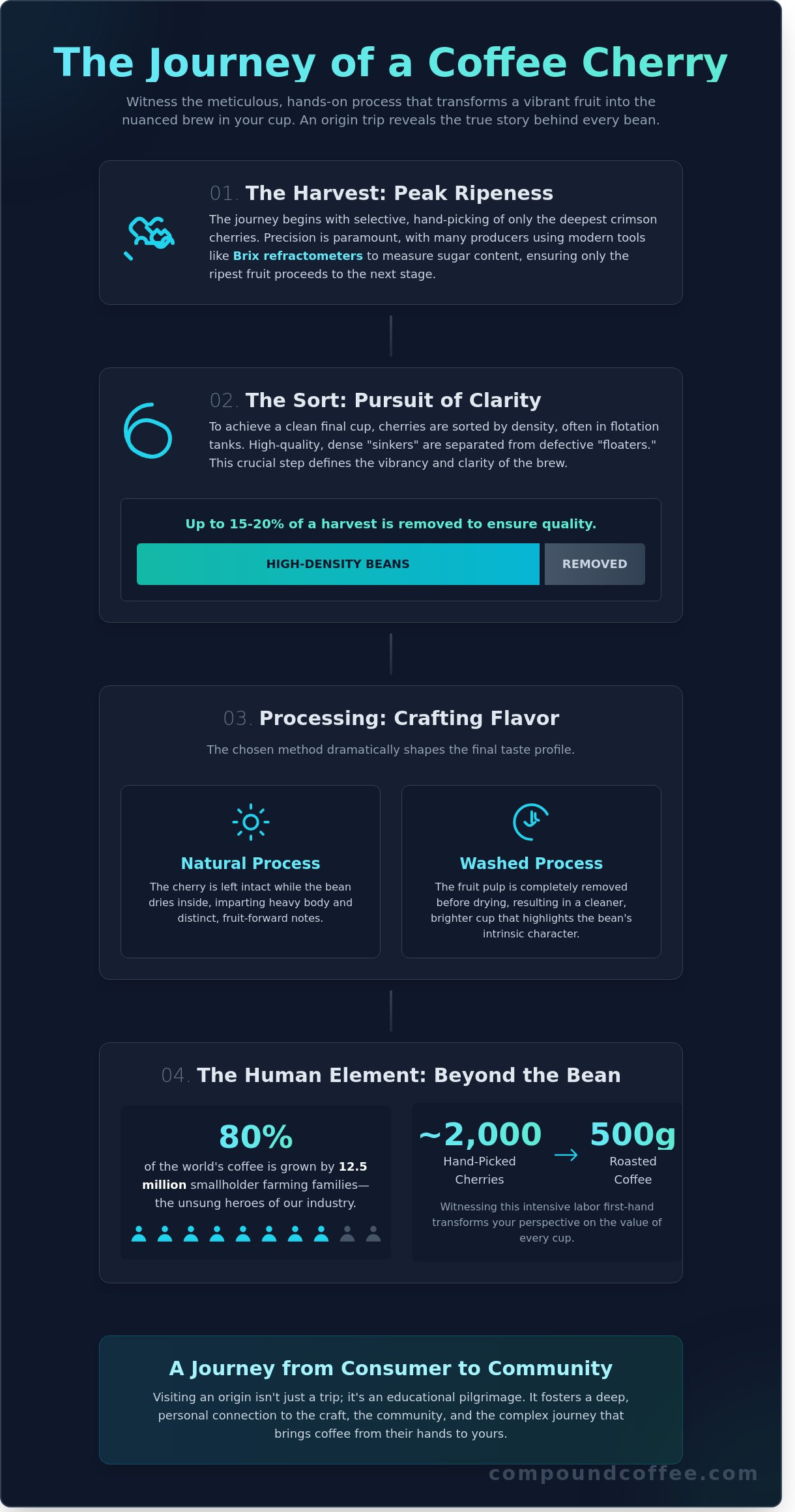
The human element is the most vital part of this experience. Statistics from 2023 show that roughly 80% of the world's coffee is grown by 12.5 million smallholder farmers. These individuals are the unsung heroes of the industry. When you visit a farm, you meet the people whose livelihoods depend on every harvest cycle. Direct relationships matter because they foster empowerment through coffee. By engaging directly with producers, we help ensure they receive fair compensation that reflects their immense skill. This connection transforms coffee from a mere commodity into a shared human story.
Approaching a farm requires a specific mindset. We don't arrive as authorities or experts. Instead, we visit as curious learners with open minds. We want to understand the process of coffee production from the ground up, literally. Witnessing the sweat and dedication required to maintain a healthy crop is humbling. It reminds us that we're all part of a larger community. At Compound Coffee Co., we see ourselves as friendly guides on this journey. We're here to share what we've learned while acknowledging that there's always more to discover.
The Shift from Consumer to Community Member
Witnessing the labor-intensive harvest firsthand completely changes your perspective. It takes approximately 2,000 hand-picked cherries to produce just 500 grams of roasted coffee. Seeing this effort builds a "rising tide" for the specialty coffee industry; it encourages us to value the product more deeply. We avoid "tourist traps" and seek out genuine production facilities. This transparency helps us appreciate the lighter, more nuanced profiles we roast, especially since we don't sell dark roast coffee. You stop being a person who just buys a drink and start being a member of a global community.
Subjectivity in the Field
Quality at the farm level is perceived differently by every taster. We don't believe in rigid rules for what makes a coffee "good." You're encouraged to find what you personally enjoy in the raw environment of the farm. We define terroir as a flexible guideline for potential flavor notes based on soil and climate, but it's never a rigid rule for what you should taste. Individual perception is everything. Whether you're at a cupping table in Ethiopia or a washing station in Indonesia, your personal sensory experience is the most important metric. We're just here to help you navigate those flavors.
What to Expect at Origin: The Journey of a Coffee Cherry
Stepping onto a coffee estate during the peak harvest season is a sensory revelation. The process begins with the selective picking of deep red cherries, a task requiring incredible precision and patience. On many coffee farm trips, you'll see that producers aren't just farmers; they're innovators using revolutionary technologies like Brix refractometers to measure sugar content before a single cherry is plucked. This data-driven approach ensures only the peak of ripeness enters the wet mill, setting the stage for a high-quality cup.
Sorting is where the "cleanliness" of your morning brew is truly born. Producers often use floatation tanks to separate "floaters" (less dense, defective beans) from "sinkers" (high-quality, dense beans). This labor-intensive stage can remove 15 to 20 percent of the harvest to ensure the final profile remains vibrant and free of off-flavors. Understanding the economic benefits of coffee tourism reveals how these meticulous steps provide better yields and higher prices for smallholder families, empowering the entire community. Getting your hands dirty by pulping or turning beans on the drying racks is the fastest way to understand the physical effort behind every S$6 cup in Singapore.
Processing Methods: Guidelines for Flavor
We view processing as a set of guidelines rather than a manual for perfection. Natural processing leaves the fruit intact during drying, often resulting in heavy bodies and fruit-forward notes. Washed processing removes the fruit entirely before drying, highlighting clarity and acidity. Honey processing sits in the middle, where varying amounts of sticky mucilage are left on the bean. Since individuals perceive taste differently, no method is objectively better; it's all about what you enjoy. For instance, our Semendo Honey green beans showcase a creamy sweetness that some love, while others might prefer the crispness of a washed lot. We focus on lighter roast profiles to let these natural characteristics shine, as we don't offer dark roast coffee.
The Role of the Wet Mill and Drying Beds
The window between picking and processing is critical, usually lasting no more than 8 to 12 hours. Any delay can lead to uncontrolled fermentation, which might ruin an entire batch. At the wet mill, you'll hear the rhythmic sound of raking beans on raised beds. This isn't just for show; consistent airflow is vital for even drying. Farmers must manage humidity levels that can fluctuate by 30 percent in a single day, factors entirely out of their control. The smell of fermenting cherries is sweet and slightly boozy, a scent that stays with you long after you leave the farm. Experience this journey yourself and explore our curated collection of beans that honor these traditions and the hard work of our producing partners.
Choosing Your Destination: Coffee Origins Near Singapore
While many enthusiasts dream of visiting the high-altitude slopes of Huila in Colombia or the historic forests of Yirgacheffe in Ethiopia, Singaporeans are in a privileged position. You do not need to spend S$2,500 on a long-haul flight to witness the magic of a harvest. Southeast Asia is home to a massive diversity of flavor profiles and processing experiments that are just a few hours away. Every origin offers a unique community and a chance to learn directly from the source. These coffee farm trips allow you to see that coffee is a living, breathing craft rather than just a commodity in a bag.
We believe that everyone's palate is unique. Individuals perceive taste differently, so there is no single "best" origin to visit. Instead, look at these trips as a way to find what resonates with your own preferences. Whether you enjoy the earthy depth of a traditional process or the wild acidity of a modern fermentation, the proximity of these farms makes them the perfect "first trips" for any Singapore-based explorer. Since we do not sell dark roast coffee at Compound Coffee Co., these trips are especially eye-opening. You will see firsthand how we prioritize preserving the natural, fruity characteristics of the bean through lighter roasting profiles.
Indonesia: A Diverse Island of Flavors
Sumatra and Java are excellent starting points for regional travelers due to their accessibility and rich history. In Sumatra, you will often encounter the "Giling Basah" or wet-hulled method. This unique process involves removing the parchment layer while the beans still have a high moisture content of 25% to 35%. It creates a heavy body and distinct flavor profile that has defined Indonesian coffee for decades. However, the landscape is changing rapidly. The families we work with in regions like South Sumatra show an insatiable hunger for improvement and experimentation.
You can see the results of this dedication in our Semendo Honey Filter. This specific coffee is a success story from the Semendo highland, where producers have moved away from traditional methods to embrace honey processing. This shift results in a cleaner cup with a refined sweetness. Visiting these farms allows you to witness the hospitality of Indonesian growing communities. They often open their homes to visitors, sharing their journey of transforming local agriculture into world-class specialty coffee.
Thailand and Vietnam: The Rising Stars of Specialty
Thailand and Vietnam have transformed their reputations over the last 10 years. Regions like Chiang Mai and Da Lat are pushing boundaries with anaerobic fermentation. This involves placing coffee cherries in sealed, oxygen-free tanks for 48 to 96 hours to develop complex, wine-like flavors. A flight from Changi to these regions takes roughly 3 hours, making them ideal for short, educational workshops during the harvest months of December to March.
The community in these areas is driven by a vibrant group of young, innovative producers. Many are second-generation farmers who have returned from studies abroad to apply scientific rigor to their family estates. They treat the farm like a lab, constantly running trials on yeast inoculation and drying temperatures. These coffee farm trips offer a hands-on look at how technology and tradition merge. Because taste is subjective, these producers often create a wide variety of experimental lots. This variety ensures that every visitor finds a profile that truly speaks to them, empowering you to become a more confident taster.
Planning Your Journey: Etiquette, Seasonality, and Preparation
Coffee farm trips are far from your standard resort holiday. You're entering a working environment that's often also a family's private home. Preparation is about more than just booking a flight; it’s about aligning your expectations with the rhythms of the land. Most specialty coffee grows at high altitudes, usually between 1,200 and 2,100 meters. While Singapore stays humid and warm, these mountains get quite cold at night. Pack layers and sturdy footwear. You'll likely be walking on uneven terrain and riding in 4x4 vehicles over unpaved roads to reach the best lots.
Respectful engagement is the cornerstone of a great visit. Always ask before picking a coffee cherry or entering a processing area. These farms are bustling hubs of labor. A misplaced step can disrupt a drying bed of expensive parchment coffee. Remember that you’re a guest in a space where "rustic" is the standard. Facilities might be basic, but the hospitality is usually unmatched. It's a humble experience that reminds us how much hard work goes into every single cup we brew back home.
The Harvest Calendar: When to Go
Timing your visit depends on what you want to see. Most origins have a "main crop" and a "fly crop," also known as the mitaca in places like Colombia. The main harvest is a high-energy period. You'll witness the frantic pace of picking, sorting, and washing. It’s the best time to see the full production chain in action. However, the off-season offers its own rewards. With fewer chores to attend to, farmers often have more time for long, winding conversations over a meal. This is where the real learning happens.
Keep in mind that climate change is making these harvest windows less predictable. In 2023, unexpected rainfall in Southeast Asia delayed drying times by nearly three weeks. Treat any harvest calendar as a loose guideline rather than a certainty. Being flexible is part of the adventure. Whether you see the trees in flower or the cherries in the vat, there's always something new to discover about the plant's life cycle.
Sensory Preparation: Training Your Palate Before You Go
You don't need to be a "pro" to have a meaningful experience, but a little bit of knowledge goes a long way. Taking a coffee workshop or class before you depart helps you build a sensory bridge. When you can identify basic acidity or body, you can communicate more effectively with the producers. It’s not about finding a "right" answer; taste is subjective, and everyone perceives flavors differently. We want to empower you to trust your own palate. Investing around S$180 in a sensory foundations class can significantly enrich your conversations with farmers.
Practice Brewing: Learn a simple V60 technique. It’s a portable method that allows you to brew fresh samples right at the source.
Define Your Preferences: Explore different processing methods like washed or natural to see what resonates with you.
Understand the Bean: Since we don't sell dark roast coffee, our workshops focus on the vibrant, complex notes inherent in the bean itself.
Traveling with a roaster or a coffee professional adds immense depth to the journey. They can act as a bridge, explaining why a certain soil type or fermentation style results in the flavors you enjoy. This collaborative spirit turns a simple tour into a shared journey of exploration. You'll return to Singapore with a renewed appreciation for the unsung heroes of the coffee world.
Bringing Origin Home: How Farm Trips Shape the Compound Coffee Philosophy
When we return to Singapore from our coffee farm trips in regions like Chiang Mai or West Java, we bring back more than just samples. We bring back a deep, personal connection to the land and the families who tend it. These intimate relationships are the bedrock of our roasting philosophy. By spending 72 hours or more on a single estate, we observe the minute details of the harvest that others might miss. We see the exact moment a cherry is picked and the precise temperature of the fermentation tanks. This level of proximity ensures that the roasted beans you buy from us are a true reflection of the farmer's intent.
Our commitment to highlighting origin character is the primary reason we do not sell Dark Roast Coffee. We believe that roasting is a delicate balancing act. If we roast too dark, the high heat triggers chemical reactions that mask the unique acids and sugars the farmer spent 9 months cultivating. A dark roast often tastes like the roaster's process rather than the farm's soil. We choose to stay in the light to medium spectrum to honor the hard work of the producers. We want you to taste the specific floral notes of a Sidama or the creamy body of a Brazilian natural, not just the char of a drum. It's about transparency and respect for the raw material.
We invite you to join our growing community of explorers. Our "Farm to Cup" experiences aren't just about drinking a beverage; they're about understanding a global ecosystem. We've seen how a single change in processing can elevate a coffee from standard to extraordinary. By choosing these curated experiences, you support a system that empowers smallholders and rewards quality over volume.
From Green Bean to Signature Profile
Our work starts months before the green beans arrive at our Singapore warehouse. We often co-create flavor profiles with producers while standing directly next to the drying beds. This iterative process involves roasting small 100-gram samples on-site and sharing immediate sensory feedback. If we find a batch lacks the desired acidity, we might collaborate with the farmer to adjust the fermentation time by 12 or 24 hours during the next harvest cycle. This dialogue ensures the final product meets our standards for clarity and sweetness. To see how we translate these raw beans into the profiles you love, check out our Ultimate Roasting Intro for the next step in the journey.
Your Own Shared Journey
We encourage you to approach every cup with an open and humble perspective. Coffee is a vast world with no single "right" answer. While we provide guidelines and tasting notes, your own palate is the only authority that truly matters. Everyone perceives bitterness, acidity, and sweetness differently based on their own biology and experiences. We're here to be your friendly guides, not to dictate what you should like. Whether you prefer a bright, citrusy brew or something with deep chocolate undertones, the goal is discovery. We hope you'll continue to experiment and find what resonates with you. Feel free to explore our current seasonal offerings from the farms we visit and start your own exploration today.
Your Journey to the Heart of the Cherry
Embarking on coffee farm trips changes how you view every morning brew. You'll see the 1,000 days of growth it takes for a seedling to produce its first harvest. It's a rare chance to meet some of the 12.5 million smallholder farmers who drive this industry. These experiences bridge the gap between a short 3-hour flight from Singapore and the complex flavors in your cup. We believe there's no single right way to enjoy these beans because your palate is unique to you.
At Compound Coffee Co., our mentors bring an insatiable hunger for research to every workshop at our Singapore hub. We maintain direct relationships with small farmers and their families to ensure every bean tells a story. Since we don't sell dark roast coffee, we focus on highlighting the natural sweetness found in light and medium profiles. Join our community and explore the world of specialty coffee through our workshops and farm-to-cup beans. We can't wait to see where your curiosity takes you next.
Frequently Asked Questions
Is it possible to go to a coffee farm as a regular traveler?
Yes, you can absolutely visit a coffee farm as a regular traveler without being an industry professional. Roughly 85% of specialty estates in regions like Chiang Mai or West Java now offer dedicated guest programs for enthusiasts. These experiences allow you to walk through the rows of trees and see the harvest firsthand. It's a great way to connect with the unsung heroes of the industry while enjoying a unique holiday away from the city.
When is the best time of year to visit a coffee farm?
The best time to visit is during the local harvest season, which typically runs from November to March in Northern Southeast Asia. If you're heading to Indonesia, the main harvest often peaks between May and September. Planning your coffee farm trips during these windows ensures you see the processing mills in full action. You'll witness the transformation from red cherries to green beans, which is a truly eye-opening experience for any coffee lover.
Do I need professional coffee training before going on a farm trip?
No professional background is required to enjoy a farm visit. We believe everyone's palate is unique, so your personal perception of flavor is the only training you really need. Farmers enjoy sharing their knowledge with curious beginners just as much as with seasoned pros. It's a hands-on learning environment where you can ask questions and discover what makes specialty coffee so different from the mass-produced options you might find elsewhere.
How do I find a coffee farm that is open to visitors without it being a tourist trap?
Look for farms that maintain active memberships with the Specialty Coffee Association (SCA) or those that partner directly with transparent roasters. About 70% of authentic farms focus on education rather than souvenir sales. You can also check platforms like World Coffee Research to identify legitimate producing regions. Avoiding "luwak" farms that prioritize animal shows over bean quality is a good rule of thumb for finding a genuine, community-focused experience.
What should I bring with me on a coffee farm visit?
Pack sturdy hiking boots and insect repellent with at least 20% DEET, as most farms sit at altitudes above 1,200 meters. The terrain can be uneven and muddy, especially during the rainy season. Don't forget a notebook to jot down your sensory observations. Since you'll be outdoors for 4 to 6 hours, a reusable water bottle and sun protection are essential for staying comfortable while you explore the plantation.
Will I be able to taste the coffee directly at the farm?
Yes, most farms include a formal cupping session where you can taste the current harvest. This is where you'll learn that flavor is a shared journey, not a set of rigid rules. You might pick up floral notes while someone else tastes citrus; both are perfectly valid. It's a chance to experiment with different origins and see how processing methods like "natural" or "washed" change the profile of your daily brew.
How does visiting a farm help me choose better coffee beans at home?
Seeing the effort behind every bean helps you identify quality markers like altitude and processing transparency. You'll learn why we choose to focus on light and medium profiles to preserve the bean's natural character. Since we don't sell dark roast coffee, understanding the farm-level work explains why those delicate, fruity flavors are so prized. This knowledge empowers you to choose bags that align with your own evolving taste preferences back in Singapore.
Are coffee farm trips suitable for families or children?
Yes, coffee farm trips are excellent for families with children, particularly those aged 7 and above. It's an educational way for kids to see where their food comes from and interact with nature. Many farms in Bali and Thailand offer family-friendly lodges starting at around S$120 per night. Just keep in mind that the remote locations mean limited Wi-Fi, which provides a perfect opportunity for your family to bond over a shared adventure.


Comments