
How to Improve Espresso Extraction: A Guide to Sensory Discovery
Imagine watching S$28 worth of meticulously roasted specialty beans disappear down the kitchen sink because your morning shot tasted like a bitter lemon peel. It's a disheartening ritual many home baristas in Singapore face when the technical advice they find online feels more like a rigid chemistry exam than a creative hobby. We agree that espresso can feel frustratingly inconsistent and confusing. However, learning how to improve espresso extraction shouldn't be about chasing someone else's "perfect" recipe or a set of dogmatic rules.
Instead, we want to help you embark on a journey of sensory discovery where you're the final judge. This guide will empower you to understand brewing variables so you can find a flavor profile that perfectly suits your unique palate. We'll show you how to diagnose flavor issues independently; this means you can finally turn those "sink shots" into a consistent, joyful morning routine. We are going to explore the practical, hands-on steps you can take to master your equipment and, most importantly, trust your own taste buds.
Key Takeaways
Embrace espresso extraction as a subjective sensory journey where your unique palate is the ultimate guide to finding the perfect cup.
Master the relationship between grind size and dose to understand how to improve espresso extraction and gain control over your flavor profile.
Learn to diagnose your shots using a sensory-first framework, including the "salami shot" method to identify the distinct stages of coffee development.
Explore the impact of "unsung heroes" like water quality and puck preparation, while discovering why "fresh" specialty beans require proper resting time.
View your barista skills as an evolving craft that flourishes through hands-on practice and engagement with a passionate coffee community.
Table of Contents Extraction as a Journey: Understanding the Basics The Four Pillars of Espresso Extraction Dialing In: A Sensory Framework for Better Taste The Unsung Heroes: Freshness, Water, and Puck Prep Elevating Your Craft Through Community and Practice
Extraction as a Journey: Understanding the Basics
Extraction isn't a rigid science; it's the beautiful process of water dissolving coffee solids to create the drink we love. Think of it as a bridge between the dry grounds in your portafilter and the liquid in your cup. When you're learning about Espresso preparation, you're essentially managing how much of the coffee's flavor enters the water. At Compound Coffee Co., we believe the "perfect" shot doesn't exist in a vacuum. It only exists in your cup, tailored specifically to your unique palate.
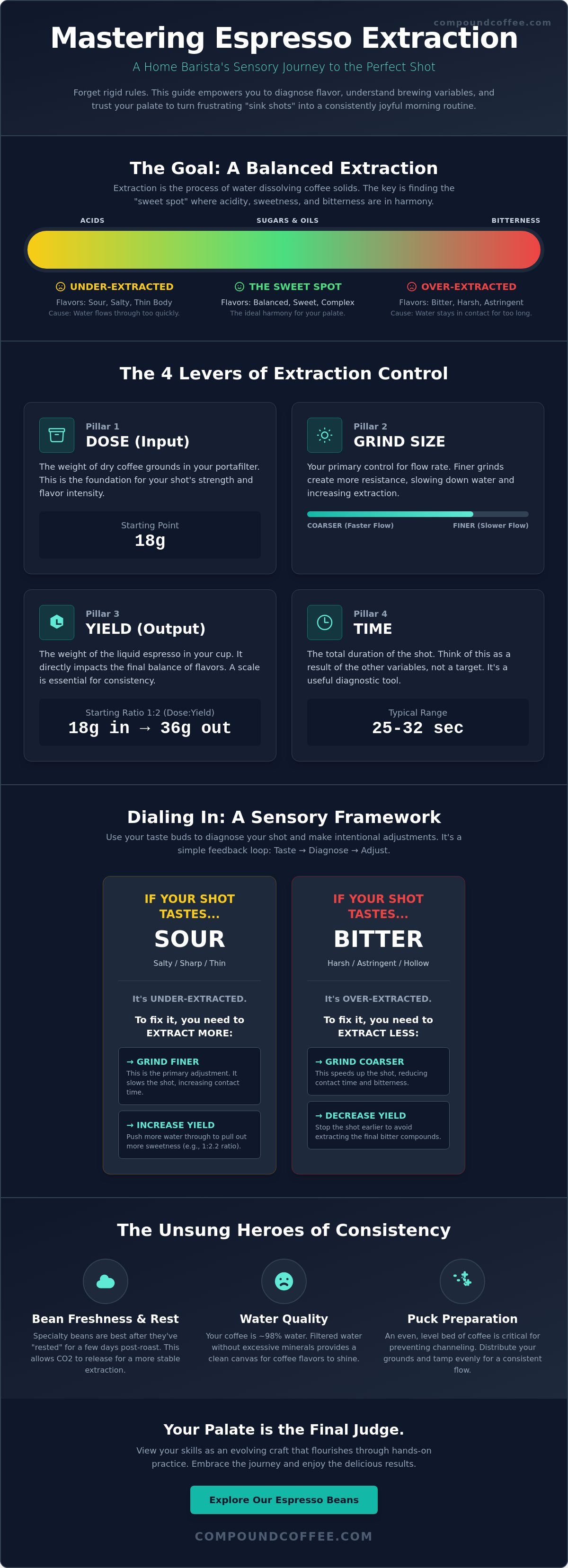
Flavor components dissolve in a specific order during the brewing process. First come the acids and salts, which can taste sharp or sour if the process stops too early. Next, the sugars and oils emerge, providing sweetness and body. Finally, the heavier organic matter dissolves, bringing bitterness. Understanding this sequence is the first step in learning how to improve espresso extraction at home.
The Goal of Balanced Extraction
We often talk about the "sweet spot" in coffee brewing. This is the moment where acidity and bitterness find a harmonious balance. It's not about eliminating bitterness entirely, as that provides necessary structure and depth. Instead, it's about finding the profile that makes you smile. Since we focus on light to medium roasts and don't sell dark roast coffee, you'll find our espresso beans offer a vibrant spectrum of fruit and floral notes. We encourage you to be curious. Try pulling a shot for 25 seconds, then try 32 seconds. Your home setup is your laboratory for discovery.
Why Subjectivity Matters in Coffee
Sensory descriptors like "bright citrus" or "stone fruit" are just signposts for your journey. They aren't absolute truths you must find to "pass" a taste test. Your individual biology and background change how you perceive flavor. What one person calls "sour," another might describe as "vibrant acidity." We treat brewing as a shared discovery rather than a lecture. For a deeper dive into these concepts, our Specialty Coffee Guide offers a roadmap for your sensory development.
In Singapore's thriving coffee scene, we see enthusiasts experimenting with everything from local water chemistry to precision baskets. Don't feel pressured by dogmatic rules or "correct" ways of drinking. If a shot tastes good to you, it's a success. Our goal is simply to give you the tools and knowledge to repeat that success every morning in your own kitchen.
The Four Pillars of Espresso Extraction
Mastering how to improve espresso extraction is less about following a strict recipe and more about understanding the four variables that shape every shot. While recent scientific research on espresso extraction provides a fascinating look into the chemistry of the puck, we believe the most important data point is your own palate. These four pillars act as levers you can adjust to explore different flavor profiles and find what tastes best to you.
Grind Size and Flow Rate
Grind size is your primary tool for controlling how fast water travels through the coffee. Finer grinds create more resistance and increase the total surface area, which slows down the flow and increases extraction. Because we don't carry dark roasts, you'll find that our light and medium roasted beans often require a finer setting to achieve the right balance. Dialing in is a process of small, intentional adjustments. If your espresso tastes sharp or thin, try moving one notch finer to slow the flow. If it's heavy and unpleasantly pungent, a coarser setting might be the solution.
Dose and Yield Ratios
The dose is the weight of dry coffee you put into your portafilter, while the yield is the weight of the liquid espresso in your cup. A common starting point is a 1:2 ratio, such as using 18 grams of coffee to produce 36 grams of espresso. This ratio isn't a rule, but a baseline for discovery. Increasing your yield can often reduce perceived sourness and add clarity, though it can eventually lead to bitterness if pushed too far. We encourage using a scale for every single shot to ensure your experiments are repeatable. You can browse our current espresso roast selections to see which beans might benefit from a slightly longer or shorter ratio based on their origin.
Dose: Sets the foundation for the intensity of the shot.
Yield: Directly impacts the balance between acidity, sweetness, and bitterness.
Precision: Using a scale helps you identify exactly which change led to a better taste.
The Role of Temperature
Temperature acts as a catalyst for solubility. Higher heat helps water pull compounds out of the coffee beans more efficiently. Lighter roasts, which are denser and less porous than darker ones, often benefit from higher brewing temperatures between 93°C and 95°C to fully unlock their sweetness. Even in Singapore's warm climate, temperature stability is vital for consistency. We recommend letting your machine warm up for at least 25 to 30 minutes before your first brew to ensure the group head and portafilter are thermally stable. Since individuals perceive taste differently, don't be afraid to drop the temperature by 1°C if you find the flavors too intense for your liking.
If you're eager to see these variables in action and get some hands-on practice, consider joining us for a home barista workshop where we explore these concepts together.
Dialing In: A Sensory Framework for Better Taste
While many baristas obsess over a specific 30-second window, we believe the clock is just a reference point. The real secrets are hidden in your palate. Learning how to improve espresso extraction starts with treating your morning brew as a hands-on experiment. You're the lead scientist in your own kitchen lab. Since taste is deeply subjective, what one person finds bright and vibrant, another might find sharp. We recommend making just one change at a time. If you tweak your grind size and your water temperature simultaneously, you won't know which variable actually changed the flavor.
To truly understand the journey of a shot, try the "salami shot" method. Place five different cups under your portafilter. Swap them every 6 to 8 seconds during a single 30-second pull. The first cup will be viscous and intense. The middle cups will hold the sweetness. The final cup often tastes like thin, watery tea. This exercise helps you see exactly where the flavors live. For those who want to dive deeper into the physics of this process, the Specialty Coffee Association features a lecture on Systematically Improving Espresso that breaks down how grind consistency impacts your yield.
Diagnosing Sour vs. Bitter
Under-extraction usually presents as sourness. You'll notice a thin body and perhaps a salty or sharp aftertaste that makes your tongue pucker. Over-extraction, on the other hand, leads to bitterness. This often feels like a drying sensation or astringency on the roof of your mouth. Since we don't roast dark coffee at Compound Coffee, you won't find those heavy carbon or "burnt" notes common in traditional roasts. Instead, you're looking for sweetness. This is the harmonious middle ground where the origin of the espresso beans really shines. Remember that individuals perceive acidity and bitterness differently, so trust your own tongue over a textbook definition.
The Adjustment Loop
When you're exploring how to improve espresso extraction at home, follow these guidelines to find your sweet spot. If your shot tastes sour, try grinding finer to slow the water down, increasing your yield, or bumping up your temperature by 1 or 2 degrees Celsius. If the shot is bitter, grind coarser, decrease your total yield, or lower your brewing temperature. This cycle isn't about reaching a perfect destination but about enjoying the discovery. Dialing in is the iterative process of matching extraction variables to your personal taste preferences.
The Unsung Heroes: Freshness, Water, and Puck Prep
Improving your extraction isn't just about the settings on your machine. It's about the variables that happen before you ever hit the brew button. If you want to know how to improve espresso extraction, you have to look at the ingredients and the physical preparation of the coffee bed. The way you handle your roasted coffee beans determines the quality ceiling of your final cup.
Resting and Degassing Specialty Coffee
Freshness is often misunderstood in the specialty world. While commodity beans might go stale quickly, our light and medium roasts often need 7 to 14 days of resting to reach their peak flavor. If you brew too early, trapped CO2 acts as a physical barrier. These gas bubbles push water away from the coffee particles, leading to uneven, bubbly extractions that taste sharp or salty. Since we don't roast dark coffee at Compound Coffee, our beans retain more organic structure and gas, making this resting period essential. Remember, your palate is the final judge; some might prefer the vibrance of a bean at day 10, while others enjoy the mellow sweetness found at day 20.
Water Quality and Filtration
Coffee is 98% water. In Singapore, our tap water is safe and relatively soft, but it still contains chlorine and varying mineral levels that can mask delicate flavors. Magnesium and calcium act as the "extractors" that pull flavors out of the grounds. If your water is too empty or too full of the wrong minerals, your espresso will taste flat or chalky. Using a simple carbon block filter or a dedicated coffee water pitcher can transform your results. Because individuals perceive taste differently, experimenting with different water profiles is a great way to discover what highlights your favorite notes.
Puck Prep Basics
Channeling is the primary reason for bitter, thin espresso. This happens when water finds a path of least resistance through the coffee bed rather than flowing through it evenly. To prevent this, you should focus on creating a uniform density in your portafilter. We recommend these steps:
Use the Weiss Distribution Technique (WDT) by stirring the grounds with thin needles to break up clumps.
Ensure the grounds are distributed perfectly level before tamping.
Focus on a level tamp rather than a heavy one; a 15kg tamp that's slanted is much worse than a 5kg tamp that's perfectly flat.
Consistency in these small movements is key to learning how to improve espresso extraction over time. Every small adjustment helps you get closer to that perfect, syrupy shot.
Ready to take your skills further? Join us for a hands-on
and master these techniques with our team of passionate educators.
Elevating Your Craft Through Community and Practice
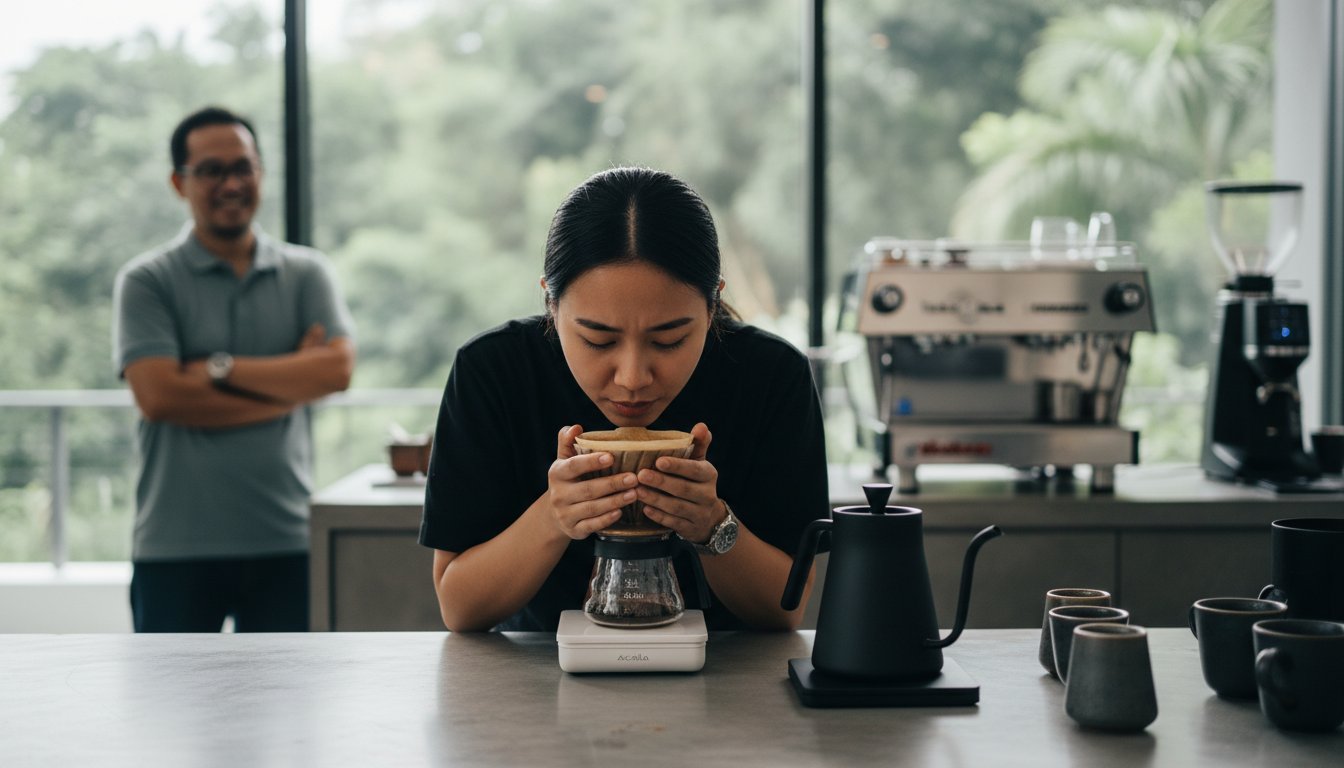
Mastering coffee isn't about reaching a final destination. It's a lifelong practice of discovery where every shot pulled offers a new lesson. While technical guides explain how to improve espresso extraction, the true magic happens when you move beyond theory and start experimenting with your own senses. We view ourselves as guides rather than absolute authorities because we know that taste is deeply personal. Individuals perceive taste differently, and what one person loves, another might find too vibrant or intense. Your palate is your best tool, and it's one that grows sharper the more you brew.
Hands-On Learning in Singapore
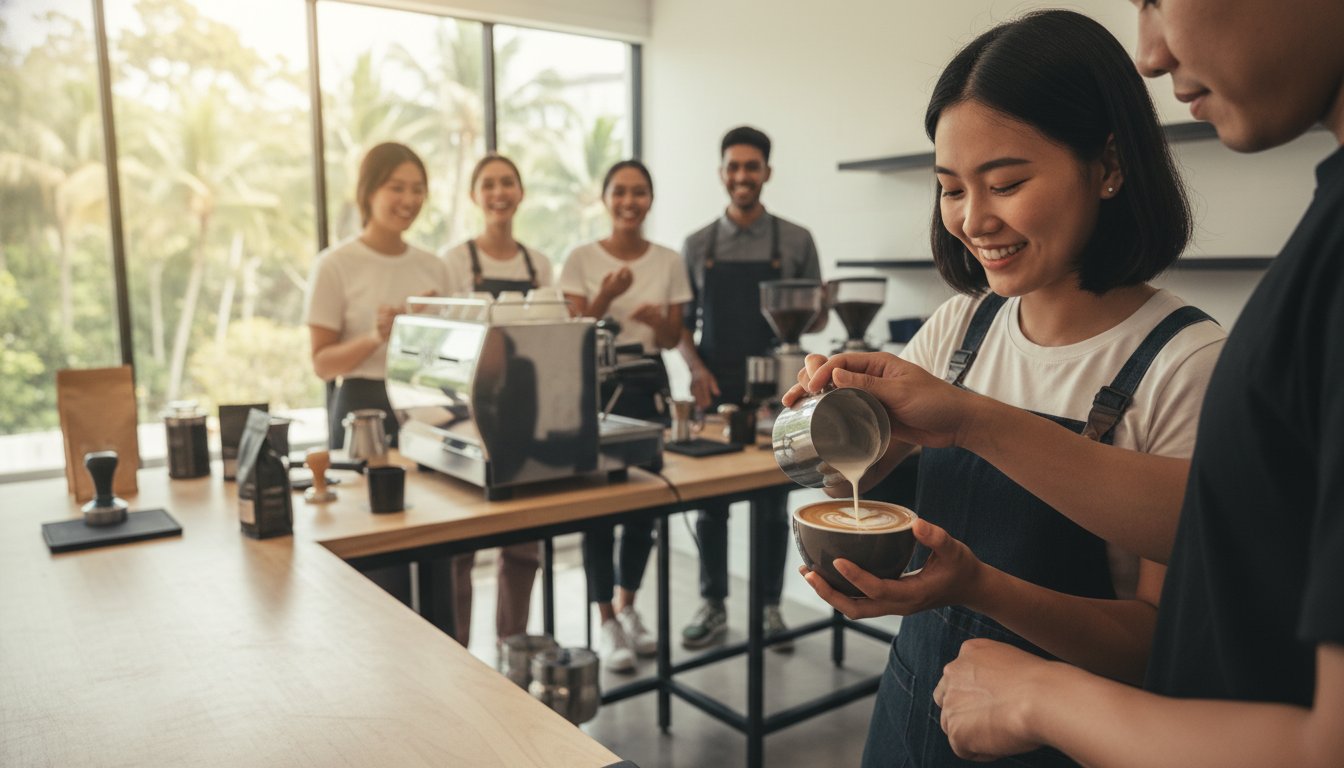
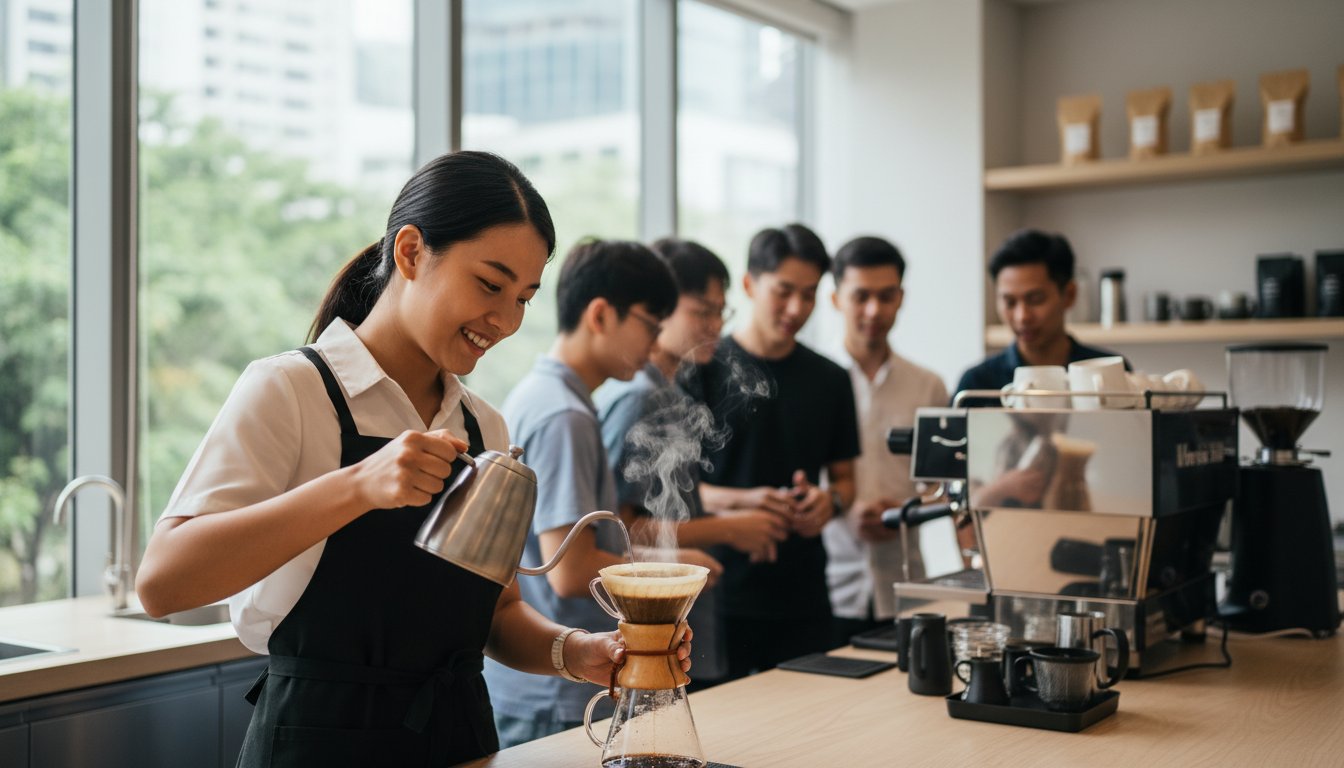
Reading about variables like yield and temperature is helpful, but nothing beats the immediate feedback of a coffee workshop in Singapore. In our training sessions, we strip away the intimidation often associated with specialty coffee. Learning how to improve espresso extraction is much faster when you have an experienced barista helping you identify sensory cues in real time. We've helped hundreds of enthusiasts go from complete beginners to confident pros in a supportive environment. If you're curious about the science behind the bean, come visit our facility at Techlink. You can see our roasting process firsthand and see why we focus on light and medium profiles, as we don't sell dark roast coffee. It's a space designed to empower your curiosity.
Finding Your Signature Brew
Your journey involves exploring different flavor profiles to see how they react to your brewing style. Trying a unique origin like our Semendo Honey is a great way to observe how extraction changes with different processing methods. You'll notice how the honey process brings out a distinct sweetness that requires a different touch than a fully washed bean. As you experiment, you'll find that your preferences shift over time. A profile you enjoyed six months ago might lead you toward something entirely different today. This evolution is the heartbeat of the Singapore coffee community.
Compound Coffee serves as a hub where equipment, education, and community converge. We're here to provide the platform, but you're the one who creates the experience. Whether you're refining your technique at home or joining us for a class, remember that the joy lies in the shared journey. There's no single "best way" to brew; there's only the way that makes you excited to start the grinder. Keep tasting, keep questioning, and enjoy every sip of your discovery.
Start Your Own Path to Coffee Mastery
Mastering the art of the pull isn't about following a rigid recipe; it's about developing your own unique palate. We've explored how the four pillars and meticulous puck prep serve as your foundation. Since every individual perceives taste differently, these principles are simply helpful guidelines for your own exploration. Understanding how to improve espresso extraction comes down to consistent practice and a genuine curiosity for the process. Whether you're refining your technique or experimenting with new brew ratios, remember that your subjective experience is the ultimate guide. Our community thrives on this shared journey of discovery. We don't believe in a single best way, only the way that makes your coffee taste incredible to you. You're now equipped with the framework to turn every shot into a learning opportunity.
Ready to master your brew? Our passionate mentors have an insatiable hunger for coffee research and want to share that excitement with you. Come get hands-on training at our Techlink facility, a hub trusted by Singapore’s specialty coffee community. Join our GOATED Espresso Workshops in Singapore and let's explore the limits of flavor together. We can't wait to see what you discover in your next cup.
Frequently Asked Questions
Why does my espresso taste sour even though I followed the recipe?
Your espresso likely tastes sour because the water hasn't extracted enough sugars to balance the natural organic acids in the coffee. Recipes are helpful guidelines, but they can't account for the unique mineral content of your water or the specific age of your beans. Since everyone perceives acidity differently, a recipe that works for one person might taste sharp to you.
Try increasing your yield by a few grams or grinding slightly finer to see if the flavor rounds out. We encourage you to treat every shot as a sensory discovery rather than a pass or fail test. Small adjustments often lead to that sweet spot where the flavors feel harmonious to your palate.
How many days should I wait after the roast date before using coffee for espresso?
We recommend waiting between 7 and 14 days after the roast date to allow the beans to properly degas. Freshly roasted coffee contains high levels of carbon dioxide that can create turbulent flow and uneven extraction during brewing. While some enjoy the vibrant energy of a 5 day old roast, most find the flavor stabilizes and peaks around the 10 day mark.
In our experience, the degassing process is essential for a consistent syrupy body. If you use beans too early, the trapped gases may prevent water from fully saturating the grounds. Experiment with different resting periods to find the window that brings out the most clarity for your taste buds.
Does grind size matter more than tamping pressure for extraction?
Grind size is significantly more impactful than tamping pressure when you are learning how to improve espresso extraction. Once you apply roughly 15kg of pressure, the coffee puck is fully compressed and further force won't change the density. In contrast, moving your grinder adjustment by a single notch can change your extraction time by several seconds.
Focus your energy on achieving a level, consistent tamp rather than worrying about the specific weight of the pressure. As long as the air pockets are removed, your grind size will be the primary lever for controlling how water moves through the coffee. This shift in focus allows you to spend more time exploring the nuances of flavor.
Can I use the same extraction settings for light and dark roasts?
You generally cannot use the same settings because different roast levels change the density and solubility of the coffee bean. Light roasts are denser and require more energy, often in the form of higher temperatures or longer brew ratios, to extract their complex flavors. While we don't sell dark roast coffee at Compound Coffee Co., we've observed that medium roasts are much more porous and extract quite easily.
If you switch from a light to a medium roast, you might find the shot runs much faster or tastes too bitter with your previous settings. We suggest adjusting your variables one at a time to see how the coffee responds. This process of adaptation is part of the joy of working with specialty coffee.
What is 'channeling' in espresso and how can I fix it?
Channeling occurs when water finds a path of least resistance through the coffee puck instead of flowing evenly through all the grounds. This usually results in a shot that tastes both sour and bitter because some coffee is under-extracted while other parts are over-washed. You can identify this by looking for "spurts" or blonde streaks if you use a bottomless portafilter.
To fix this, focus on your distribution technique to ensure there are no clumps or uneven mounds before you tamp. Using a simple tool to stir the grounds can reduce extraction variance by up to 30 percent in some setups. It's a small step that makes a massive difference in the consistency of your daily brew.
Is it possible to get good extraction with a budget espresso machine?
You can absolutely achieve a delicious extraction on a budget machine if you prioritize a high-quality grinder and fresh beans. Many entry-level machines priced under S$700 use pressurized baskets to create artificial crema, but switching to a standard basket allows for more authentic flavor development. Your technique and understanding of the variables matter far more than the price tag of your equipment.
We've seen many members of our community produce cafe-quality results at home by mastering puck preparation and temperature management. Don't let your gear limit your curiosity. A humble setup is a fantastic platform for learning the fundamentals of sensory discovery and finding what you truly enjoy.
How does the humidity in Singapore affect my espresso grind settings?
Singapore's high average humidity of 84 percent causes coffee beans to absorb moisture from the air, which often makes them swell and clump. This moisture absorption usually requires you to adjust your grinder to a coarser setting to maintain your desired flow rate. If the air is particularly damp, your shots might run several seconds slower than they did the previous day.
We suggest checking your shot times every morning and making small micro-adjustments as the weather shifts. Storing your beans in an airtight container can help minimize these fluctuations. Staying observant of these environmental changes is a key part of becoming a more confident home barista.
How do I know if my espresso is over-extracted or just naturally bitter?
You'll know if your espresso is over-extracted if it leaves a dry, sand-papery sensation on your tongue. Learning how to improve espresso extraction is about finding the point where bitterness provides structure without being overwhelming. Natural bitterness should feel clean and dissipate quickly, whereas over-extraction often tastes like burnt wood or ash and lingers unpleasantly.
If the finish feels astringent like an over-steeped black tea, try shortening your brew time or using slightly cooler water. Remember that taste is entirely personal. What one person calls "balanced bitterness," another might find too intense, so always trust your own palate over rigid rules.
Comments