
Sumatra Mandheling Coffee Beans in Singapore: A Guide to Earthy Elegance (2026)
- carmel.soon
- Apr 14
- 13 min read
What if that heavy, "burnt" bitterness you associate with Sumatra Mandheling isn't actually the bean's fault, but rather a byproduct of how it's traditionally roasted? If you've spent time exploring sumatra mandheling coffee beans singapore roasters offer, you've likely encountered cups that feel more like charcoal than a complex, earthy beverage. We understand the frustration of wanting that deep, forest-floor profile without the harsh, ashy finish that often masks the true character of the bean.
At Compound Coffee Co., we believe taste is entirely subjective and every individual perceives flavor notes differently. You don't need to be an expert to enjoy a great cup; you just need the right guidelines to find what you love. We'll show you how the unique "Giling Basah" or wet-hulling process creates those signature spice and cedar notes. Since we don't sell dark roast coffee, we'll focus on how specialty roasting techniques unlock a cleaner, more vibrant sweetness instead. This guide will help you navigate the heritage of Mandheling, understand the "why" behind its unique processing, and empower you to brew a cup that suits your personal taste perfectly.
Key Takeaways
Uncover the secrets of Giling Basah (wet hulling) and how this traditional Indonesian processing method creates the signature heavy body and complex depth found in Mandheling coffee.
Explore flavor profiles that reach far beyond simple "earthiness" to include notes of dark chocolate and cedar, while embracing the idea that your own sensory experience is the ultimate guide.
Learn how to expertly brew sumatra mandheling coffee beans singapore at home using a French Press or Espresso to highlight their natural richness and complexity.
Understand our commitment to ethical sourcing and how we partner with Batak farming communities to bring Grade 1 quality beans to the Singapore specialty coffee scene.
Discover why we focus on roast profiles that preserve the bean's inherent sweetness—notably avoiding dark roasts—to provide a clean canvas for you to discover your own favorite taste notes.
Table of Contents What Makes Sumatra Mandheling Coffee So Unique? Understanding Giling Basah: The Secret Behind the Body Exploring the Flavour Profile: Beyond Earthiness How to Brew Sumatra Mandheling at Home in Singapore Finding Your Perfect Sumatra Roast at Compound Coffee Co.
What Makes Sumatra Mandheling Coffee So Unique?
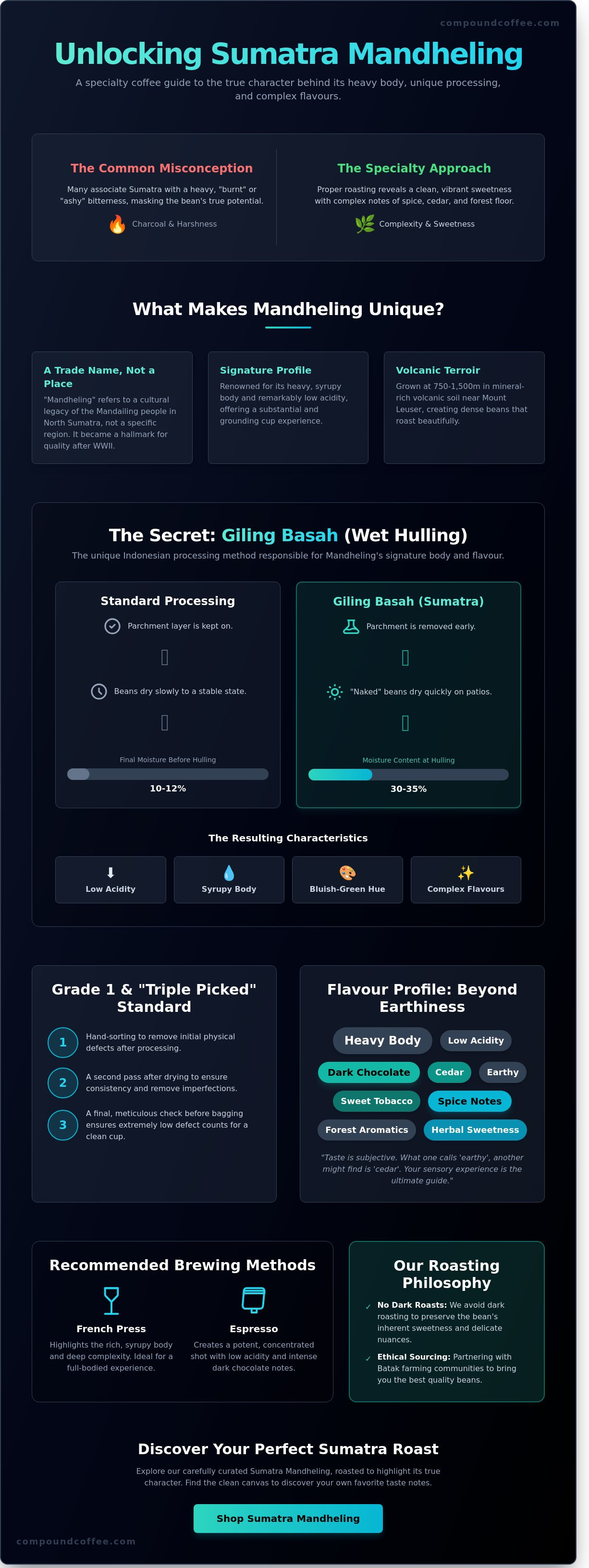
You've likely seen the name "Mandheling" on cafe menus across the island. It's legendary in the local scene. Interestingly, Mandheling isn't a specific district or a botanical variety. It's actually a trade name for coffee produced in the Batak region of North Sumatra. This name originates from the Mandailing people, an ethnic group that the Japanese military reportedly encountered during World War II when inquiring about the coffee they were drinking. Since then, it has become a global hallmark for Indonesian specialty coffee.
Historically, Coffee production in Indonesia has been a cornerstone of the global market. Sumatra specifically has carved out a niche for its unique processing methods and flavor profiles that differ wildly from Central American or African counterparts. In Singapore, many of us grew up with a preference for this profile. We're traditionally drawn to its heavy, syrupy body and remarkably low acidity. It feels substantial and grounding in the cup.
While many coffee drinkers associate sumatra mandheling coffee beans singapore with a "strong" or "bold" cup, we've found that its complexity goes much deeper than just intensity. At Compound Coffee Co., we believe that every individual perceives taste differently. What one person calls "earthy," another might describe as "cedar" or "sweet tobacco." We don't currently sell dark roast coffee because we want to preserve these delicate nuances. By roasting to a profile that highlights the bean's inherent character, we help you discover the forest-like aromatics and herbal sweetness that often get lost in a darker roast.
The Volcanic Terroir of Mount Leuser
The character of these beans starts with the rich volcanic soil surrounding Mount Leuser in Aceh and North Sumatra. This soil is packed with minerals that influence how the coffee trees take up nutrients. Growing at altitudes between 750 to 1,500 meters, the beans develop a high density. This density allows the coffee to withstand the heat of the roaster while maintaining its structural integrity. "The name 'Mandheling' honors the heritage of an ethnic group rather than a map coordinate, representing a cultural legacy within every cup." This terroir creates a profile that is uniquely Sumatran, offering a rustic elegance you won't find anywhere else.
Specialty Grade 1 and the "Triple Picked" Standard
When you're looking for sumatra mandheling coffee beans singapore, the term "Grade 1" is a vital indicator of quality. In the specialty world, this means the coffee has a very low defect count. To achieve this, the beans undergo a "Triple Picked" process. This involves hand-sorting the green coffee beans three separate times to remove any physical defects or impurities. This meticulous attention to detail ensures that your morning filter coffee is clean and consistent. It elevates the bean from a simple commodity to a specialty experience. This process isn't just about rules; it's about empowering producers to showcase their best work while giving you a reliable, delicious brew every time you reach for your grinder.
Understanding Giling Basah: The Secret Behind the Body
When you brew sumatra mandheling coffee beans singapore coffee enthusiasts often notice a distinct, heavy mouthfeel. This isn't just luck; it's the result of a unique processing method called Giling Basah, or "Wet Hulling." In most coffee-producing countries, the protective parchment layer stays on the bean until it reaches a stable 10% to 12% moisture level. In Sumatra, the humid tropical climate makes this standard approach difficult. Farmers often face 85% humidity levels, which would cause beans to rot if left to dry slowly in their shells.
The solution is a mechanical shift. Farmers remove the parchment when the bean is still quite soft and holds a high moisture content of 30% to 35%. This exposure to the elements at such a vulnerable stage creates the striking bluish-green hue seen in raw Mandheling beans. It also triggers specific chemical changes that result in the low acidity and syrupy body many of us love. It's a beautiful example of how local environment shapes the final cup.
The Science of the Wet-Hulling Method
Drying beans without their parchment shell speeds up the process significantly. Because the bean is "naked" while it dries on patios, it absorbs unique organic characteristics from the soil and air. This accelerated drying path is a direct response to the Indonesian weather. You can explore how this compares to global standards in this guide to Understanding Coffee Processing Methods. We find that this method often emphasizes cedar, tobacco, and chocolate notes, though every batch tells its own story.
Why "Wet Hulled" is Not a Rule for Flavour
We treat processing methods as a helpful map, not a rigid destination. While Giling Basah usually points toward an earthy profile, individuals perceive taste differently. One person might find a cup "bold and spicy," while another identifies "herbal sweetness." There's no right or wrong answer here. Modern Sumatran farmers are also pushing boundaries. Some producers now experiment with Honey or Natural processes, which can bring out surprising fruity or floral notes in sumatra mandheling coffee beans singapore collections.
We don't believe in masking these intricate flavours with heavy roasting. Since we don't sell Dark Roast coffee, our goal is to let the Giling Basah character shine through balanced roasting profiles. If you're curious to see how these processing methods translate to your morning brew, you can browse our latest seasonal selections to find a profile that resonates with your palate.
Exploring the Flavour Profile: Beyond Earthiness
Many coffee drinkers in Singapore associate Sumatra Mandheling with a singular, heavy "earthiness." While this grounded quality is a hallmark of the region, it's a mistake to stop there. When you explore high-quality sumatra mandheling coffee beans singapore, you're actually stepping into a complex world of deep, resonant flavours that go far beyond simple forest floor notes. We often find that these beans reveal layers of rich dark chocolate, aromatic cedar, sweet tobacco, and even subtle hints of warming spices like clove or nutmeg. These characteristics aren't accidental; they're the result of the unique Giling Basah processing method that defines the Sumatran tradition.
The "herbal" tag often given to these beans can also be misleading. Instead of fresh green herbs, think of the dried, sweet herbs used in artisanal cooking. This complexity is what makes Mandheling a favourite for those who enjoy a cup with a long, lingering finish. It's a bold profile that stands up well to milk but offers a surprising amount of elegance when enjoyed black. By looking past the "earthy" label, you can start to appreciate the structural balance between the sweetness of molasses and the rustic charm of the Indonesian landscape.
The Subjectivity of the Coffee Experience
We believe that your palate is your best guide. In our tasting sessions, we've seen how diverse the human experience of flavour can be. One person might taste the deep sweetness of molasses, while another identifies a woody, cedar-like aroma. This is the beauty of specialty coffee; it's a personal dialogue between you and the cup. If you're new to this, don't worry about getting the "right" answer. Focus on the "body" first, notice how the coffee feels thick and syrupy on your tongue, almost like full-cream milk. Then, look for the acidity, which in Mandheling is usually a gentle, low-toned hum rather than a sharp citrus bite. There is no "correct" flavour to find, only what you enjoy.
Why Roast Level Matters (Medium vs. Dark)
The way a bean is roasted fundamentally changes the story it tells. At Compound Coffee, we choose to focus on Medium Roasts for our roasted beans. We don't sell Dark Roast coffee because we've found that pushing the beans too far into the "dark" territory often masks their unique origin character. When beans are roasted until they're oily and black, the spicy, cedar, and herbal notes are frequently lost to carbonised, bitter flavours.
A Medium Roast allows the natural sugars to caramelise without burning away the nuances that make Sumatra special. It preserves the bean's integrity and provides a much clearer window into the farmer's hard work. We invite you to experiment with different brewing parameters to find your own sweet spot. Every bag is an opportunity to learn something new about your own preferences and the incredible diversity of coffee.
How to Brew Sumatra Mandheling at Home in Singapore
Brewing sumatra mandheling coffee beans singapore is an invitation to explore a profile that's famously bold yet surprisingly nuanced. We believe your kitchen is a lab where your own preferences take center stage. To get started, always grind your beans right before brewing. This preserves the volatile aromatics that make Sumatran coffee so distinct. Water quality is equally vital. While Singapore tap water is safe and generally soft, the chlorine and trace minerals can sometimes mask the delicate sweetness of the bean. Using a simple carbon filter at home helps the earthy and spicy notes shine through without interference.
We recommend starting with a 1:15 coffee to water ratio. If you use 20g of coffee, try 300g of water. Because individuals perceive taste differently, don't feel locked into this number. If the cup feels too heavy, try a 1:16 ratio next time. If it feels thin, tighten it up to 1:14. Since we don't roast our beans to a dark, oily stage, you'll find more clarity and less bitterness than traditional roasts. Our goal is to highlight the bean's inherent character rather than the taste of the roaster's fire.
The Immersion Method (French Press)
The French Press is a classic choice for this origin because the metal mesh filter allows natural oils to pass into your cup. This creates that iconic, velvety mouthfeel. For a standard brew, use a coarse grind similar to sea salt. Pour your water, let it steep for 4 minutes, and give the top a gentle stir before pressing. This method highlights the "big" body of the coffee. If you're looking to refine your technique, our coffee brewing classes offer hands-on guidance to help you master these variables.
The Filter Approach (V60/Pour-Over)
Using a V60 might seem unconventional for a bean known for its weight, but it's a fantastic way to discover hidden red grape or citrus acidity. The paper filter cleans up the cup by removing sediment and some oils. Use a medium-coarse grind to prevent the brew from becoming muddy. If the taste feels too intense, try a slightly faster pour or a coarser grind. This experimentation is how you get the most out of sumatra mandheling coffee beans singapore. You might find that a faster 2:30 total brew time brings out a surprising brightness you didn't know existed.
Ready to start your journey?
to find your next favorite profile.
Finding Your Perfect Sumatra Roast at Compound Coffee Co.
We believe coffee is a bridge that connects the dedicated labor of Sumatran farmers with your daily ritual in Singapore. Our mission is to empower every person in this chain. This starts with our commitment to sourcing Grade 1 beans through ethical channels. We work to ensure that the small farmers and their families receive the support they deserve for producing such exceptional crops. By the time these beans reach our local roastery, they carry a story of hard work and heritage that we feel privileged to share with you.
Our roasting philosophy is centered on sweetness, balance, and clarity. We don't sell dark roast coffee. Instead, we focus on roast profiles that highlight the intrinsic characteristics of the bean without the bitterness of heavy carbonization. Every batch is an experiment in finding the "sweet spot" where the earthy elegance of sumatra mandheling coffee beans singapore can truly shine. We provide these profiles as guidelines rather than strict rules. We know that individuals perceive taste differently; what one person identifies as herbal, another might find chocolatey. We invite you to trust your own palate as you explore our latest roasts.
Freshly Roasted Beans Delivered in Singapore
Freshness is the single most important factor in the quality of your specialty coffee. Once beans are roasted, they begin to lose their complex aromatic compounds. We roast in small, frequent batches to ensure you receive your coffee at its peak potential. If you want to explore the nuanced clarity of Mandheling, our Filter Coffee selection offers a transparent look at the terroir. You can also view our full range of Roasted Coffee Beans to find the right match for your home brewing setup. We aim to get these beans to your doorstep quickly so you can experience the vibrant flavors exactly as we intended.
Deepen Your Knowledge with Our Workshops
We want to help you move from being a consumer to a confident pro. Our hands-on Coffee Workshops are designed to demystify the brewing and roasting process. Whether you are a beginner or looking to refine your V60 technique, these sessions are a welcoming space for discovery. For those who want the ultimate level of control, our co-roasting space allows you to roast your own sumatra mandheling coffee beans singapore. We provide the revolutionary technology and the guidance; you provide the curiosity. It is a shared journey where we learn together, pushing the boundaries of what a great cup of coffee can be.
Begin Your Personal Coffee Exploration
Your search for the perfect cup is a personal adventure that evolves with every brew. Sumatra Mandheling remains a standout choice for those who appreciate a heavy body and low acidity; characteristics shaped by the traditional Giling Basah processing method. While many enthusiasts enjoy the classic herbal and cedar notes, it's important to remember that individuals perceive taste differently. Your palate is unique. We view brewing as a fun experiment rather than a set of rigid rules. Finding the right sumatra mandheling coffee beans singapore has to offer is about discovering what resonates with your specific preferences. At Compound Coffee Co., we focus on highlighting the natural vibrance of every bean. We don't roast dark, as we believe our light to medium profiles better showcase the meticulous Grade 1, Triple-Picked quality of our specialty lots. Every batch is freshly roasted in Singapore to ensure you experience peak flavor in your own kitchen. Our community of coffee professionals is always here to share knowledge and help you navigate this flavorful journey. We can't wait to see what unique notes you discover in your next bag.
Frequently Asked Questions
Is Sumatra Mandheling coffee always a dark roast?
No, Sumatra Mandheling isn't always a dark roast, though it's a common sight in traditional Singaporean coffee shops. At Compound Coffee Co., we don't sell dark roast coffee because we believe lighter roast profiles better reveal the unique, complex nuances of the bean. Since taste is subjective, you might enjoy the heavy body of a dark roast, but we invite you to explore how a medium roast brings out cleaner, herbal notes.
What does "Wet Hulled" or "Giling Basah" actually mean for the taste?
Wet hulling is a traditional Indonesian processing method that contributes to the characteristic heavy body and low acidity of sumatra mandheling coffee beans singapore. By removing the parchment while the moisture content is still around 30% to 35%, this process creates the distinct cedar and spice notes many fans love. It's a unique method that defines the Sumatra experience, though your own palate will perceive these earthy depths in its own unique way.
Is Sumatra Mandheling less acidic than other coffees?
Most coffee drinkers find Sumatra Mandheling to be significantly lower in perceived acidity compared to East African or Central American beans. This is largely due to the Giling Basah process which alters the bean's chemical structure during drying. While a typical Kenyan coffee might have high citric acidity, Sumatra often sits at a lower pH level on the tongue. We suggest trying it side by side with a washed Ethiopian bean to see which sensation you prefer.
Can I use Sumatra Mandheling beans for espresso and milk-based drinks?
You can certainly use these beans for espresso, as their natural syrupy body cuts through milk beautifully. Many of our community members enjoy how the chocolatey undertones of Sumatra Mandheling pair with fresh milk or oat milk in a latte. There's no single right way to brew, so we encourage you to experiment with your grind size and ratio until you find the balance that makes your morning perfect.
How should I store my coffee beans in Singapore’s humid weather?
Store your beans in an airtight, opaque container kept in a cool, dry cupboard away from your stove. Singapore's average humidity stays around 84%, which can quickly age beans if they're left in the open. We recommend buying smaller bags that you can finish within 14 to 21 days of the roast date. This ensures you're always experiencing the beans at their peak flavor potential before the tropical heat takes its toll.
Why does my Sumatra coffee taste earthy or musty?
That earthy or forest floor profile is the hallmark of the traditional wet hulling process used in Northern Sumatra. While some describe it as musty, others find it reminiscent of fresh herbs or sweet tobacco. Since taste is entirely personal, what one person calls dirty, another calls complex. If the flavor feels too intense, try increasing your water temperature to 94 degrees Celsius to see if it rounds out the profile.
What is the difference between Sumatra Mandheling and Sumatra Lintong?
Mandheling is actually a trade name for coffee grown in various parts of Northern Sumatra, whereas Lintong specifically comes from the high plateau south of Lake Toba. Beans from the Lintong region, grown at altitudes of 1,200 to 1,500 meters, often present a slightly cleaner finish than general Mandheling lots. Both use the Giling Basah method, but the specific microclimates offer two different paths for your coffee journey.
Where can I buy freshly roasted Sumatra Mandheling beans in Singapore?
You can find freshly roasted sumatra mandheling coffee beans singapore at specialty roasters like Compound Coffee Co., where we focus on seasonal transparency and education. We provide clear roast dates on every bag because we want you to have the best possible starting point for your home brewing. Many local cafes in areas like Jalan Besar also stock these beans. It's always a great idea to ask your barista about the specific farm or cooperative the beans came from.


Comments