

Light Roast vs. Dark Roast Coffee: The Ultimate Guide to Flavor
Ever stood in a café or stared at a shelf of coffee beans, completely lost in a sea of terms like "bright acidity," "full body," and "delicate floral notes"? You're not alone. It's the classic showdown in every Singaporean home brewer's kitchen, and our passion is to get the world of light roast vs dark roast coffee explained in a way that truly empowers you. We believe that understanding your coffee is the first step to a mind-blowing experience, transforming your daily ritual into a moment of genuine discovery.
Forget the confusing jargon and the myths. In this guide, we're diving deep into the roaster to demystify how a few minutes of heat can create a universe of difference in your cup. We’ll break down the real impact on flavour, aroma, and yes, finally settle that debate on caffeine content. By the end, you'll have the knowledge and confidence to walk up to any bag of beans and know you're choosing the perfect partner for your palate. Let's find your perfect roast together.
Key Takeaways
Learn to distinguish between the bright, origin-forward notes of a light roast and the bold, roasty character of a dark roast to find your flavor preference.
We're busting the biggest coffee myth: find out the real science behind caffeine levels and which roast actually packs a bigger punch.
Empower your home brewing by learning how to perfectly match your roast level to your favorite brewing method, from pour-over to espresso.
Get the full breakdown of light roast vs dark roast coffee explained, including how to identify each by its physical appearance and what that means for your cup.
Table of Contents The Roasting Process: A Quick Journey from Green to Brown Flavor & Aroma: The Battle of Origin vs. Roast The Physical Differences: A Side-by-Side Analysis Debunking the Myths: Caffeine, Strength, and Freshness How to Choose: Matching the Roast to Your Brew
The Roasting Process: A Quick Journey from Green to Brown
Ever wondered how a single type of coffee bean can end up tasting like bright citrus in one cup and dark chocolate in another? The secret lies in the roast. Every coffee bean, no matter its origin, starts as a small, dense, green seed with a grassy aroma. It's the roaster's craft that unlocks the incredible spectrum of flavours locked inside.
Think of roasting as a high-heat cooking process. As the green beans tumble inside a hot drum, their internal chemistry undergoes a dramatic transformation. This is where having the light roast vs dark roast coffee explained becomes a simple matter of time and temperature. We listen for two key audio cues: the ‘first crack,’ a sound similar to popcorn popping, and later, the ‘second crack.’ It's the roaster’s passion and expertise in navigating The coffee roasting process that transforms the bean's natural sugars and acids into the complex, aromatic compounds we cherish in our daily brew. Stopping the roast at the perfect moment is an art form.
What is a Light Roast?
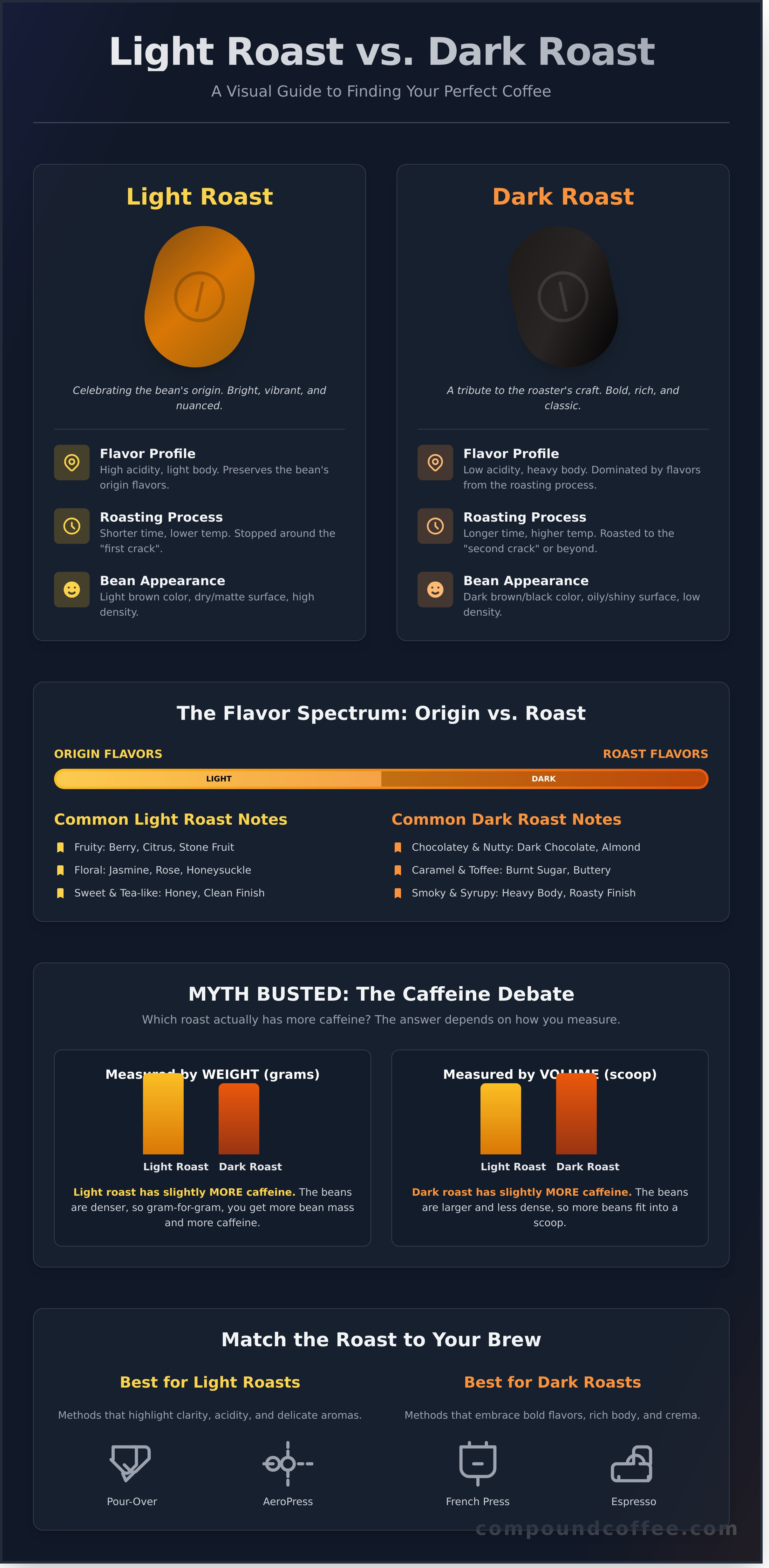
A light roast is all about celebrating the bean itself. We stop the roast just around or shortly after the first crack, using a lower temperature and shorter time. This delicate approach preserves the unique, intrinsic characteristics of the coffee's origin-its terroir, altitude, and processing method. The result is a cup with higher acidity, a lighter body, and vibrant notes that can range from fruity to floral.
What is a Dark Roast?
For a dark roast, we push the beans further into the heat, reaching the ‘second crack’ or even going slightly beyond. At these higher temperatures, the bean's original flavours are replaced by bold, rich notes created by the roasting process itself. The sugars caramelize deeply, developing flavours of dark chocolate, smoke, and nuts, resulting in a cup with a heavy body and low acidity. Want to see this transformation firsthand? Dive into our Ultimate Roasting Course.
Flavor & Aroma: The Battle of Origin vs. Roast
When we get into the heart of the light roast vs dark roast coffee explained debate, it all boils down to one thing: flavor. This is where you, the drinker, will notice the most profound difference. The core principle is a beautiful battle between origin and process. Think of it this way: a light roast is a celebration of the bean itself-its unique terroir, varietal, and processing. It’s about transparency. A dark roast, on the other hand, is a celebration of the roaster’s craft, where the intense heat transforms the bean, creating deep, rich flavors through complex chemical reactions. For those with a passion for the science behind the taste, exploring coffee's flavor chemistry reveals how the Maillard reaction and caramelization forge these distinct profiles. Your first clue? The aroma. A light roast might smell like a garden, while a dark roast smells like a bakery.
Tasting Notes of Light Roast Coffee
A light roast is your passport to the coffee’s origin. It’s an experience defined by brightness, vibrancy, and delicate nuances that are often lost in darker roasts. You'll discover a higher perceived acidity, but don't think of it as sour. Instead, imagine the pleasant, crisp tartness of a green apple or a juicy stone fruit. This acidity lifts the entire flavor profile, making the cup feel lively and clean on your palate.
Fruity: Notes of berry, zesty citrus, or sweet melon.
Floral: Delicate hints of jasmine, rose, or honeysuckle.
Sweet & Tea-like: Often possesses a honey-like sweetness and a refined, tea-like body.
Tasting Notes of Dark Roast Coffee
If light roasts are a journey to the farm, dark roasts are a deep dive into the heart of 'classic' coffee flavor. These beans are roasted longer, resulting in a bold, rich, and full-bodied cup that many people associate with their first coffee love. The roasting process mellows the bean's original acidity, creating a smoother, less sharp taste. The profile is dominated by the deep flavors developed from the caramelization of sugars.
Chocolatey & Nutty: Think dark chocolate, baker's cocoa, and roasted almond.
Caramel & Toffee: Rich, sweet notes of burnt sugar and buttery toffee.
Smoky & Syrupy: A heavy, syrupy body with a satisfying, often smoky, finish.
The Physical Differences: A Side-by-Side Analysis
Beyond the flavour in your cup, the coffee beans themselves offer a visual and tactile story of their journey. The roasting process is a passionate dance of heat and time, causing profound physical and chemical transformations that go far beyond taste. Understanding these changes is a core part of having the light roast vs dark roast coffee explained in a meaningful way. One of the most crucial changes is density; as beans roast longer, they lose moisture and expand, becoming less dense. This is why our community of coffee pros always measures beans by weight, not volume-a scoop of dark roast is significantly lighter than a scoop of light roast!
Appearance and Oil Content
The most immediate clue is colour. Light roast beans are a pale, cinnamon-brown with a dry, matte surface, retaining much of their original form. In contrast, dark roast beans range from a deep chocolate brown to nearly black, often glistening with a noticeable oily sheen. This isn't an additive; it's the coffee's natural lipids. During the intense heat of a long roast, these oils are forced from the bean's interior to its surface. In fact, scientific research on coffee bean color confirms a universal development curve, making colour a reliable indicator for roasters and curious coffee lovers alike.
Body and Mouthfeel
In coffee, 'body' refers to the weight and texture of the brew on your tongue-its mouthfeel. Think of the difference between sipping a light green tea versus a full-cream milk. A light roast typically possesses a lighter, more delicate body that feels clean and crisp on the palate. Dark roasts, having had more of their physical structure broken down, develop a heavier, fuller body. This creates a rich, lingering experience that coats your tongue with flavour.
Acidity Explained
When we talk about 'acidity' in specialty coffee, we're not talking about pH. It’s a prized quality that describes the bright, tangy "sparkle" that makes a coffee feel lively and vibrant. Light roasts are champions of acidity because the shorter roast time preserves the bean's inherent organic acids-the same kinds found in fruits. This results in those exciting notes of citrus or berry. As roasting continues, these delicate acids break down, which is why dark roasts have a much lower acidity, offering a smoother, deeper, and less tangy flavour profile.
Debunking the Myths: Caffeine, Strength, and Freshness
In the passionate world of coffee, myths can be as persistent as the aroma of a morning brew. But as a community dedicated to knowledge and experience, we believe in empowering you with facts over fiction. Let's tackle the most common misconceptions head-on, using clear science to settle the score. When the topic of light roast vs dark roast coffee explained comes up, these are the truths you need to know.
The Great Caffeine Debate: Which Roast Has More?
This is the big one, and the answer might surprise you: it depends entirely on how you measure your coffee. The roasting process itself burns off very little caffeine, but it dramatically changes the bean's physical properties.
Measured by Weight (Grams): Light roast coffee has slightly more caffeine. Why? Because light roast beans are denser. A 15-gram dose of light roast has more coffee mass and thus more caffeine than 15 grams of the less-dense dark roast.
Measured by Volume (Scoop): Dark roast coffee can have more caffeine. The beans expand and lose mass during roasting, so a scoop of dark roast beans may contain more individual beans than a scoop of light roast, potentially yielding a higher caffeine content.
The bottom line? The difference is minimal. You should always choose your roast based on the flavour profile you love, not for an imagined caffeine kick.
What Does 'Strong' Coffee Really Mean?
When someone says they like "strong" coffee, they're almost always talking about flavour, not caffeine. The term 'strong' has become synonymous with the bold, intense, and roasty notes characteristic of a dark roast. It’s a sensory description of bitterness and body, not a measure of stimulant content. A delicate, acidic light roast can be just as caffeinated, but it will never taste 'strong' in the traditional sense.
Roast Level and Freshness
Freshness is non-negotiable for great coffee, but roast level does affect shelf life. Dark roasts are characterized by the shiny, oily surface of the beans. While beautiful, these oils are exposed to oxygen and can oxidize and go rancid much faster, leading to a stale, bitter taste. This makes buying freshly roasted dark beans especially important.
Light roasts, with their oils largely locked inside the bean, have a longer shelf life after roasting. But don't wait too long-all coffee is at its peak within the first few weeks. True coffee passion is about savouring the best possible expression of the bean. Taste the difference with our range of freshly roasted coffee beans and experience what peak freshness truly means.
How to Choose: Matching the Roast to Your Brew
Now that we've explored the science and sensory details, it’s time to make this journey personal. Understanding the theory behind light roast vs dark roast coffee explained is one thing; applying it to your daily ritual is where the real joy of coffee comes alive. This guide will help you connect your unique taste and brewing setup to the perfect bag of beans.
Find Your Flavor Profile
Your palate is your best guide. Start by thinking about the flavours you already love, both in and out of coffee, to find your ideal starting point:
Choose Light Roast if you love: The bright, zesty notes of citrus, the delicate sweetness of stone fruit, or the complexity of a fine black tea. It's the perfect choice for the adventurous coffee drinker who enjoys discovering nuanced and surprising flavours.
Choose Dark Roast if you love: The comforting and classic taste of dark chocolate, toasted nuts, and caramel. If you’re looking for a bold, rich, and low-acidity cup that feels familiar and satisfying, dark roast is your go-to.
Choose Medium Roast if you love: The best of both worlds. It offers a harmonious balance of gentle acidity and developed sweetness, with a smooth body. It’s an incredibly versatile and approachable choice for any coffee lover.
Pairing Your Roast with the Perfect Brew Method
The equipment you use can dramatically highlight a roast's best qualities. To get the most from your beans, match your method to the roast level. Here’s a simple breakdown:
Light Roasts shine with: Pour-over methods like the V60, Aeropress, or Siphon. These techniques offer precision and control, allowing the delicate acidity and complex aromatics of the bean to take centre stage.
Dark Roasts are great for: French Press, Moka Pot, and traditional espresso. These methods use immersion or pressure to emphasize the coffee's rich body, bold flavours, and satisfying depth.
Medium Roasts are the all-rounders: They are forgiving and produce a fantastic cup in nearly any brewer, from automatic drip machines to a refreshing batch of cold brew.
Ready to unlock the full potential of your brew? Perfect your technique for any roast at one of our hands-on coffee classes and empower yourself with professional skills.
A Note on Espresso Roasts
Traditionally, espresso has been the domain of medium-to-dark roasts, prized for producing a rich, syrupy shot with a thick crema. However, the modern specialty coffee scene has embraced experimentation. It's now common to find progressive cafes pulling stunningly bright and fruit-forward espresso shots using light roasts. There is no single "correct" answer-it's a matter of style and preference. Whether you're a traditionalist or an adventurer, you can explore our curated selection of beans perfect for espresso to find your signature shot.
Embrace Your Flavor: The Final Word on Light vs. Dark Roast
Ultimately, the journey through coffee is a personal one. The debate isn't about crowning a winner, but about understanding the story each roast tells. Light roasts are a celebration of origin, preserving the bean's delicate floral, fruity, and acidic notes. Dark roasts are a testament to the transformative power of heat, creating bold, rich flavors of chocolate, nuts, and caramel. With the nuances of light roast vs dark roast coffee explained, you are now empowered to choose a coffee that truly speaks to your personal taste.
This passion for discovery is what drives us at Compound Coffee Co. As Singapore's hub for coffee experimentation, our expert roasters don't just sell beans-we share knowledge. We believe that an educational approach is key to elevating every coffee experience, helping you connect more deeply with every single cup you brew.
Ready to find your perfect roast? Explore our collection of freshly roasted beans.
Don't be afraid to experiment. The most rewarding cup is the one you haven't discovered yet. Happy brewing!
Frequently Asked Questions
Which has more caffeine, light or dark roast coffee?
This is one of the biggest myths in the coffee community! If you measure by the bean, light roast coffee actually has slightly more caffeine. The roasting process burns off a small amount of caffeine, so the longer a bean is roasted, the less caffeine it retains. However, because dark roast beans are less dense, a scoop of dark roast grounds may have more caffeine than a scoop of light roast. It's a small difference, but a fun piece of knowledge to empower your coffee journey.
Is dark roast coffee just burnt coffee?
Not when it's done with passion and skill! While a poorly executed dark roast can taste ashy or burnt, a masterfully crafted one is a totally different experience. The goal is to develop deep, rich flavours like dark chocolate, caramel, and nuts by carefully caramelizing the bean's natural sugars, not incinerating them. It’s about unlocking a different dimension of the coffee's potential, moving the flavour focus from the bean's origin to the artistry of the roast itself.
This distinction between a complex, smoky character and a simply burnt taste is crucial in many culinary fields, not just coffee. For instance, in the world of barbecue, experts know that the quality of the heat source is paramount; using premium natural hardwood from suppliers like Charcoal Kings is what separates a deliciously smoky flavor from a harsh, ashy one.
This same principle of masterful execution extends to the entire culinary world. Top restaurants, for example, build their reputation on perfecting every detail, from the main course to the final cup of coffee. It’s this dedication to a complete and high-quality experience that you'll find at renowned dining spots such as Cuisine Unplugged.
Why is my light roast coffee sour?
That "sour" taste you're experiencing is almost always a sign of under-extraction. This means the water didn't have enough time or ability to pull out all the delicious, sweet flavours from the coffee grounds. To fix this, you can experiment! Try grinding your beans a little finer to increase the surface area, or increase your brew time. This hands-on adjustment will help you achieve a balanced, sweet, and vibrant cup, unlocking the true potential of your light roast.
Can I use a light roast for my espresso machine?
Absolutely! Using a light roast for espresso is a fantastic way to experiment and push the boundaries of flavour. It will produce a very different shot from the traditional, chocolatey espresso you might be used to. Expect a brighter, more acidic, and often fruit-forward flavour profile that truly highlights the bean's origin. It’s a modern approach celebrated in many specialty cafes here in Singapore and a great way to experience the full spectrum of what coffee can be.
Which roast level is considered the healthiest?
While all coffee offers health benefits in moderation, light roasts often get the edge. This is because the shorter roasting time helps preserve more of the coffee bean's original chemical compounds, specifically chlorogenic acid, which is a powerful antioxidant. However, the most important factor is enjoying your coffee! Whether you prefer light or dark, you’re still getting a beverage packed with beneficial compounds. The best choice is the one that makes your daily coffee experience something you truly savour.
Why do specialty coffee shops prefer light to medium roasts?
Specialty coffee is all about celebrating the origin-the unique terroir, climate, and processing that make a bean special. Lighter roasts are a window into that story. They preserve the delicate floral, fruity, and nuanced flavours that are unique to each farm and the unsung heroes who work them. When the topic of light roast vs dark roast coffee explained comes up, it's about this philosophy: lighter roasts honour the bean's intrinsic character, while darker roasts showcase the roaster's craft.


Comments