

How to Choose The Right Roasted Coffee Beans For You
Ever stood in a cafe, staring at a shelf lined with beautiful bags of roasted coffee beans, and felt completely overwhelmed? The jargon alone-'single origin,' 'honey-processed,' 'roast date'-can feel like a secret language. You just want a delicious cup of coffee, but you're worried about spending your hard-earned money on a bag you might not even enjoy. We get it. That feeling of uncertainty is exactly what keeps so many people from discovering the incredible world of specialty coffee.
This guide is your personal coffee mentor. We believe that knowledge is empowerment, and we’re here to demystify the entire process. Together, we'll explore everything from roast levels and flavour notes to which beans sing in an espresso machine versus a V60. By the end, you won't just be buying coffee; you'll be confidently selecting the perfect beans for your unique taste, ready to craft a consistently amazing cup at home. Let's unlock your perfect brew.
Key Takeaways
Unlock maximum flavour by always checking the roast date on the bag-it's the single most important factor for a delicious cup.
Learn to decode the coffee label to understand how a bean's origin and processing method directly shape the taste in your cup.
Find your perfect flavour profile by understanding how the roast level-from light to dark-highlights different characteristics of the bean.
Elevate your home coffee by matching your chosen roasted coffee beans to your specific brewing method for the best extraction.
Table of Contents The Golden Rule: Why Freshness Is Non-Negotiable Decoding the Coffee Label: Origin, Process, and Variety Finding Your Perfect Roast Profile: Light, Medium, or Dark? Matching Beans to Your Home Brewing Method Your Journey Starts Here: How to Buy Your Next Bag
The Golden Rule: Why Freshness Is Non-Negotiable
When you begin your journey into the world of specialty coffee, you'll encounter a flood of information: origin, processing, varietals, and tasting notes. But before you get lost in the details, let's focus on the one factor that trumps all others: the roast date.
Think of coffee not as a shelf-stable pantry item, but as a fresh, artisanal product, much like fresh-baked bread or produce from a local market. The moment green coffee beans are roasted, a chemical transformation unleashes hundreds of aromatic compounds. This is the magic. But this magic is fleeting. The vibrant, complex flavours begin to degrade rapidly, and after just a few weeks, the coffee becomes a shadow of its former self-flat, lifeless, and generic.
This is why you must learn to distinguish between a 'roast date' and a 'best by' date. A roast date empowers you; it's a transparent declaration of when your coffee’s flavour journey began. A 'best by' date, often found on supermarket bags in Singapore, is a vague marketing term that can be months away, hiding the fact that the roasted coffee beans inside are already long past their peak.
What 'Freshly Roasted' Actually Means
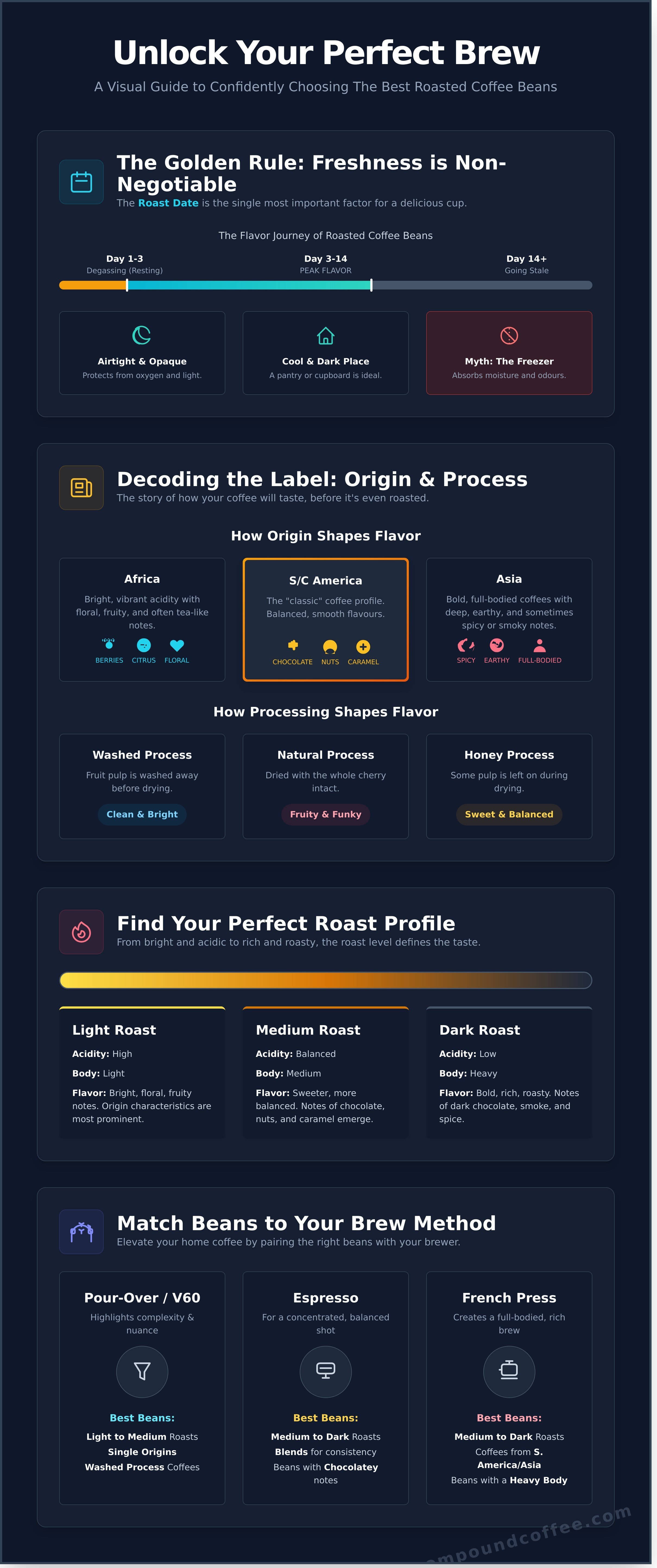
Peak flavour for most coffees typically falls between 3 and 14 days after the roast date. Why not day one? Because of a crucial process called 'degassing'. Immediately after roasting, beans release a significant amount of carbon dioxide. Brewing during this phase can lead to an uneven, sour-tasting cup. Giving your beans a few days to rest allows this gas to escape, resulting in a more balanced and delicious extraction experience.
How to Store Your Roasted Coffee Beans
You've invested in fresh beans-now, let's protect that investment. Proper storage is key to preserving those precious flavours for as long as possible. Follow these simple rules:
Use the Right Container: Store your beans in an airtight, opaque container. Exposure to oxygen and light are two of the fastest ways to make your coffee go stale.
Find a Cool, Dark Place: A pantry or cupboard is ideal. Keep them away from heat sources like your oven and direct sunlight from a window.
Bust the Freezer Myth: Please, don't store your coffee in the freezer! The porous, cellular structure of a roasted coffee bean means it will absorb moisture and freezer odours, ruining the taste.
Decoding the Coffee Label: Origin, Process, and Variety
Think of the information on a bag of specialty coffee not as a list of specs, but as the story of your brew. Before the roaster even applies heat, the inherent flavour of the roasted coffee beans is shaped by three key factors: where it was grown (origin), how it was handled after picking (process), and its genetic family (variety). Understanding these elements is the first step in your journey from a curious coffee drinker to a confident pro.
Much like terroir in wine, a coffee's origin imparts a unique signature. The soil, altitude, and climate all contribute to the final taste in your cup. In the world of specialty coffee, the focus is almost exclusively on the Arabica variety, celebrated for its complex aromatic and flavour profiles, a stark contrast to the bolder, more bitter Robusta species. Learning to read this story empowers you to select beans that perfectly match your taste, a crucial step before you even begin to think about your brewing method, a topic expertly covered in this National Coffee Association brewing guide.
Single Origin vs. Blends: Consistency or Adventure?
When you shop for coffee, you'll see two main categories. Single-origin coffees come from a specific farm, cooperative, or region, showcasing a distinct and traceable flavour profile unique to that place. Blends, on the other hand, are a curated mix of beans from different origins, crafted by the roaster to achieve a balanced, consistent, and reliable flavour. Your choice depends on your goal: choose blends for a dependable daily brew and single origins for a taste adventure.
How Origin Shapes Flavour: A World Tour in Your Cup
Different parts of the world produce coffees with distinct characteristics. While not a strict rule, here's a general guide to the world's main growing regions:
Africa (e.g., Ethiopia, Kenya): Expect bright, vibrant acidity with floral, fruity, and often tea-like notes. Think berries, citrus, and jasmine.
South/Central America (e.g., Brazil, Colombia): This is home to the "classic" coffee profile. Look for balanced, smooth flavours of chocolate, nuts, and caramel.
Asia (e.g., Indonesia, Sumatra): Known for bold, full-bodied coffees with deep, earthy, and sometimes spicy or smoky notes.
For a fantastic example of this profile, the premium, ethically sourced beans from Brazil offered by Café Delicioso are an excellent starting point for anyone who loves smooth, chocolatey notes.
A Simple Guide to Processing Methods
Processing is how the coffee cherry is removed from the seed (the bean). This step has a massive impact on flavour.
Washed Process: The fruit pulp is washed away before drying. This method creates clean, crisp flavours and highlights the bean's inherent acidity.
Natural Process: The entire cherry is dried intact, allowing the fruit to ferment around the bean. This results in intensely fruity, sweet, and often wine-like flavours.
Honey Process: A hybrid method where some, but not all, of the fruit pulp is left on during drying. It offers a beautiful balance of sweetness and clarity.
Finding Your Perfect Roast Profile: Light, Medium, or Dark?
The journey from a humble green seed to the aromatic, complex roasted coffee beans you brew begins with fire and artistry. Roasting is a transformative process where the roaster's skill unlocks the bean's potential. The crucial choice you make is the roast profile, which acts like a spotlight, deciding whether to illuminate the coffee's inherent origin flavours or the rich, deep notes created by the roast itself. Understanding this spectrum is the key to empowering your coffee experience and finding a cup you truly love.
Light Roasts: For the Adventurous Palate
If you're driven by curiosity and a desire to taste a coffee's unique origin story, light roasts are your gateway. These beans are dropped from the roaster just after the 'first crack,' preserving the delicate and complex notes of their terroir. They offer a vibrant and nuanced cup, a world away from 'classic' coffee flavour.
Characteristics: Bright, crisp acidity (think juicy fruit, not sourness), with prominent floral or fruity notes like bergamot, jasmine, or berries.
Appearance: A light, cinnamon-brown colour with a dry, non-oily surface.
Best For: Manual brewing methods like a V60 pour-over or filter coffee that highlight clarity and complexity.
Medium Roasts: The Balanced All-Rounder
Considered the 'sweet spot' by many, medium roasts offer a beautiful harmony between origin character and roasting notes. They are the perfect starting point for anyone beginning their specialty coffee journey. These versatile beans are roasted a bit longer, developing more sweetness and body while retaining a pleasant brightness.
Characteristics: A balanced and smooth profile with lower acidity than a light roast. Expect notes of caramel, milk chocolate, and roasted nuts, with a lingering sweetness.
Appearance: A rich, milk chocolate brown. Typically, the surface is still dry.
Best For: Almost any brew method! It's a fantastic, crowd-pleasing option for your daily drip coffee or Aeropress.
Dark Roasts: For Lovers of a Classic, Bold Cup
For those who crave a rich, intense, and powerful coffee experience, dark roasts deliver. Roasted until the 'second crack' or beyond, these beans showcase the flavours developed by the Maillard reaction and caramelization. The origin notes take a back seat to a bold, roasty character that many find comforting and familiar.
Characteristics: Low acidity, a heavy, syrupy body, and dominant bittersweet flavours like dark chocolate, smoke, and spice.
Appearance: A deep, dark brown, often with a glossy, oily sheen on the surface of the beans.
Best For: Espresso and French press, where the heavy body shines. These roasted coffee beans also stand up well to milk and sugar.
Matching Beans to Your Home Brewing Method
You’ve learned about origin, roast, and processing-now it’s time to bring it all together. Your home brewing method is the final, crucial step in the journey from farm to cup. Think of it as the lens that focuses the flavour of your coffee. Different methods extract oils, acids, and sugars in unique ways, so pairing the right roasted coffee beans with your brewer is essential for a stellar experience. Consider these our passionate recommendations, but never forget the most important rule: experimentation is key to discovering what you love.
Best Beans for Espresso Machines
Espresso is an intense extraction method that magnifies every flavour note, making balance paramount. Medium to dark roasts are often preferred as they deliver a rich, syrupy body and that beautiful, persistent crema. While single origins can be exciting, high-quality blends are popular for a reason-they are crafted specifically to produce a consistent and well-rounded shot that tastes amazing on its own or with milk.
Perfecting Your Pour-Over (V60, Chemex)
If you love exploring nuance and complexity, pour-over is your playground. This method highlights clarity, acidity, and delicate aromatics, producing a clean, almost tea-like cup. Light roast, single-origin beans truly shine here. To experience the bright, floral notes of an Ethiopian Yirgacheffe or the crisp acidity of a Kenyan, a V60 or Chemex is the perfect tool. Washed process beans, in particular, will yield an exceptionally clean and vibrant brew.
Choosing Beans for French Press & Cold Brew
These full-immersion methods are wonderfully forgiving and produce a bold, full-bodied, and rich brew. Because the coffee grounds are steeped directly in water, they develop deep sweetness and a heavy mouthfeel. This makes them a perfect match for medium to dark roasts from regions like the Americas or Indonesia, which are celebrated for their classic chocolatey, nutty, and earthy flavour profiles.
A Note on Grinding: Whole Bean vs. Pre-Ground
To truly empower your home brewing, the single best investment you can make is a quality coffee grinder. Coffee is an aromatic product, and it begins to lose its vibrant character within minutes of being ground as oxygen gets to work. Buying whole roasted coffee beans and grinding them right before you brew is the most effective way to preserve freshness and unlock the incredible flavour potential locked inside. It’s the game-changing step from good coffee to exceptional coffee.
Ready to put this knowledge into practice? Explore our curated selection of whole beans and start your next brewing adventure.
Your Journey Starts Here: How to Buy Your Next Bag
You've navigated the world of origins, processing methods, and roast levels. You are now equipped with the core knowledge to transform your daily coffee from a simple routine into a rich, rewarding experience. Choosing the right roasted coffee beans is no longer about guesswork; it's an exciting act of discovery. The journey boils down to three key pillars we've explored: the vibrant peak of Freshness, the personality of the Flavour Profile, and the science of your Brew Method.
At Compound Coffee Co., our mission is to empower you through knowledge. This guide isn't about rigid rules, but about providing a framework for your own coffee adventure. The goal is to remove any fear or hesitation and replace it with curiosity and confidence. To begin, simply start with a flavour you already know and love. If you enjoy dark chocolate, look for beans with nutty and chocolatey notes. If you prefer a crisp glass of juice, a bag with fruity, vibrant tasting notes is your perfect entry point.
Your Simple Buying Checklist
Walk up to any coffee bag with confidence. Here’s a simple, four-step checklist to guide your decision-making process in the moment:
1. Check the roast date. Is it within the last few weeks? Freshness is non-negotiable for incredible flavour.
2. Choose a flavour profile. Start with a broad category you enjoy: Bright & Fruity, Rich & Chocolatey, or a versatile Balanced profile.
3. Pick a roast level. Lighter roasts often highlight fruity acidity, while darker roasts develop deep, chocolatey notes. Match it to your chosen profile.
4. Consider your coffee maker. Are you brewing for espresso or filter? Ensure the bean's profile is well-suited to your equipment for the best extraction.
Explore and Experiment with Confidence
The world of specialty coffee is a community built on shared passion. Don't be afraid to talk to your local roaster or barista-we live to share recommendations and help you find a coffee you'll love. For a guided tour of different origins and profiles, consider a coffee subscription; it's a fantastic way to sample the vast spectrum of flavours without commitment.
Ultimately, remember this: the best coffee bean is the one you enjoy the most. Your palate is the final judge. Trust it, explore with an open mind, and have fun with the process. Your perfect cup is waiting to be discovered.
Ready to put your new knowledge into practice? Explore our curated selection of freshly roasted coffee beans and find your perfect match today.
Your Coffee Journey Starts Now
Armed with new knowledge, you're ready to move beyond the generic and find the coffee that speaks to you. Choosing the right roasted coffee beans is no longer a daunting task, but an exciting journey of personal taste. Remember the golden rules: always prioritize freshness, decode the label to understand a bean's story, and match the roast profile to your preferred brewing method. This is the secret to transforming your daily coffee ritual into a consistently remarkable experience.
You don’t have to take this next step alone. Here at Compound Coffee, we're more than just a roastery; we are a passionate community hub for coffee lovers across Singapore, dedicated to education and empowerment. Our purpose is built on fostering direct, intimate relationships with coffee producers, ensuring every bean we roast tells a story of quality and care. We're here to share that passion and knowledge with you.
Your perfect cup is waiting to be discovered. Take the leap and explore a world of flavour. Discover your next favourite coffee in our collection of freshly roasted beans.
Frequently Asked Questions About Roasted Coffee Beans
How long do roasted coffee beans stay fresh?
Roasted coffee beans are at their absolute peak between 7 to 21 days after the roast date. While they are safe to consume for months, their vibrant aromas and complex flavours begin to fade significantly after about four weeks. To preserve this precious freshness, always store your beans in an airtight container away from direct sunlight, heat, and moisture. Think of the roast date as a 'born on' date, not an expiry date-the fresher, the better the experience.
Should I buy whole bean or pre-ground coffee?
For the ultimate flavour experience, we always champion whole bean coffee. Grinding right before you brew unleashes a world of aromatic compounds that are lost within minutes of being ground. Pre-ground coffee offers convenience, but you trade away the vibrant and nuanced flavours that make specialty coffee so incredible. Investing in a quality grinder is the single biggest step you can take to elevate your home coffee game and truly honour the beans.
What do coffee 'tasting notes' like 'stone fruit' or 'caramel' actually mean?
Tasting notes are not added flavours, but the natural, inherent characteristics of the coffee itself, brought to life by the roasting process. Think of it like a wine having notes of cherry or oak. A coffee with 'stone fruit' notes might have a bright, juicy acidity reminiscent of a peach, while 'caramel' suggests a rich, sweet, and smooth body. These notes are our community's shared language to help you navigate the amazing diversity of coffee flavours.
Is expensive specialty coffee really worth the price difference?
Absolutely. That S$25 bag of single-origin coffee represents a powerful commitment to quality and ethics. The higher price supports fair wages for small-scale farmers, sustainable agricultural practices, and the meticulous care taken in every step of processing and roasting. This investment translates directly into a superior cup-one with incredible clarity, complexity, and a story you can taste. It’s an experience that empowers everyone from the farm to your cup.
What's the main difference between Arabica and Robusta beans?
The key differences are in flavour, caffeine, and growing conditions. Arabica beans, which dominate the specialty market, are celebrated for their bright acidity and complex aromatic profiles, with notes from floral to fruity. Robusta is a hardier plant with nearly double the caffeine content. It delivers a bolder, more intense flavour often described as rubbery or chocolatey, and is prized in traditional espresso blends for the thick, stable crema it produces.
Can I use espresso beans for filter coffee, and vice versa?
You absolutely can! "Espresso beans" are simply roasted coffee beans with a profile developed to shine under the high pressure of an espresso machine-often roasted slightly darker for more body. Using them for filter coffee might create a heavier, less nuanced brew. Conversely, using a light-roast filter coffee for espresso can yield a very bright, acidic shot. We encourage you to experiment! It’s the best way to develop your palate and discover what you love.


Comments