

Columbus Coffee Co. and Beyond: A Guide to Singapore's Specialty Coffee Scene
- carmel.soon
- Mar 24
- 15 min read
Updated: Apr 5
What if the complex jargon on your bag of beans isn't meant to gatekeep, but to invite you into a deeper story? We've all stood in front of a cafe menu feeling a bit lost between terms like "anaerobic process" and "altitude" while just wanting a solid caffeine fix. Whether you're queuing for a weekend brunch at columbus coffee co or trying to decode a label at your local roaster, the sheer volume of choices in Singapore can feel overwhelming. It's completely normal to feel like you're missing out on the "right" way to taste your brew when every individual perceives flavor differently.
You deserve to feel empowered in your coffee journey, and we're here to help you bridge the gap from a passive drinker to a confident home brewer. In this guide, we'll explore what makes our local scene so vibrant, from the bustling atmosphere of spots like Columbus Coffee Co. to the technical craft happening behind the roasting drum. We'll show you how to identify profiles you actually enjoy and why we choose to highlight the bean's natural sweetness rather than offering dark roasts. We're diving into the artistry of the bean so you can turn your kitchen into your favorite specialty cafe.
Key Takeaways
Explore why Upper Thomson has become a pilgrimage site for enthusiasts and how cafes like columbus coffee co helped pioneer Singapore's specialty coffee and brunch culture.
Demystify the "specialty" label by understanding the 80-point grading scale and how traceability empowers the unsung heroes at the farm level.
Understand the philosophy behind light and medium roasts, which focus on preserving a bean’s natural terroir rather than the heavy bitterness found in dark roasts.
Get started with home brewing using simple guidelines on bean freshness and grind consistency, while exploring the flavors that best suit your unique palate.
Discover how to transition from a customer to a community member in a space that celebrates shared learning, experimentation, and the joy of discovery.
Table of Contents Exploring the Upper Thomson Coffee Hub: The Columbus Coffee Co. Experience What is Specialty Coffee? Decoding the Craft in 2026 The Roaster's Perspective: Why We Choose Light and Medium Roasts Bringing the Cafe Experience Home: A Beginner’s Brewing Guide Beyond the Cup: Joining the Singapore Coffee Community
Exploring the Upper Thomson Coffee Hub: The Columbus Coffee Co. Experience
Upper Thomson Road has transformed into a weekend pilgrimage site for Singapore's caffeine seekers. While the area was once known primarily for late-night prata, the arrival of specialty pioneers around 2014 changed the neighborhood's DNA. Since opening its doors in 2018, columbus coffee co has played a central role in this evolution. They didn't just bring another brunch menu to the strip; they helped bridge the gap between casual diners and serious coffee hobbyists. This shift turned a suburban road into a competitive arena where quality is the only way to survive.
This passion for authentic craft isn't limited to coffee. After a day of exploring the cafe scene, many look for equally compelling dining experiences. For those interested in the rich traditions of North Indian and Indian-Chinese cuisine, Copper Chimney is another must-visit destination in Singapore's diverse culinary landscape.
Walking into the space, you'll notice a distinct balance between a high-energy 'cafe vibe' and a focused 'coffee lab' environment. The former is characterized by the clatter of plates and the constant hiss of the steam wand, while the latter emerges at the filter bar where baristas meticulously measure every gram. Understanding what is specialty coffee helps you appreciate this effort; it refers to beans scoring 80 points or higher on a 100-point scale. At columbus coffee co, this quality is translated into a menu that encourages you to move beyond your standard latte. Transitioning to single-origin brews is a journey of discovery. You might start with a creamy 'White' coffee, but the real magic happens when you try a black filter coffee that tastes like blueberries or Earl Grey tea rather than just 'bitter'.
What to Look for in a Singapore Specialty Cafe
Quality isn't accidental. When you enter a shop, look at the bean display. Bags should clearly state the roast date. We recommend consuming beans within 14 to 45 days of roasting for the best flavor profile. Observe the barista's workflow; are they weighing every dose? Precision leads to consistency. At Compound Coffee Co., we focus on light to medium roasts to preserve these delicate fruit notes. You won't find dark roast coffee in our selection because high heat often masks the unique characteristics of the bean's origin. We want you to taste the farm, not the roaster.
Subjectivity in Taste: Why Your Favourite Cup is Unique to You
Taste is a personal conversation between the coffee and your palate. One person might find a Kenyan coffee's bright acidity refreshing, while another perceives it as too sharp. Neither person is wrong. We believe there is no single 'best' cup in Singapore. There's only the cup that resonates with you today. Your mood, the weather, and even what you ate for breakfast can change how you perceive sweetness and body. We encourage a humble approach to tasting. If you find a cup delicious, then it's good coffee. Our goal is simply to provide the knowledge that helps you identify why you like what you like, empowering you to explore new origins with confidence. Whether it is a S$6.50 espresso or a S$12.00 hand-brew, your preference is the final authority.
What is Specialty Coffee? Decoding the Craft in 2026
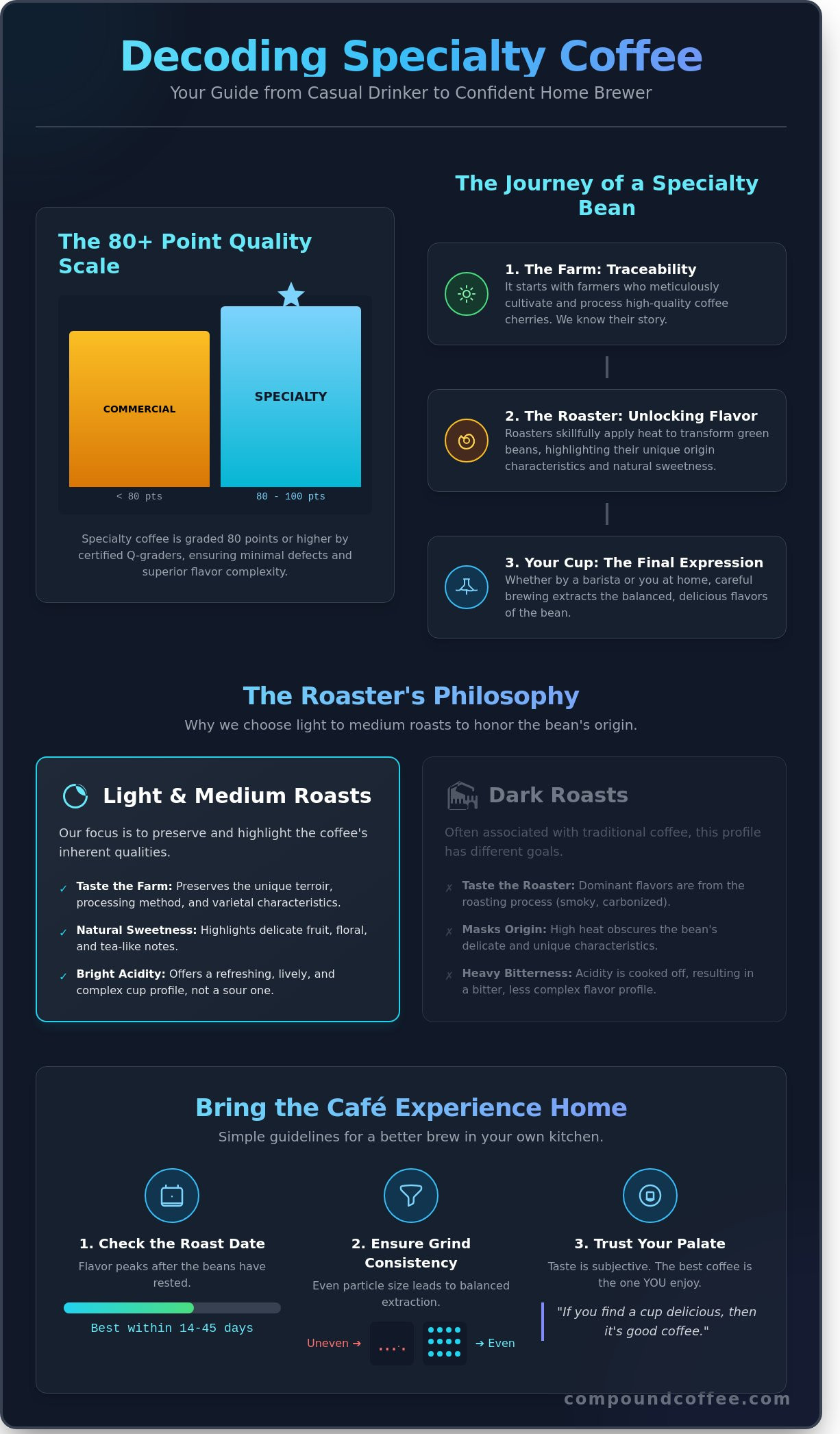
Specialty coffee represents the top tier of global production. It's defined by a rigorous grading system where beans must score 80 points or higher on a 100-point scale. Certified tasters, known as Q-graders, evaluate these beans for physical defects and sensory complexity. By 2026, the Singapore coffee scene has evolved far beyond simple caffeine fixes. Enthusiasts now seek transparency. They want to know exactly which farm grew the beans and how the farmers were compensated. This focus on traceability ensures that the Third Wave movement continues to empower the unsung heroes of the industry, the producers themselves.
When you visit a high-quality establishment like columbus coffee co, you're tasting the result of a long, careful journey. This journey starts with soil health and ends with the barista's technique. However, it's vital to remember that specialty coffee is a guideline for quality. It isn't a rigid set of rules you must follow. Your personal enjoyment is the ultimate metric. If a coffee scores 90 points but you don't enjoy the high acidity, that's perfectly okay. Taste is entirely subjective. Individuals perceive flavors differently based on their own experiences and biology.
The Role of the Roaster in the Coffee Ecosystem
The roaster acts as a bridge between the farmer's hard work and your morning cup. Roasting transforms green, grassy seeds into the aromatic beans we recognize. This process involves carefully managing heat and airflow to unlock the bean's inherent soul. You can dive deeper into the science of coffee roasting to understand how different roast levels impact chemical acidity and flavor development.
In Singapore's 2026 market, the distinction between commercial and specialty roasting is clear. Commercial roasters often use massive machines to produce consistent, dark, and oily beans at scale. Specialty roasters prefer small-batch methods. This allows for better control over the specific flavor profile of each harvest. At Compound Coffee Co., we choose not to offer dark roast coffee. We believe heavy roasting masks the unique characteristics of the origin. By sourcing quality roasted beans from small-batch roasters, you directly support a more sustainable and ethical coffee ecosystem for small farmers and their families.
Understanding Flavour Profiles Without the Snobbery
You might see bags of coffee from columbus coffee co or other local roasters listing notes like blueberry or milk chocolate. These aren't added syrups. They're natural aromatic compounds found within the bean. To help you navigate these without the snobbery, it helps to look at the processing methods used at the farm:
Washed: The fruit is removed before drying. This usually results in a clean, bright, and floral cup.
Natural: The fruit dries on the bean. This often creates intense, funky, and berry-like flavors.
Honey: Some fruit flesh is left on during drying. This typically produces a balanced sweetness and a creamy mouthfeel.
You don't need a golden tongue to enjoy these complexities. Start by noticing if a coffee feels heavy or light in your mouth. Is it tart like a lemon or sweet like a caramel? There are no wrong answers in your discovery. We invite you to browse our latest seasonal arrivals and start your own flavor journey at your own pace.
The Roaster's Perspective: Why We Choose Light and Medium Roasts
At Compound Coffee Co., we view roasting as a process of development rather than a way to impose flavor onto a bean. Our philosophy centers on highlighting the inherent characteristics that a specific lot of coffee carries from its origin. When you visit a local specialty hub like columbus coffee co, you expect to taste the work of the farmer and the unique soil of the region. We focus exclusively on light and medium roasts to preserve this terroir. Roasting is a delicate dance between heat and time; our goal is to stop the process before the sugars turn to carbon.
We've made a firm decision not to sell dark roast coffee. While many commercial brands use dark roasting to hide defects in low-quality beans, we believe this masks the very qualities that make specialty coffee exciting. Charred or "roasty" flavors are generic. They taste the same regardless of whether the bean came from Ethiopia or Brazil. By avoiding the "dark roast" profile, we ensure that the floral, fruity, and complex notes remain the star of your cup. We recognize that everyone perceives taste differently, so we offer these profiles as a starting point for your own sensory journey.
The roast level you choose will naturally influence your brewing setup. Lighter roasts are denser and require more energy to extract. We recommend using water temperatures between 93 and 96 degrees Celsius for light roasts to pull out those vibrant acids. Medium roasts are slightly more porous, making them excellent for a balanced espresso or a syrupy V60. Since our launch in 2014, we've found that these guidelines help brewers find their personal "sweet spot" without feeling restricted by rigid rules.
The Science of the Roast: Guidelines for the Curious
Understanding the "First Crack" is essential for anyone interested in the technical side of coffee. This event occurs around 196 degrees Celsius when moisture inside the bean turns to steam and breaks through the cell walls. It sounds like popcorn popping in the roaster. This milestone marks the beginning of the development phase where we balance acidity and sweetness. The Specialty Coffee Association emphasizes that maintaining quality at this stage is vital for a high cupping score. If you want to see the data behind our heat curves, feel free to explore our ultimate roasting introduction for a deeper dive.
Experimentation: The Heart of Our Roastery
We treat our Singapore facility as a living lab. We don't believe in a "perfect" roast that stays fixed forever. Instead, we view every batch as a constant experiment. We often co-create profiles with our community, taking feedback from home baristas and professionals at places like columbus coffee co to push the boundaries of what a bean can do. Some of our most popular profiles were "accidental" triumphs where a slight adjustment in airflow revealed a flavor note we hadn't seen before. We encourage you to experiment at home too. Try a recipe that seems "wrong" or a temperature that feels too low. You might just discover a new favorite way to drink your morning brew.
Specialty coffee in Singapore has evolved rapidly over the last 10 years. We've seen a 40 percent increase in home brewers investing in high-end grinders to better experience these light roast profiles. Whether you are spending S$3.50 on a quick filter coffee or S$80 on a rare Gesha, the focus remains the same: empowering you to trust your own palate. We're here to provide the tools and the beans, but the final discovery is yours to make.
Bringing the Cafe Experience Home: A Beginner’s Brewing Guide
Brewing at home shouldn't feel like a rigid chemistry experiment; it's an invitation to explore. While places like columbus coffee co showcase the peak of professional service, you can replicate that magic in your own kitchen with a few foundational shifts. At Compound Coffee Co., we view ourselves as your partners in this journey, offering guidelines rather than strict rules because we know every palate perceives sweetness and acidity differently.
Step 1: Prioritize Freshness. Always check the roast date on your bag. Coffee is a perishable agricultural product that usually peaks between 7 and 21 days after roasting. We focus exclusively on light to medium profiles to preserve the bean's unique origin stories; you won't find dark roast coffee in our selection because we believe heavy charring masks the very flavors we work so hard to source.
Step 2: Get a Burr Grinder. Consistency is the secret to a clean cup. Blade grinders shatter beans into uneven boulders and dust, leading to a muddy taste. A reliable entry-level manual burr grinder in Singapore costs roughly S$80 to S$120 and will immediately elevate your morning routine.
Step 3: Mind Your Water. Since a cup of coffee is about 98% water, the quality matters. Singapore’s tap water is safe and high quality, but the chlorine can sometimes flatten the delicate floral notes of a high-altitude Ethiopian lot. Using a simple charcoal filter pitcher makes a noticeable difference.
Step 4: Master the 1:15 Ratio. Use a digital scale to measure 15g of coffee for every 225g of water. This 1:15 ratio is a fantastic starting point for most methods, providing a balanced strength that allows you to identify specific tasting notes.
Step 5: Document and Experiment. Keep a small notebook by your kettle. Write down your grind size, water temperature, and how the coffee tasted. Don't fear a "bad" cup; every failure is just data that helps you understand what your specific taste buds enjoy.
Choosing Your Method: V60, Aeropress, or Espresso?
Your choice of equipment depends on the texture and clarity you prefer. Many enthusiasts find that filter coffee via a Hario V60 is the most rewarding way to discover tea-like, floral complexities. If you enjoy a heavier body and a more forgiving process, the Aeropress is a versatile tool used by professionals and travelers alike. Home espresso is a beautiful, challenging hobby that requires a higher investment in gear, but it offers the ultimate reward for those who love the intensity of a concentrated shot like those served at columbus coffee co.
Adjusting for Your Palate
Taste is entirely subjective, so don't let anyone tell you that you're "wrong" about what you're drinking. If your brew tastes unpleasantly sour or salty, it's likely under-extracted. Try using a finer grind or hotter water next time to pull more flavor out. If the coffee feels dry, ashy, or overly bitter, it's over-extracted. Coarsening your grind or slightly lowering your water temperature will often fix this.
These adjustments are merely suggestions to help you find your "sweet spot." We embrace the fact that everyone experiences flavor through a different lens. Whether you prefer a bright, citrusy spark or a smooth, chocolatey finish, the goal is your personal satisfaction.
Ready to start your home brewing adventure? You can explore our latest seasonal roasts to find the perfect beans for your next cup.
Beyond the Cup: Joining the Singapore Coffee Community
Stepping into the world of specialty coffee often begins with a single, memorable cup at a local favorite like columbus coffee co. However, for many Singaporeans, that initial spark of curiosity leads to a deeper desire to understand the science and heart behind the brew. The transition from being a customer to becoming a "coffee maker" is a transformative journey. It's about moving away from seeing coffee as a simple caffeine delivery system and viewing it as a complex, living craft that connects you to people across the globe. This shift empowers you to take control of your morning ritual, turning a routine task into a moment of genuine discovery and personal expression.
This journey of discovery isn't limited to what's in your cup. The same appreciation for craft and personal style can be found in other local establishments; for those looking to explore another form of artistry, you can discover Stellar SG and their premium services.
In Singapore’s vibrant coffee scene, community-focused spaces do more than just serve drinks; they act as incubators for passion and professional growth. When we share knowledge openly, we embrace the "Rising Tide" philosophy. This belief suggests that by elevating the skills of every home enthusiast and professional, the entire industry grows stronger. We don't see coffee as a set of rigid, dogmatic rules. Instead, we view our methods as a collection of guidelines designed to help you explore your own palate. Since every individual perceives taste differently, there's no single "correct" way to brew. Our goal is to provide the platform and tools so you can decide what tastes best to you, fostering a welcoming environment for everyone.
Empowerment comes through experimentation. By understanding the variables of extraction, you gain the freedom to tweak your recipe until it perfectly matches your preference. This community-driven approach ensures that knowledge isn't gatekept by "experts" but is instead a shared resource that helps everyone from the casual drinker to the aspiring barista find their voice in the craft.
Mastering the Craft with Hands-On Workshops
If you're looking to accelerate your journey, enrolling in a professional coffee class is the fastest way to build genuine confidence. These sessions bridge the gap between watching a video and actually feeling the tactile response of a puck being tamped. We offer levels ranging from "Barista Basics" to advanced roasting, ensuring a fit for your current experience. Learning in a group environment is particularly valuable because it highlights the subjectivity of flavor. Comparing your perceptions with others helps you broaden your sensory vocabulary and understand why we focus on light to medium profiles rather than Dark Roast Coffee.
The Future of Coffee: Community and Sustainability
The future of the Singaporean coffee scene relies on transparency and direct relationships. When you support local roasters who prioritize ethical sourcing, you're directly impacting the lives of small farmers and their families. We believe in an intimate relationship with producers, often facilitating farm trips that change how you value your cup. This journey isn't just about dialing in an espresso at columbus coffee co; it's about being part of a movement that values people as much as the product. We invite you to join this exploration at Compound Coffee Co., where your curiosity is the only prerequisite for the next step in your coffee journey.
Your Personal Path to the Perfect Brew
Singapore's specialty landscape has transformed since we launched as a dedicated roastery in 2014. Whether you're navigating the bustling Upper Thomson hub to visit columbus coffee co or dialing in a new recipe at home, remember that your palate is the final authority. We've spent nearly a decade building direct relationships with small-scale farmers to bring you diverse profiles, yet we know that taste remains deeply personal. Individuals perceive flavors differently; there's no single right way to enjoy a cup. This belief is why we skip dark roasts entirely, focusing instead on light and medium profiles that let the bean's origin speak for itself.
If you're eager to sharpen your skills, our community workshops offer hands-on learning for all levels. We provide the guidelines, but you bring the curiosity. From understanding the craft of specialty coffee to mastering home brewing, the goal is empowerment through discovery. Grab a bag, try a new technique, and see where your senses take you. Explore our latest seasonal roasts and start your coffee journey today. We can't wait to see what you discover in your next cup.
Frequently Asked Questions
Is Columbus Coffee Co. related to Compound Coffee Co.?
Columbus Coffee Co. is an independent specialty cafe and is not the same entity as Compound Coffee Co. While both brands are part of the vibrant Singapore coffee community, we operate with different focuses. You'll find their team at 220 Upper Thomson Road; meanwhile, we act as a roasting and education hub. The columbus coffee co brand has its own unique menu and atmosphere for you to explore.
What is the best way to brew specialty coffee at home for a beginner?
Starting with a Hario V60 or a simple French Press is often the most accessible entry point for home brewing. We suggest a starting ratio of 60 grams of coffee per 1 litre of water, but since taste is deeply personal, you should adjust this to find what you love. There's no single right way to brew. Experimenting with your grind size and water temperature is the fastest way to go from a beginner to a confident home barista.
Why don't some specialty roasters offer Dark Roast coffee?
We don't currently sell Dark Roast coffee at Compound Coffee Co. because our roasting philosophy focuses on highlighting the natural, intrinsic flavors of the bean. Roasting past a certain point often replaces these delicate notes with charred or smoky characteristics. While research suggests 40% of coffee drinkers prefer a heavier profile, our mission is to showcase the vibrant acidity and sweetness found in lighter roast levels. It's all about exploring the natural potential of the farm's hard work.
How long do roasted coffee beans stay fresh?
Roasted beans typically reach their peak flavor between 7 and 21 days after the roast date marked on the bag. After 30 days, the aromatic compounds begin to dissipate, though the coffee is still perfectly safe to drink. We recommend buying smaller quantities more frequently to ensure you're always enjoying the most vibrant experience possible. Storing your beans in an airtight container away from direct Singapore sunlight helps maintain that freshness for longer.
Do I need expensive equipment to enjoy specialty coffee?
You don't need to spend thousands of dollars on high-end gear to enjoy a fantastic cup of specialty coffee at home. A basic setup consisting of a S$15 plastic dripper, a decent hand grinder, and a standard kitchen scale is more than enough to start your journey. The most important factor is the quality of the beans and your willingness to experiment with the process. Great coffee is about the ritual and the discovery; it's not about the price tag of your machine.
What is the difference between single-origin coffee and a blend?
Single-origin coffee comes from one specific farm or region, while a blend combines beans from multiple locations to create a specific flavor profile. We often use single-origins to showcase the unique characteristics of a single place, like a specific lot from Ethiopia. Blends are great for providing a consistent, balanced taste that works well with milk. Since individuals perceive taste differently, you might find you prefer the complexity of a blend one day and the clarity of a single-origin the next.
Can I learn to roast my own coffee in Singapore?
Yes, you can join our hands-on roasting workshops at our Singapore facility to learn the art and science of transforming green beans. Our 3-hour Roasting Foundation sessions provide a platform for you to use professional equipment and understand how heat affects flavor. We've helped over 500 enthusiasts and aspiring professionals start their roasting journey since 2014. It's a great way to deepen your connection to the beans and take control of your coffee experience.
How do I know if I will like a specific coffee bean before buying?
The most reliable way to know if you'll like a coffee is to try a small sample or attend a guided tasting session. Tasting notes are just a guideline; individuals perceive taste differently based on their own experiences. Don't be afraid to ask for recommendations. If you're visiting a shop like columbus coffee co, the baristas can often describe the flavor profile to see if it matches your personal preference before you commit to a bag.


Comments