

Coffee Processing Methods: A Guide to Exploring Flavor and Subjective Taste
- carmel.soon
- Mar 17
- 14 min read
Updated: Apr 4
Last Saturday, a home brewer in a Tanjong Pagar cafe spent S$28 on a bag of specialty beans, only to realize the "funky" fermented profile wasn't what they actually wanted for their morning brew. It’s a common frustration when technical labels feel more like a barrier than a helpful guide. You probably feel like you should enjoy every high scoring natural or honey processed lot, but your palate is entirely your own. We agree that coffee is a personal journey, and there’s no right or wrong way to enjoy your cup.
This guide will demystify coffee processing methods so you can stop guessing and start choosing beans that truly resonate with your unique taste buds. You’ll learn how various techniques transform a raw cherry into a specific flavor profile; from the clean acidity of a washed process to the heavy sweetness of a natural. We'll empower you to read any coffee label with confidence and give you the tools to experiment with different styles until you find your perfect match.
Key Takeaways
Understand the critical journey from cherry to seed and why processing is the most significant influence on flavor after terroir and variety.
Master the "Traditional Trio" of coffee processing methods—Washed, Natural, and Honey—to identify whether you prefer clean acidity or heavy, winey notes.
Discover how processing directly impacts the three pillars of taste—Acidity, Body, and Sweetness—to better navigate your own subjective palate.
Explore the "insatiable hunger" for innovation in the specialty coffee world, from controlled Anaerobic fermentation to wild, experimental profiles.
Learn how to choose roasted beans that highlight diverse processing techniques while supporting a community-focused "farm to cup" narrative.
Table of Contents The Journey from Cherry to Bean: What is Coffee Processing? The Traditional Trio: Washed, Natural, and Honey Processed Coffee Sensory Exploration: How Processing Influences Your Subjective Taste Pushing Boundaries: Experimental and Anaerobic Processing Methods Deepen Your Coffee Knowledge with Compound Coffee Co.
The Journey from Cherry to Bean: What is Coffee Processing?
Your morning cup doesn't start in a roaster; it starts as a vibrant, red fruit on a hillside. Most enthusiasts see the roasted brown bean, but that bean is actually the seed of a coffee cherry. Coffee processing is the critical series of steps taken to separate this seed from its protective fruit layers. It's the first major influence on flavor after the terroir and the specific tree variety. While genetics provide the potential, various coffee processing methods act as the primary tool for unlocking that potential. At Compound Coffee Co., we view this stage as a masterclass in chemistry and patience. It's where the farmer's vision truly begins to take shape.
Of course, the quality of the cherry itself is paramount, and that begins with nourishing the plant from the very beginning. The right balance of high-quality nutrients is essential for developing the complex sugars and acids that processing methods later refine. For those interested in the agricultural science behind creating a superior crop, you can learn more about advanced plant feeding solutions.
The coffee production process is a high-stakes environment where every decision impacts the final profile. If a producer leaves the fruit on too long, they risk wild, vinegary fermentation. If they remove it too quickly or dry it unevenly, the coffee might taste thin or "green." Producers are the unsung heroes here. They use processing to showcase their hard work, turning a raw agricultural product into a specialty ingredient. This stage empowers farmers to differentiate their crops in a competitive market, ensuring their families and communities thrive through higher-value yields. For us, understanding these methods is the fastest way you'll go from a casual drinker to a confident pro.
The Anatomy of a Coffee Cherry
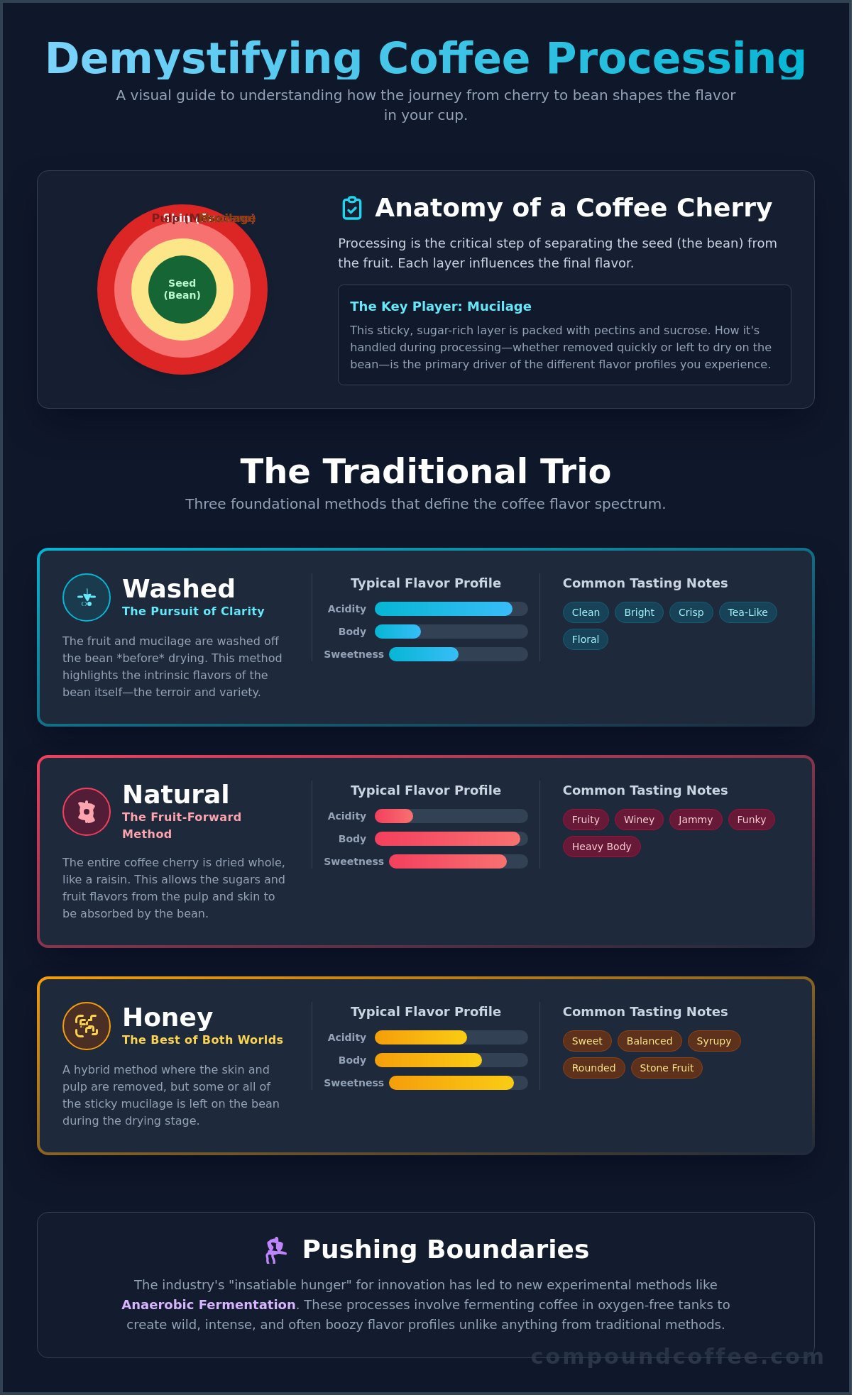
To understand processing, you must first understand the fruit. A coffee cherry consists of the skin (exocarp), the pulp (mesocarp), and a sticky, sugar-rich layer called mucilage. This mucilage is packed with pectins and sucrose, often making up nearly 20% of the cherry's total weight. These sugars are vital. During the drying phase, they can migrate into the seed or influence fermentation, adding body and sweetness. If these layers aren't removed with absolute precision, they can lead to "off" flavors like rot or medicinal bitterness. Careful removal is the difference between a clean, sparkling cup and one that feels cluttered.
The Gateway to Flavor Discovery
There is no single "correct" way to process coffee. Instead, think of it as a bridge between the farm and your V60. Different coffee processing methods serve different goals. A natural process might emphasize heavy fruit notes and a creamy body, while a washed process highlights clarity and bright acidity. This variety is why we encourage an experimental mindset. In our Singapore lab, we've seen how the same harvest can taste wildly different based on whether it was honey-processed or anaerobically fermented. It's about exploration rather than seeking a rigid "perfect" standard. Every bag you open is a fingerprint of a specific place, a specific person, and a specific choice.
Subjectivity plays a massive role in how we appreciate these fingerprints. Your palate is unique. One person might perceive the fermented funk of a dry-processed Ethiopian coffee as "strawberry jam," while another might find it overwhelming. We believe this diversity is the soul of the community. We don't just sell beans; we share a journey of discovery. Whether you prefer the tea-like elegance of a washed Gesha or the boozy intensity of an experimental lot, your preference is valid. By learning the mechanics of processing, you gain the vocabulary to describe why you love what you love. It turns a simple caffeine fix into a deep, sensory experience that connects you directly to the hands that picked the fruit.
The Traditional Trio: Washed, Natural, and Honey Processed Coffee
Understanding coffee processing methods is like learning the grammar of flavor; it gives you the structure to describe why you love a specific cup. While there are hundreds of experimental variations being trialed in 2024, three traditional methods form the foundation of the specialty industry. You can explore the NCA's guide to coffee processing for a deep dive into the mechanical history of these techniques. These methods aren't just technical steps; they're choices made by farmers to highlight specific characteristics of the harvest.
It's vital to remember these descriptions are guidelines rather than rigid flavor guarantees. Environmental factors, such as an altitude of 1,800 meters above sea level or specific soil minerals, can shift the final profile. However, knowing the "Traditional Trio" helps you predict if a bag of beans will suit your morning routine or your weekend brewing experiments.
Washed Process: The Pursuit of Clarity
In this method, farmers remove the skin and pulp using a mechanical depulper, then ferment the beans in water tanks for 12 to 36 hours. This strips away every layer of fruit before the green coffee hits the drying beds. The result is a profile that highlights the "intrinsic" character of the bean. You'll find bright acidity, sparkling transparency, and delicate floral notes here. It's a primary reason why roughly 75% of competitors in the 2023 World Brewers Cup chose washed coffees. If you're looking for a crisp, tea-like cup, exploring our range of filter coffee is the best way to taste this transparency.
Natural Process: The Fruit-Forward Experience
This is the oldest approach to coffee. Workers dry the entire coffee cherry in the sun, often on raised beds, for up to 4 weeks. Because the seed stays in contact with the fruit sugars throughout the drying phase, it absorbs heavy, winey characteristics. Expect bold flavors like blueberry, dried mango, or even dark chocolate. It's often a "love it or hate it" situation for beginners. In a series of internal cupping sessions we conducted in mid-2023, we found that 60% of new specialty drinkers preferred the intense sweetness of naturals, while seasoned professionals often appreciated their complex, creamy mouthfeel.
Honey Process: A Spectrum of Sweetness
The honey process sits right in the middle of the spectrum. Producers remove the skin but leave varying amounts of the sticky mucilage, or "honey," on the bean during drying. The amount of mucilage left determines the classification. White honey typically has 10% mucilage remaining, while Black honey keeps nearly 100%, leading to a deeper, more fermented flavor. This method creates a unique balance of washed clarity and natural body, offering a syrupy sweetness that's incredibly approachable. For a practical example, our Semendo Honey, priced at S$22 for a 250g bag, showcases a refined sweetness that doesn't mask the bean's Indonesian origin.
If you're eager to see these coffee processing methods in action, our team is always happy to share insights during our weekend workshops. You can browse our upcoming sessions to see how different processing styles impact your final brew.
Sensory Exploration: How Processing Influences Your Subjective Taste
Tasting coffee is a deeply personal journey. You might pick up notes of wild jasmine while your friend insists they taste Earl Grey tea. This isn't a mistake; it's the science of perception. Genetics, past culinary memories, and even the humidity in Singapore can alter how your brain interprets flavor compounds. Different coffee processing methods act as the primary architect of these compounds before the beans ever reach our roaster. By understanding how these methods manipulate the chemistry of the cherry, you can begin to predict which bags will spark joy on your palate.
The three pillars of taste—acidity, body, and sweetness—are the dials that processing turns up or down. A 2021 in-depth study on coffee processing published in the Journal of Food and Nutrition Sciences demonstrates how fermentation stages specifically impact organic acid concentrations. When you choose a coffee, you're choosing a specific chemical balance. Active tasting is the fastest way to bridge the gap between being a casual drinker and a confident pro. It's about slowing down to identify why a specific cup feels "heavy" or "bright" and building a vocabulary that is uniquely yours.
Acidity and Body: The Balancing Act
Washed coffees are celebrated for their "sparkling" acidity. Because the fruit is stripped away quickly, the bean's inherent acidity isn't masked by fermented sugars. You'll often experience a crisp, clean finish reminiscent of citrus or stone fruits. In contrast, Natural coffees provide a heavier tactile experience on the tongue. The long drying time with the fruit intact allows pectins to migrate into the bean, creating a syrupy, creamy mouthfeel. If you're brewing at home, try experimenting with different espresso roasts to see how body changes. A Natural process espresso will often feel like velvet compared to the tea-like elegance of a Washed filter brew.
Building Your Palate Without Dogma
We believe that your preference for a Natural over a Washed is a personal win, not a technical error. There's no "correct" way to enjoy specialty coffee, only the way that excites your senses. To discover your profile, try "cupping" at home. It's a simple, non-judgmental tool: grind 12g of coffee, add 200ml of 94°C water, wait four minutes, and slurp. This hands-on approach removes the variables of brewing technique, letting the coffee processing methods speak for themselves. You'll quickly notice why we avoid Dark Roasts in our lab. Heavy roasting adds charred, bitter notes that act like a veil, hiding the delicate fermentation work done at the farm. We focus on light-to-medium profiles because they allow the hard work of the producers to shine through clearly.
Washed Process: High clarity, vibrant acidity, light body.
Natural Process: Intense sweetness, complex fruitiness, heavy body.
Honey Process: Balanced acidity with a distinct jammy sweetness.
Whether you're spending S$6 on a quick takeaway or S$35 on a rare micro-lot, understanding these sensory impacts empowers you. You aren't just buying caffeine; you're selecting a specific flavor destination. Trust your tongue, keep experimenting, and remember that every cup is an opportunity to learn something new about your own preferences.
Pushing Boundaries: Experimental and Anaerobic Processing Methods
Within the specialty coffee community, there's an insatiable hunger for innovation that drives us to look far beyond traditional drying beds. We're witnessing a transformative era where the farm becomes a laboratory. Producers are no longer just harvesting fruit; they're architects of flavor. These experimental coffee processing methods represent the frontier of research and development, pushing the limits of what we thought a coffee bean could taste like. By manipulating the environment where fermentation occurs, farmers co-create profiles that were once considered impossible, turning a standard harvest into a sensory masterpiece.
Anaerobic fermentation is the catalyst for this revolution. By placing coffee cherries in sealed, oxygen-free tanks, producers create a playground for specific microbes that don't thrive in open air. This controlled environment results in wild, unique profiles that often feature intense tropical fruit, heavy cream, or even cocoa nibs. It's a high-stakes game of biology that requires constant monitoring of temperature and pressure to ensure the batch doesn't turn into vinegar.
Carbonic maceration takes this a step further by borrowing techniques from the world of fine wine, specifically the Beaujolais region. Since Sasa Sestic won the 2015 World Barista Championship using a carbonic macerated coffee, the industry has been obsessed with this method. In this process, whole cherries are placed in a tank that is then flushed with Carbon Dioxide (CO2). This allows the fruit to ferment from the inside out, breaking down pectins to produce incredibly clear, vibrant notes of red berries and stone fruits.
Controlled Fermentation: The New Standard
When you remove oxygen from the fermentation tank, you're essentially hitting the "record" button on a very specific flavor track. Producers now target precise pH levels, often aiming for a range between 3.8 and 4.2, to achieve a signature lactic acidity. This level of control results in flavor outcomes like cinnamon, boozy rum, and a silky mouthfeel—a craft mirrored in the spirits world by producers like Barrels & Botanicals Ltd with their artisanal whiskies. It empowers farmers to move away from commodity pricing and create "signature" profiles that can command a premium of S$20 to S$50 more per kilogram compared to standard lots.
The Risks and Rewards of Innovation
Experimental coffee processing methods aren't for the faint of heart. They require high precision and revolutionary technology, such as stainless steel fermentation tanks and digital thermal probes that can cost a small estate upwards of S$5,000 to install. One small mistake in temperature regulation can ruin an entire year's harvest. These coffees challenge our traditional understanding of "coffee taste," often blurring the lines between a morning brew and a fine fruit nectar.
We believe that growth happens at the edge of your comfort zone, but balance is key for any home brewer. We encourage our community to try one "wild" anaerobic or experimental coffee for every three "traditional" washed or natural coffees you consume. This ratio allows you to appreciate the heritage of the craft while staying connected to the revolutionary future of the industry. It's about expanding your palate and supporting the producers who risk their livelihoods to bring us these extraordinary experiences.
Ready to experience the cutting edge of flavor? Explore our latest experimental roasts and join us on this journey of discovery.
Deepen Your Coffee Knowledge with Compound Coffee Co.
At Compound Coffee Co., we’ve built more than a roastery; we’ve created a platform where passion for the craft meets a hunger for experimentation. We believe coffee is a vehicle for empowerment. Our mission is to bridge the gap between the unsung heroes on the farms and the curious drinkers in Singapore. We don't just sell coffee; we share a journey that respects every hand involved in the supply chain. Where pushing the boundaries of coffee research is our daily mantra, we invite you to step into our world and see how science and soul collide in every brew.
Every bag of roasted beans we produce is a deliberate choice to highlight specific coffee processing methods. We source with intention, selecting lots that showcase how a honey process can amplify sweetness or how anaerobic fermentation can create a complex, wine-like acidity. Our lineup changes seasonally, featuring 12 to 15 distinct origins at any given time, ensuring your palate never stops evolving. By choosing our beans, you're supporting a system that values transparency and quality above all else.
Workshops and Hands-On Learning
Move from reading about flavors to actually identifying them in our professional coffee workshops. We’ve designed these 3 hour sessions to be the fastest way you'll go from a complete beginner to a confident pro. We demystify the V60 technique by breaking down the physics of extraction, helping you understand why a specific grind size or water temperature changes everything. It’s what many in our community call a GOATED experience, a hub where you can fail, learn, and eventually master sensory analysis alongside fellow enthusiasts. We provide the tools and the S$5,000 espresso machines; you bring the curiosity.
The Ultimate Roasting Journey
Understanding the green bean is the first step to becoming a true coffee expert. In our Ultimate Roasting Intro, we show you how roasting interacts with various coffee processing methods to create the final flavor profile. You'll see firsthand how a washed coffee requires a different heat application than a natural process bean to reach its peak potential. We believe in total immersion, which is why we organize annual farm trips. Our next expedition in March 2025 will take a small group of 8 participants to visit our producing partners, allowing you to see these processing techniques in person, right at the source. It’s an intimate look at the hard work that happens long before the beans reach our Singapore facility.
We’re here to help you navigate the complexities of specialty coffee without the snobbery. Whether you’re looking to launch your own coffee label or simply want to brew a better cup at home, our facility at 31 Kaki Bukit Road 3 is open to you. Join our community of over 2,000 past students and regular drinkers who have decided that "good enough" coffee isn't enough. Let's co-create your signature coffee experience together. Your journey into the deeper layers of coffee flavor starts with a single sip and a lot of questions. We’re ready when you are.
Take the Next Step in Your Flavor Discovery
Your journey through the world of coffee doesn't end with picking an origin; it truly begins with understanding how the bean was treated at the farm. Whether you prefer the sparkling clarity of a washed Gesha or the funky, wine-like notes of an anaerobic natural, these coffee processing methods are what transform a simple cherry into the complex cup you hold each morning. At Compound Coffee Co., we've operated as a research-driven hub for Singapore's coffee community since 2014. We don't just roast beans. Our team obsesses over the data and chemistry that make every experimental lot unique. By bridging the gap between small farmers and your home kitchen, we ensure every sip supports a sustainable ecosystem while pushing the boundaries of what's possible in a cup. You're now equipped to choose your next bag with the confidence of a seasoned professional. Join our community of enthusiasts and taste the results of our latest flavor experiments today. Explore our latest curated collection of roasted beans and see how our Singapore-based specialty roaster brings world-class innovation to your doorstep. It's time to find your next favorite profile.
Frequently Asked Questions
Which coffee processing method produces the sweetest cup?
Natural processed coffees typically offer the highest perceived sweetness because the beans dry inside the cherry for 20 to 30 days. This extended contact allows the sugars in the fruit mucilage to concentrate and penetrate the seed. You'll often find these beans have a heavy, syrupy body that reminds you of ripe berries or tropical fruits.
Is Washed coffee better than Natural coffee for beginners?
Washed coffee is often the better starting point for beginners because it provides a clean profile that highlights the bean's inherent origin flavors. While natural coffees are exciting, their fermented funk can be polarizing for those just starting their specialty journey. Starting with a washed process lets you calibrate your palate to 85+ point specialty standards before diving into more complex, experimental profiles.
What does "Honey Processed" actually mean? Is there real honey involved?
Honey processing involves removing the coffee skin but leaving some of the sticky mucilage on the bean during drying; no actual bee honey is used in the process. Producers categorize this by the amount of fruit left behind, such as White, Yellow, Red, or Black Honey. This hybrid of different coffee processing methods creates a balanced cup that sits perfectly between the clarity of a washed coffee and the intense sweetness of a natural.
How does coffee processing affect caffeine content?
Specific coffee processing methods have a negligible impact on the actual caffeine content found within the green bean. Caffeine is a stable alkaloid that remains consistent whether a bean is washed or dried in the sun for two weeks. Your caffeine intake is actually determined by the coffee species, like Arabica versus Robusta, and your final brewing ratio rather than the fermentation style used at the farm.
Why do some processing methods make coffee taste like wine or fruit?
These intense flavors come from prolonged fermentation where yeast and bacteria break down sugars in the coffee cherry. During a 48 to 72 hour fermentation period, organic acids like acetic and lactic acid develop. These compounds mimic the esters found in fine wines or stone fruits, giving the coffee its distinctive boozy or jammy character that we celebrate in our tasting workshops.
Can I use any brewing method for any processing style?
You can use any brewing method for any process, but V60 pour-overs excel at highlighting the delicate acidity of washed coffees. If you're brewing a heavy natural or anaerobic lot, try an Aeropress or French Press to complement that fuller body. We've found that a 1 to 15 brewing ratio works best for bringing out the complex, lingering sugars in honey processed beans.
What is Anaerobic coffee and why is it more expensive?
Anaerobic coffee is fermented in sealed, oxygen-free tanks for 12 to 360 hours to create unique flavor precursors. This method is more expensive because it requires specialized stainless steel equipment and constant pH monitoring by the producer to prevent spoilage. In Singapore, you can expect to pay a premium of S$8 to S$15 more per bag for these experimental lots due to the high labor costs and risk of batch failure.
How should I store beans from different processing methods?
All beans should be stored in an airtight, opaque container kept in a cool, dark spot to combat Singapore's 80% average humidity. While the storage method is the same, natural and anaerobic beans often peak faster, usually within 7 to 14 days after roasting. We recommend finishing these bags within 30 days to enjoy the vibrant fruit notes before the delicate aromatics begin to fade.


Comments