

Coffee: A Beginner’s Guide to the Specialty Sensory Journey
- carmel.soon
- Mar 23
- 14 min read
Updated: Apr 3
What if the secret to a better morning isn't a more expensive machine, but simply trusting your own palate? It's easy to feel intimidated by the complex jargon and precise measurements that often surround specialty coffee. You might have felt that sting of uncertainty when staring at a wall of beans. We've all been there. It's frustrating when your home brew tastes different every single day or doesn't match the tasting notes on the bag.
We're here to demystify that experience and empower you to find what you actually enjoy. This guide will walk you through the farm-to-cup journey, explaining how variables like altitude and processing change the liquid in your S$7 latte. You'll learn to identify your personal flavor preferences without the pressure of being a "pro" overnight. We'll explore roasting and brewing as guidelines rather than rigid laws, keeping in mind that we don't stock dark roast coffee because we prefer highlighting the bean's natural, diverse character. By the end, you'll have the tools to confidently select your next S$22 bag of beans and brew a consistent cup that makes you smile.
Key Takeaways
Explore how specialty coffee functions as a supportive ecosystem that empowers everyone from the small-batch farmer to the curious home brewer.
Uncover the secrets of "terroir" to see how environmental factors like altitude and soil shape the distinct flavors waiting in every bean.
Understand the "bridge" of roasting and how the Maillard reaction develops sweetness and aromatics without relying on traditional dark roast profiles.
Learn to treat brewing as a personalized experiment, adjusting variables like grind and temperature to discover which coffee profiles best suit your subjective taste.
Dive into the thriving Singapore specialty coffee scene to find your place in a community where shared knowledge and collective passion lift every cup.
Table of Contents Beyond the Caffeine: What Is Specialty Coffee? From Farm to Cup: The Journey of the Coffee Bean The Art and Science of Coffee Roasting Brewing as an Experiment: Methods for Every Palate Joining the Singapore Coffee Community
Beyond the Caffeine: What Is Specialty Coffee?
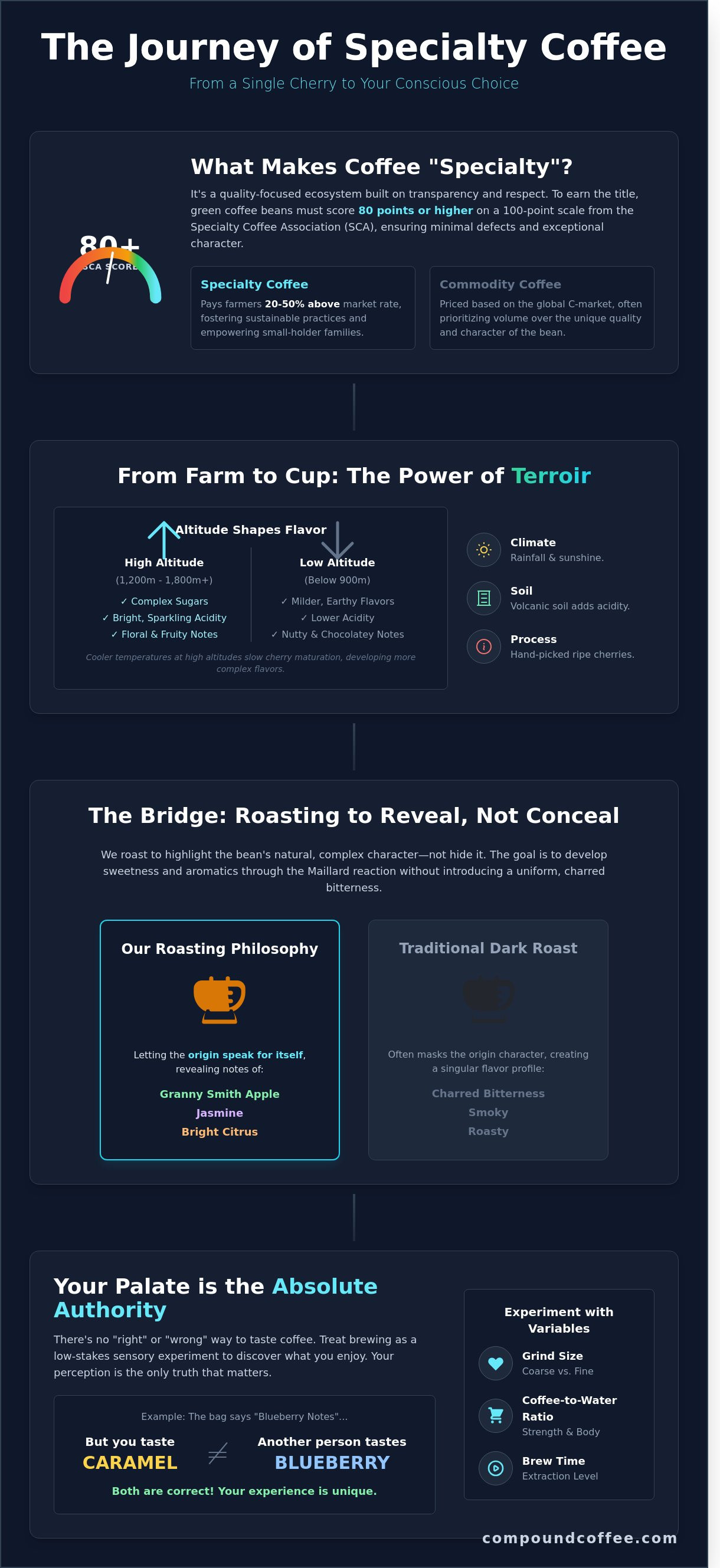
Specialty coffee isn't just a marketing label or a luxury price tag; it's a quality-focused ecosystem built on transparency and respect. This journey begins at the farm level where producers dedicate their lives to nurturing specific cultivars in unique micro-climates. To earn the specialty title, the beans must score 80 points or higher on a 100-point scale set by the Specialty Coffee Association (SCA). Think of this as a rigorous quality audit where certified tasters evaluate everything from aroma to acidity. If a batch has too many primary defects or lacks distinct character, it simply doesn't make the cut. This comprehensive guide to coffee provides a historical backdrop to how these global grading systems evolved to prioritize excellence over volume.
This movement is deeply rooted in empowerment. When you choose higher-scoring beans, you're participating in a system that pays farmers significantly more than the standard commodity price. In many cases, specialty premiums sit 20% to 50% above the global C-market rate, which allows small-holder families to invest in better processing equipment and sustainable land management. At Compound Coffee Co., we see ourselves as a bridge in this community. We want to empower you with the knowledge to understand what's in your cup, turning a simple morning habit into a conscious choice that supports unsung heroes across the globe.
The "Third Wave" Movement and You
The "Third Wave" represents a massive shift in how we perceive our daily brew. In the 1960s, the first wave made the drink a household staple through vacuum-sealed cans. By the 1990s, the second wave introduced espresso culture and large chains. Today, we treat the bean like fine wine or craft chocolate. We focus on transparency because knowing the exact washing station or altitude of a farm in Ethiopia directly impacts the flavor you experience. You'll notice we don't offer dark roasts at Compound Coffee Co. because we want to highlight the natural, complex, and nuanced profiles of the bean. Instead of a uniform charred bitterness, you might taste the bright acidity of a Granny Smith apple or the floral sweetness of jasmine. It's about letting the origin speak for itself without hiding behind a heavy roast.
This global focus on origin and story has allowed roasters with unique identities to flourish worldwide. In the U.S., for example, The Sasquatch Coffee Company has built a brand around small-batch coffee for outdoor enthusiasts, showing how the Third Wave connects coffee to specific lifestyles and communities, far beyond the local cafe.
Why Your Palate Is the Absolute Authority
There is a common myth that you need a "refined" palate to enjoy specialty coffee. That's simply not true. Your taste buds are your own, and what you perceive is the only truth that matters. We treat every cup as a low-stakes sensory experiment. If a bag of beans says "blueberry notes" but you taste "caramel," you aren't wrong; you're just experiencing the flavor through your unique biological lens. We encourage you to explore without the fear of being "incorrect."
In Singapore's vibrant cafe scene, where a single-origin filter brew might cost between S$7 and S$12, the experience should be about discovery rather than snobbery. This is a community experience rather than a solitary one. We learn best when we share our thoughts and compare notes with others. Don't feel pressured to find the "correct" answer. Just enjoy the process of finding what tastes good to you, because your preference is the final judge in this journey.
From Farm to Cup: The Journey of the Coffee Bean
Every exceptional cup begins as a flowering blossom on a tree, often tucked away on a steep hillside in the tropics. This flower eventually transforms into a green cherry, which ripens into a vibrant red or yellow fruit over several months. The journey of the coffee bean from these flowering trees to a shipping container is a testament to human dedication. Most specialty lots are produced by small-holder farmers who manage less than 5 hectares of land. These families are the unsung heroes of the industry, meticulously hand-picking only the ripest cherries to ensure quality remains high. We focus on building intimate relationships with these producers because their passion for the land is what makes our work as roasters possible.
Terroir acts as the invisible architect of flavor. It encompasses the soil composition, rainfall, and elevation of the farm. High altitudes, typically ranging from 1,200 to 1,800 meters, provide cooler temperatures that slow down the maturation of the cherry. This longer growth cycle allows the seeds to develop complex sugars and organic acids. For example, coffee grown in volcanic soil often presents a sparkling acidity that you won't find in lower-elevation crops. Because we believe that individuals perceive taste differently, we treat these terroir markers as helpful guidelines rather than absolute rules. Your unique palate might find floral notes where others find fruit, and that's the beauty of exploration.
Processing Methods: How Origin Shapes Flavor
Processing is where the farmer's technical skill shines, acting as a bridge between the tree and the roastery. In the Washed process, the fruit is removed entirely before drying, usually resulting in a clean and bright profile. The Natural process involves drying the bean inside the whole cherry, which imparts heavy fruit notes and a creamy body. Honey processing is a hybrid where the skin is removed but some sticky mucilage remains during the drying phase. This often creates a stunning sweetness and a syrupy mouthfeel. To experience this first-hand, we suggest trying our Semendo Honey, available for S$24.00. It's a fantastic way to taste how a specific method can elevate a bean's natural character.
The Importance of Green Bean Quality
Specialty roasters have an insatiable hunger for high-quality "green beans," which are the raw, unroasted seeds. Before any heat is applied, we analyze the density and moisture content of the beans. Ideally, moisture levels are kept between 10.5% and 11.8% to ensure the beans stay fresh during transit. High-density beans are particularly prized because they possess the structural integrity to handle complex roast profiles. Since we don't currently sell dark roast options, we rely on these premium raw materials to provide natural sweetness and clarity. If you're feeling adventurous and want to expand your brewing knowledge, you can even purchase green beans for S$14.00 to experiment with home roasting or sensory study. Understanding the raw product is the fastest way to appreciate the craft behind your morning ritual.
The Art and Science of Coffee Roasting
Think of roasting as the essential bridge connecting years of hard work at the farm to your morning coffee ritual. It's the transformative moment where we unlock the chemical potential stored within a green seed. We align our practices with the standards of the Specialty Coffee Association (SCA) to ensure we're honoring the labor of the farmers who produced the crop. During the roast, the Maillard reaction takes center stage. This complex chemical interaction between amino acids and reducing sugars creates the hundreds of aromatic compounds we love. It's how we develop the natural sweetness and intricate flavors hidden inside the bean, turning a grassy seed into a fragrant delight.
We don't view roasting as a way to impose a specific flavor on the coffee bean. Instead, it's about revealing the unique story the bean already tells. We treat roast levels as helpful guidelines rather than rigid indicators of quality or "correctness." Taste is deeply personal and subjective. Your palate might pick up delicate jasmine while your friend tastes bright citrus. Neither of you is wrong because individuals perceive taste differently. Our goal is to provide a map, but you're the one choosing the destination.
You'll notice we don't offer dark roasts in our lineup. We've made this intentional choice to respect the bean's natural profile and origin character. When beans are roasted into a dark, oily state, the unique characteristics of the soil, altitude, and processing method often disappear. They're replaced by smoky, bitter carbon notes that taste the same regardless of where the crop was grown. We want you to experience the vibrant diversity of the global harvest, not just the flavor of the roasting machine.
Light vs. Medium Roasts: Finding Your Balance
Light roasts usually showcase high acidity, floral notes, and delicate, tea-like bodies. These profiles are exceptional for filter extractions like the V60, where the clarity of flavor can truly shine. Medium roasts tend to offer more balance and approachability. You'll often find chocolatey or nutty notes combined with a heavier mouthfeel, making them a fantastic choice for espresso drinkers. We choose not to offer dark roasts to respect the bean’s natural profile. Every roast we produce is designed to empower you to find the specific flavor profile that resonates with your personal preferences.
The Roaster’s Daily Mantra: Pushing Boundaries
Our roastery in Singapore is a lab where curiosity leads the way. Pushing the boundaries of what's possible is our daily mantra. We spend countless hours on research and experimentation to refine every single profile we release. To maintain this high standard, we rely on precision technology like Lighttells CM-100 analyzers. This tool measures the roast degree with scientific accuracy, helping us maintain consistency across different batches. Since integrating these data-driven methods, we've seen a 12% increase in flavor consistency across our seasonal offerings. If you're hungry for the technical details behind the drum, explore our Ultimate Roasting Intro for deeper insights into our craft.
Brewing as an Experiment: Methods for Every Palate
Think of brewing as the final act of a long, collaborative performance. Our team spends hundreds of hours sourcing and roasting, but the final bridge between the green bean and your cup happens in your kitchen. It is a hands-on experiment where you bring a roaster’s vision into reality. Every bag of beans holds a specific potential, and your brewing method is the tool you use to unlock it.
You have three primary levers to pull: grind size, water temperature, and contact time. Adjusting these variables allows you to tailor the brew to your specific palate. If a cup tastes too sharp or sour, you might try a finer grind or hotter water. If it feels unpleasantly bitter, coarsening the grind or lowering the temperature can soften the profile. These aren't rigid rules; they are guidelines to help you explore. Because everyone perceives acidity and sweetness differently, the perfect cup is simply the one you enjoy most.
Consistency is your best friend during this journey. We often suggest using a simple digital scale to measure your dose and water. While you can certainly brew by eye, a scale ensures that when you find a recipe you love, you can repeat it tomorrow. You don't need an expensive setup to start. A basic scale costing around S$25 is a fantastic investment that removes the guesswork without becoming a barrier to your morning routine.
Filter Coffee: Clarity and Complexity
If you enjoy tasting the distinct characteristics of a specific origin, filter methods like the V60 are a brilliant choice. Pour-over techniques emphasize clarity and delicate floral or fruity notes. We recommend using specific Filter Coffee beans for these methods. These beans are roasted to highlight transparency. You will typically use a coarser grind here because the water spends more time in contact with the grounds; this slower pace allows for a nuanced extraction that celebrates the bean's natural complexity.
Espresso: Intensity and Texture
Espresso is a pressurized miracle that creates intense flavors and rich textures. It serves as the powerful heart of milk-based drinks like lattes and flat whites. Choosing different Espresso roasts can completely shift a drink's character. A bright, acidic espresso might pop in a small 5-ounce white, while a more chocolatey profile provides a comforting base for a larger latte. We don't offer dark roast coffee because we believe in preserving the unique identity of the farm; instead, we roast to develop sweetness and body without masking the bean in smoke.
Individuals perceive body and acidity differently, especially in concentrated shots. What one person calls bright, another might call sour. There is no right or wrong answer in your cup. We invite you to play with your ratios and see how a shot changes as it cools. The goal is discovery, not perfection. If you want to dive deeper into these techniques, you can explore our hands-on brewing workshops to refine your skills alongside our community.
Joining the Singapore Coffee Community
Singapore has grown into a vibrant hub for specialty coffee professionals and hobbyists alike. Since the surge of independent cafes around 2011, the local scene has embraced a philosophy where a rising tide lifts all boats. We believe that sharing knowledge doesn't create competition; it creates a superior experience for everyone involved. Whether you're a home enthusiast or an aspiring barista, you'll find that the community is built on mutual support. Moving from a complete beginner to a confident pro happens naturally when you're surrounded by people who love the craft as much as you do.
One of the best ways to immerse yourself is by visiting local facilities that offer "Rent a Roaster" or co-roasting services. These spaces, often found in industrial areas like Tai Seng or Geylang, allow you to see the roasting process in person. You can observe how professionals manage heat profiles and airflow on commercial machines that might otherwise cost upwards of S$50,000. It's a hands-on way to understand the chemistry of the bean. These facilities aren't just for businesses; they're for anyone who wants to take their education to the next level and see the scale of production required to fill shelves across the island.
Hands-On Learning: Workshops and Classes
Investing in a coffee class or workshop is the fastest way to improve your skills. While online tutorials are helpful, they can't replace the immediate feedback of a mentor in a live environment. Our "GOATED" workshop experience is designed to be an accessible entry point for everyone, regardless of their current skill level. You'll spend time in a community setting, tasting different profiles and learning how small adjustments change the final cup. We focus on the "why" behind the techniques, empowering you to make decisions based on your own palate. Since individuals perceive taste differently, we teach you to trust your own senses rather than following a rigid set of rules that might not suit your preferences.
Empowering Your Own Vision
There are many ways to share your love for a great cup with others. Some enthusiasts choose to launch a private label to showcase their favorite origins to a wider audience. Others find that corporate team bonding sessions are the perfect way to build culture through shared learning in a relaxed environment. Our mission is to empower lives through every step of the process, from the farmers at origin to the person holding the mug in their HDB flat. We don't sell dark roasts because we believe lighter roast profiles better preserve the unique story and diverse flavors of the bean. We want to help you discover the nuances that make each variety special. Your brewing journey is yours to define; start exploring today.
Begin Your Personal Flavor Discovery
The path from a curious beginner to a confident enthusiast starts with a single sip. You've seen how these specialty beans travel from small-holder farms through direct relationships to our Singapore roastery, which we established in 2014. We believe brewing is a continuous experiment where your own perception is the only guide that truly matters. Because taste is subjective and individuals perceive flavor differently, we provide guidelines rather than rigid rules to help you find what you love. You won't find any dark roast coffee in our selection; we focus on profiles that celebrate the bean's natural character. By joining our community of 500+ workshop graduates, you're entering a space where learning is hands-on and every palate is respected. There's no single right way to enjoy your brew, only your way. We're here to provide the tools and knowledge while you lead the exploration.
We're excited to be part of your adventure into new flavors.
Frequently Asked Questions
What is the difference between specialty coffee and commercial coffee?
Specialty coffee is defined by its quality score, requiring 80 points or higher on a 100 point scale as determined by certified Q Graders. Commercial coffee focuses on high volume and lower costs, which often results in defect rates as high as 30% in the green beans. We find that specialty beans offer a wider spectrum of flavors, like jasmine or stone fruit, because they're grown at higher altitudes and processed with extreme care.
How do I know which coffee beans to buy for my home setup?
You should choose beans based on your preferred brewing method and the specific flavor profiles you enjoy. For an espresso machine, a medium roast with chocolatey notes often provides a balanced base, while a V60 dripper highlights the bright acidity of lighter roasts. Since taste is subjective, we recommend starting with a 250g bag to see how your specific grinder and water interact with the beans.
Why doesn’t Compound Coffee Co. sell dark roast coffee?
Compound Coffee Co. doesn't sell dark roast coffee because our goal is to highlight the unique characteristics of the bean's origin. Roasting past the second crack often masks the delicate acids and sugars we work hard to preserve. We believe a lighter roast profile allows you to experience the 800 plus aromatic compounds naturally present in high quality beans; it's about honoring the farmer's hard work.
Is coffee roasting something I can learn as a beginner in Singapore?
Yes, you can learn coffee roasting through hands-on workshops right here in our Singapore lab. Our community focused sessions are designed so that 95% of participants successfully roast their first batch within three hours. It's a great way to understand how heat transforms green seeds into the aromatic beans you use every morning, and we'll guide you through every step of the process.
How should I store my roasted coffee beans to keep them fresh?
Store your beans in an airtight container in a cool, dark place away from direct sunlight. Oxygen and moisture are the main enemies of freshness, causing beans to go stale within 14 to 21 days if left exposed. Avoid the fridge; the humidity in Singapore can reach 90% and lead to condensation that ruins the flavor when you open the bag.
What is the best way to brew coffee if I don’t have expensive equipment?
The French Press or a simple pour-over cone are excellent, affordable ways to brew high quality coffee at home. You can get a basic dripper for under S$15 and still achieve professional results by focusing on your technique. Since individuals perceive taste differently, these manual methods let you experiment with variables like grind size and pour speed until you find your own perfect cup.
Are single-origin coffees always better than blends?
Single-origin coffees come from one specific farm or region, while blends combine beans from multiple locations to create a specific flavor profile. Neither is objectively better because it's all about what you enjoy. A blend might offer a consistent flavor for your morning latte, while a single-origin allows you to explore the distinct terroir of a specific harvest. We encourage you to try both.
How does water temperature actually affect the taste of my coffee?
Water temperature acts as a catalyst for extraction, with 90 to 96 degrees Celsius being the standard range for most brewing methods. Higher temperatures extract compounds faster, which can lead to bitterness if the water is too hot. Lower temperatures might result in a sour or under-extracted taste, but remember that these numbers are just guidelines for your own journey of discovery.


Comments