
Why Does My Coffee Taste Sour? 5 Reasons & How to Fix It
There’s nothing more disappointing than that first sip of your morning brew-the one you’ve been looking forward to-only to be met with a sharp, wince-inducing sourness. It's a frustrating experience that can make you feel like you've wasted those beautiful, expensive beans, and wonder if you'll ever replicate that perfect café experience at home. If you’re constantly asking yourself, why does my coffee taste sour?, you’re not alone. It's one of the most common hurdles in the coffee community, but the great news is that it’s completely fixable.
We believe knowledge is empowerment. This isn't about having a 'golden palate'; it's about understanding the simple science of extraction. In this guide, we'll demystify the process and equip you with the knowledge to take control of your brew. You'll discover the five key reasons for sour coffee, learn the crucial difference between unpleasant sourness and the bright, desirable acidity found in specialty coffee, and get hands-on, actionable steps to pull a perfectly balanced cup, every single time. Get ready to brew with confidence and finally unlock the incredible flavours hiding in your beans.
Key Takeaways
Learn the crucial difference between desirable, bright acidity and the unpleasant sourness that signals a brewing flaw.
Understand exactly why your coffee tastes sour by exploring the science of under-extraction, the #1 culprit behind this common issue.
Get a hands-on guide to dialling in your brew by adjusting key variables like grind size, water temperature, and brew time to achieve a balanced cup.
Go beyond technique and uncover how your choice of coffee beans and even your water quality could be the hidden source of sourness.
Table of Contents Sour vs. Bright Acidity: The Most Important Distinction The #1 Culprit: Under-Extraction Explained Simply How to Fix Sour Coffee: Dialing In Your Brewing Variables Beyond Technique: Other Factors Causing Sourness Your Action Plan: A Step-by-Step Troubleshooting Guide
Sour vs. Bright Acidity: The Most Important Distinction
If you've ever brewed a cup at home, taken a sip, and recoiled from a sharp, unpleasant taste, you're not alone. The first step to solving the problem of why does my coffee taste sour is to understand one of the most common points of confusion in the coffee world: the difference between sourness and acidity.
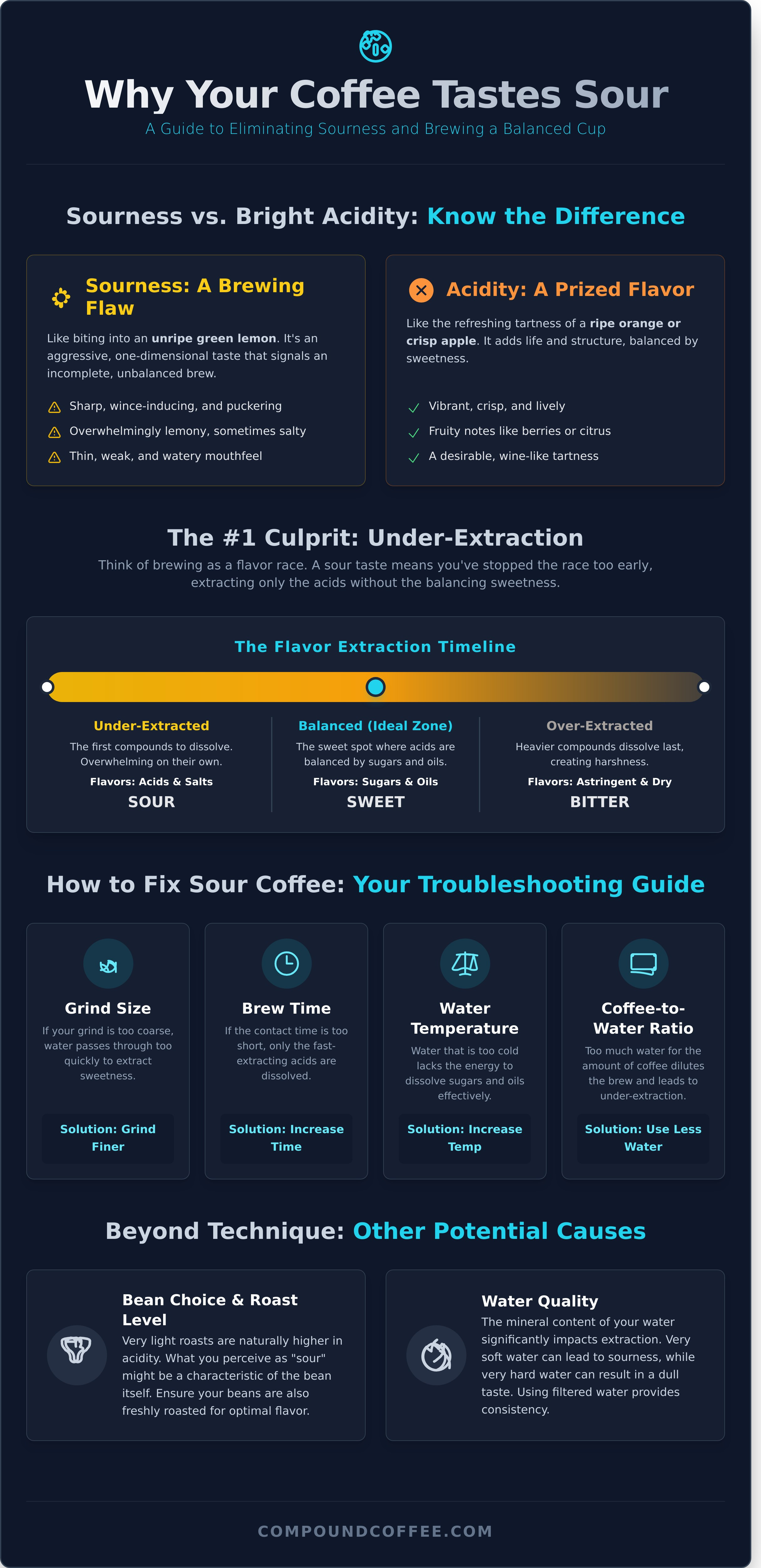
Let's be clear: Sourness is a brewing flaw. Acidity is a prized flavour characteristic. Our mission isn't to eliminate all tartness from your cup. Instead, our goal is to fix the flaw of sourness to unlock the balanced sweetness and vibrant acidity that makes specialty coffee so exciting.
Think of it this way: sourness is like biting into a completely unripe, green lemon. It’s aggressive, one-dimensional, and makes your mouth pucker. Bright acidity, on the other hand, is like the refreshing, complex tartness of a ripe orange or a crisp green apple. It’s balanced by sweetness and makes the flavour pop.
What Sourness Tastes Like
True sourness in coffee is an unmistakable sign that your brew is unbalanced and incomplete. It tastes sharp, aggressively lemony, and can sometimes even have a salty quality. This happens because the desirable flavour compounds haven't been properly extracted from the grounds, a common issue when key coffee brewing variables like grind size or water temperature are off. This unpleasant taste is often accompanied by a thin, weak, and watery mouthfeel that lacks any satisfying depth.
What Acidity Tastes Like
When baristas and roasters talk about acidity, we're describing a positive trait that adds life and structure to the coffee. This desirable acidity tastes vibrant, crisp, and lively. It can manifest as fruity notes (like berries or citrus) or even a pleasant, wine-like tartness. This characteristic is deeply connected to the coffee’s story-its origin, varietal, and processing method. A high-altitude coffee from Kenya, for example, is celebrated for its bright, complex acidity.
The #1 Culprit: Under-Extraction Explained Simply
Let's get straight to the heart of the matter. That sharp, puckering sourness in your cup isn't a sign of 'bad' beans; it's a sign of science in action. Specifically, it’s the most common answer to the question, "why does my coffee taste sour?" The culprit is a simple concept with a technical name: under-extraction.
Think of brewing coffee as a flavour race. When hot water meets your coffee grounds, it starts dissolving all the delicious, soluble compounds locked inside the bean. This process is called extraction. But here’s the secret: not all flavours dissolve at the same speed. It's a timed event, and hitting the sweet spot is everything.
Your goal is to stop the race right in the middle, where you have a perfect harmony of flavours. A sour coffee is simply a sign that you’ve stopped the race too early, leaving all the balancing sweetness and complexity behind.
The Flavor Extraction Timeline
To truly master your brew, you need to understand the sequence. Imagine the flavours being pulled from the grounds in three distinct waves:
First Stage (Under-extracted): The very first compounds to dissolve are acids and salts. These are primarily bright, fruity acids like citric and malic acid-you can dive deep into the chemical composition of coffee acids in this fascinating study-which are fantastic in moderation but overwhelmingly sour on their own. This is the source of that sharp taste.
Second Stage (Balanced): Next up are the sugars and oils. These compounds introduce sweetness, roundness, and the complex notes we love, like chocolate, caramel, or florals. This is the "sweet spot" where balance is achieved.
Third Stage (Over-extracted): If you let the race run too long, you start dissolving the heavier, less-soluble compounds. These bring out bitter, dry, and astringent flavours, making the coffee taste hollow and unpleasant.
Visualizing Your Brew
Sometimes, a picture makes it all click. While every coffee is different, the extraction journey generally follows a predictable curve. Think of your brew moving along this line:
[SOUR] ---> [SWEET & BALANCED] ---> [BITTER] (Under-extracted) --> (Ideal Zone) --> (Over-extracted)
When your coffee tastes sour, you're landing squarely in that first zone on the left. You've successfully extracted the acids, but you haven't given the water enough time or opportunity to dissolve the sugars needed to create a balanced, delicious cup. The good news? Now that you know why your coffee tastes sour, you have the power to fix it. In the next sections, we'll show you exactly how.
How to Fix Sour Coffee: Dialing In Your Brewing Variables
You've identified the problem, and now it's time for the hands-on solution. If you're asking "why does my coffee taste sour?", the answer is almost always under-extraction. The good news is that you have complete control over this. By systematically adjusting your brewing technique, you can push the extraction further, moving past those sharp, sour notes and into the realm of sweetness and balance.
We'll focus on four key variables: grind, time, temperature, and ratio. The golden rule of this process? Change only one variable at a time. This is how you experiment like a pro, isolating the effect of each adjustment so you truly understand your brew.
Variable 1: Adjust Your Grind Size
This is the most powerful tool in your arsenal. A finer grind creates significantly more surface area for the water to interact with, dramatically increasing extraction. If your coffee is sour, your first move should be to grind your beans finer. For a V60, think of the texture of table salt; for a French Press, it should be coarser, like cracked pepper. Small adjustments here make a huge difference.
Variable 2: Extend Your Brew Time
Simply put, the longer your coffee grounds are in contact with water, the more flavour will be extracted. If your brew is tasting sour, try extending the brew time. For pour-over methods, this means slowing down your pouring rhythm to prolong the overall process. For immersion brewers like a French Press or AeroPress, just let it steep for an extra 30-60 seconds before plunging.
Variable 3: Check Your Water Temperature
Water is the solvent in this equation, and hotter water extracts flavour more efficiently. For most brewing methods, the specialty coffee community agrees on an ideal temperature range of 92-96°C (198-205°F). If your water is too cool, it won't have the energy to pull out the sweet compounds, leaving you with a sour cup. Use a thermometer or a temperature-control kettle, but avoid scorching the grounds with water at a full, rolling boil.
Variable 4: Refine Your Brew Ratio
Your coffee-to-water ratio dictates the strength and extraction potential of your brew. Using too much coffee for the amount of water can lead to a sour, under-extracted cup because there isn't enough water to properly saturate and extract from all the grounds. A great, universally-accepted starting point is a 1:16 ratio (1 gram of coffee to 16 grams of water). If your coffee is sour, try a 1:17 ratio to see if it helps achieve a more balanced extraction.
Beyond Technique: Other Factors Causing Sourness
You’ve dialed in your grinder, perfected your pouring technique, and timed your brew to the second. So, why does my coffee taste sour? If you've addressed all the extraction variables from the previous sections, it’s time to look beyond your technique and investigate the two fundamental ingredients in your cup: the coffee beans and the water.
At Compound Coffee, we believe in empowering you with knowledge that covers the entire coffee journey. Understanding these core components is the fastest way to transform a good brew into a truly exceptional one.
The Coffee Beans: Roast Profile & Development
The beans themselves hold the key to your coffee's flavour potential. Lighter roasts are celebrated for their vibrant, bright acidity, but if they are under-extracted, this desirable quality can easily be perceived as an unpleasant sourness. If you're new to the world of specialty coffee, a great starting point is to explore our range of deliciously balanced roasted beans to calibrate your palate.
Beyond the roast level, a flaw in the roasting process itself, known as an underdeveloped or "baked" roast, can impart grassy and sour notes, no matter how perfectly you brew it. This is a roasting defect, not a brewing one. Curious to see how we transform green beans into flavour powerhouses? Dive deeper with our Ultimate Roasting Course.
Water Quality: The Unsung Hero
It's easy to forget, but water makes up over 98% of your final cup of coffee. Its mineral composition has a massive impact on flavour extraction. Here’s a simple breakdown:
Very Soft Water: Water with very low mineral content (like some distilled or heavily filtered water) lacks the "buffer" to balance out the coffee's natural acids, leading to a cup that can taste overly sharp or sour.
Very Hard Water: Water with high mineral content can mute the delicate flavours and aromatics of your coffee, resulting in a flat or chalky taste.
For consistent and delicious results every time, we strongly recommend using filtered water. While Singapore's tap water is high quality, a simple carbon filter can remove chlorine and balance the mineral content, creating the perfect canvas for your coffee to shine.
Your Action Plan: A Step-by-Step Troubleshooting Guide
Knowledge is power, but action is where the magic happens. Let's turn theory into a delicious reality with a methodical plan to eliminate sourness from your cup. To start, we need a baseline. Brew a coffee using a standard recipe-we recommend a 1:16 coffee-to-water ratio (e.g., 15g of coffee to 240g of water) with a water temperature of 94°C.
Taste it. Is that familiar, sharp sourness present? Good. Now you have a benchmark. The key from here is to change only one variable at a time. This controlled approach is the fastest way to discover exactly why your coffee tastes sour and how to fix it for good.
Step 1: Grind Finer
Your grinder is the most powerful tool for controlling extraction. A finer grind creates more surface area, allowing water to pull out more of the sweet, complex compounds that balance out acidity. Make a small adjustment-just one or two clicks finer on your grinder-and keep every other variable (dose, water, temperature) the same. Brew again and taste. Is the sourness fading? Are you noticing more sweetness and a fuller body? You're on the right path!
Step 2: Increase Brew Time or Temperature
If adjusting the grind isn't quite enough, your next levers are time and temperature. For manual brew methods like a V60 or French Press, try extending the total brew time by about 15-20 seconds. This gives the water more contact time to work its magic. Alternatively, check your water temperature. If it's below 92°C, you're likely under-extracting. Nudging it up towards 96°C can significantly improve extraction, turning sour notes into a rich, balanced flavour profile. The goal is to find that sweet spot right before any bitterness appears.
When to Get Hands-On Help
Reading and experimenting are fantastic, but brewing is a deeply practical skill. If you've followed these steps and are still struggling, personalized feedback can make all the difference. Sometimes you just need an expert to taste your coffee, watch your technique, and provide that one crucial tip that changes everything.
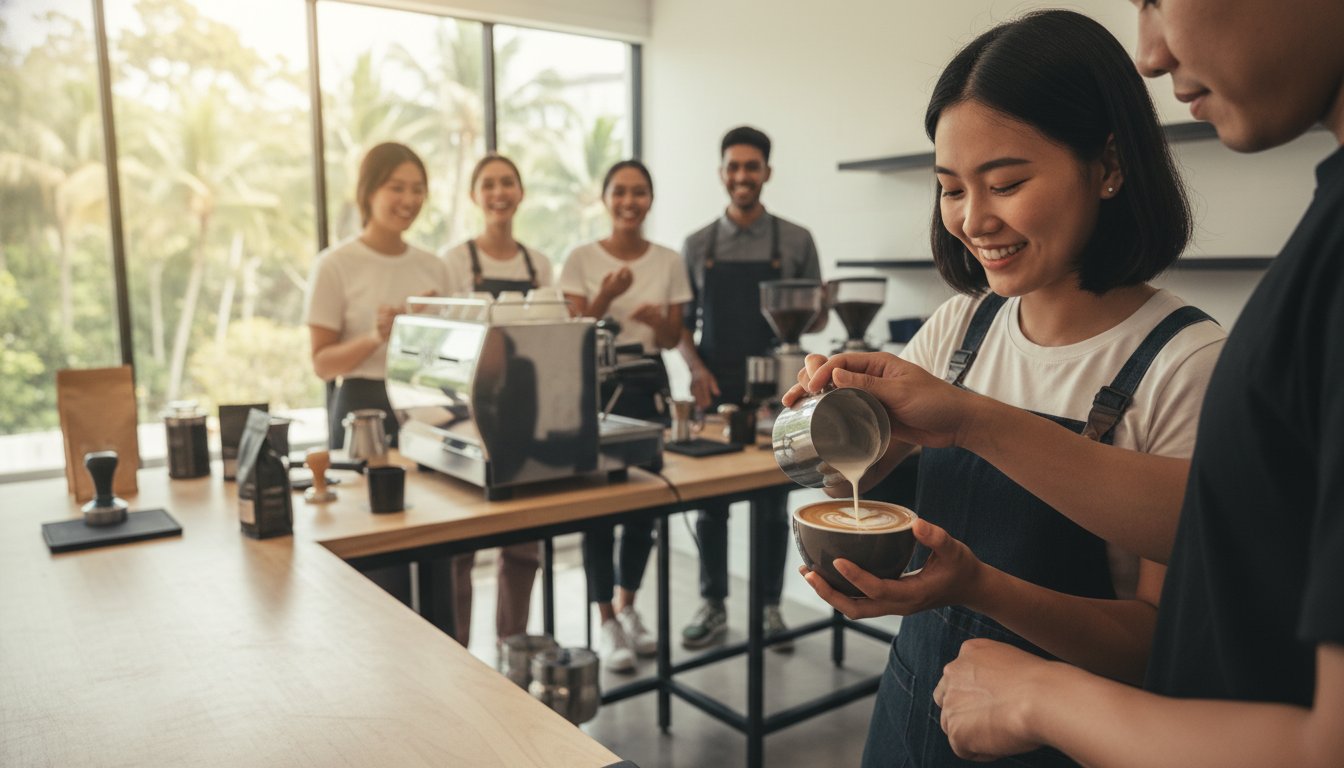
This is where our passion for community and knowledge comes to life. We're here to empower your coffee journey. If you're ready to take your skills to the next level, join one of our hands-on brewing classes. Let our professional baristas guide you in person, helping you dial in your recipe and transform your home coffee experience from frustrating to fantastic.
Transform Your Brew: Say Goodbye to Sour Coffee
You started this journey asking, "why does my coffee taste sour?" and now you're empowered with the knowledge to fix it. The key takeaway is that under-extraction is almost always the culprit, but the solution is entirely in your hands. By methodically adjusting variables like your grind size, water temperature, and brew time, you can turn that unpleasant sourness into the vibrant, sweet, and complex cup you deserve. Every brew is a chance to experiment and get closer to perfection.
Reading is one thing, but true mastery comes from doing. If you're ready to fast-track your skills and gain confidence behind the machine, there's no substitute for hands-on learning. Join our community of passionate coffee lovers and learn from expert instructors in our professional coffee facility. We’re here to guide you every step of the way on your coffee journey.
Your perfect cup is just a few adjustments away. Happy brewing!
Frequently Asked Questions
Is sour coffee the same as bitter coffee?
That's a fantastic question, and the answer is no-they are polar opposites on the extraction spectrum! Sour coffee is a sign of under-extraction, meaning the water didn't have enough time or energy to pull out the sweet flavours. Bitter coffee is over-extracted, where the water pulled out too many harsh compounds. Think of sourness as an "unripe" taste, while bitterness is more "hollow" and "astringent." Getting the balance right is the heart of a great brewing experience.
Can my coffee machine or grinder be the cause of sour coffee?
Absolutely. Your equipment is a critical part of the brewing equation. An inconsistent grinder produces both fine and coarse particles, leading to uneven extraction where the larger grounds under-extract and taste sour. Similarly, if your coffee machine's water isn't hot enough (ideally 92-96°C), it won't have the thermal energy to properly extract all the delicious compounds from the coffee grounds, leaving you with a sour cup. Always check your gear!
Is it safe to drink coffee that tastes sour?
Rest assured, it's completely safe to drink. A sour taste in your coffee is a flavour issue, not a health one. It simply indicates that the coffee was under-extracted during the brewing process and is not a sign of spoilage or contamination. While it might not be the delicious experience you were hoping for, there's no harm in finishing the cup. Better yet, see it as a hands-on learning opportunity to perfect your next brew!
Will adding milk or sugar fix sour coffee?
While adding milk or sugar can help mask the unpleasantness, it won't truly fix the underlying problem. The sharp, puckering quality of under-extracted coffee often cuts right through the sweetness and creaminess. It’s a temporary patch, not a solution. The best approach is to focus on correcting your brew technique-like grinding finer or increasing brew time-to create a balanced, sweet cup from the start. That's how you truly empower your coffee experience.
Does the age of my coffee beans affect sourness?
This is a common point of confusion. Generally, the answer to why does my coffee taste sour is tied to under-extraction, not the age of the beans. In fact, very old beans tend to taste flat or bitter as their desirable compounds degrade. However, extremely fresh coffee-just a day or two off roast-can be tricky to extract evenly and may present sour notes. We recommend letting your beans "rest" for at least 5-7 days after the roast date.
Why do some coffees from cafes taste acidic but not sour?
This is where the art and science of specialty coffee shine! Acidity is a desirable, vibrant flavour note-think the bright zest of a lemon, the crispness of a green apple, or the sweetness of berries. Sourness is a flavour defect from under-extraction. A skilled barista carefully dials in their recipe to highlight the coffee's beautiful, complex acidity without letting it tip over into being unpleasantly sour. It's all about achieving a delicious, balanced extraction.
Can I fix a cup of coffee that I've already brewed sour?
Unfortunately, once the brew is done, you can't go back and re-extract the coffee. The best fix is knowledge for your next attempt! Take it as a valuable learning moment. Instead of trying to save the cup, focus on what you can change for the next one. Try grinding a little finer, increasing your brew time, or checking your water temperature. Every cup is a chance to experiment and get one step closer to that perfect brew.
Comments