
Mastering Homeground Coffee: A Guide to Your Home Brewing Journey (2026)
Updated: Apr 12
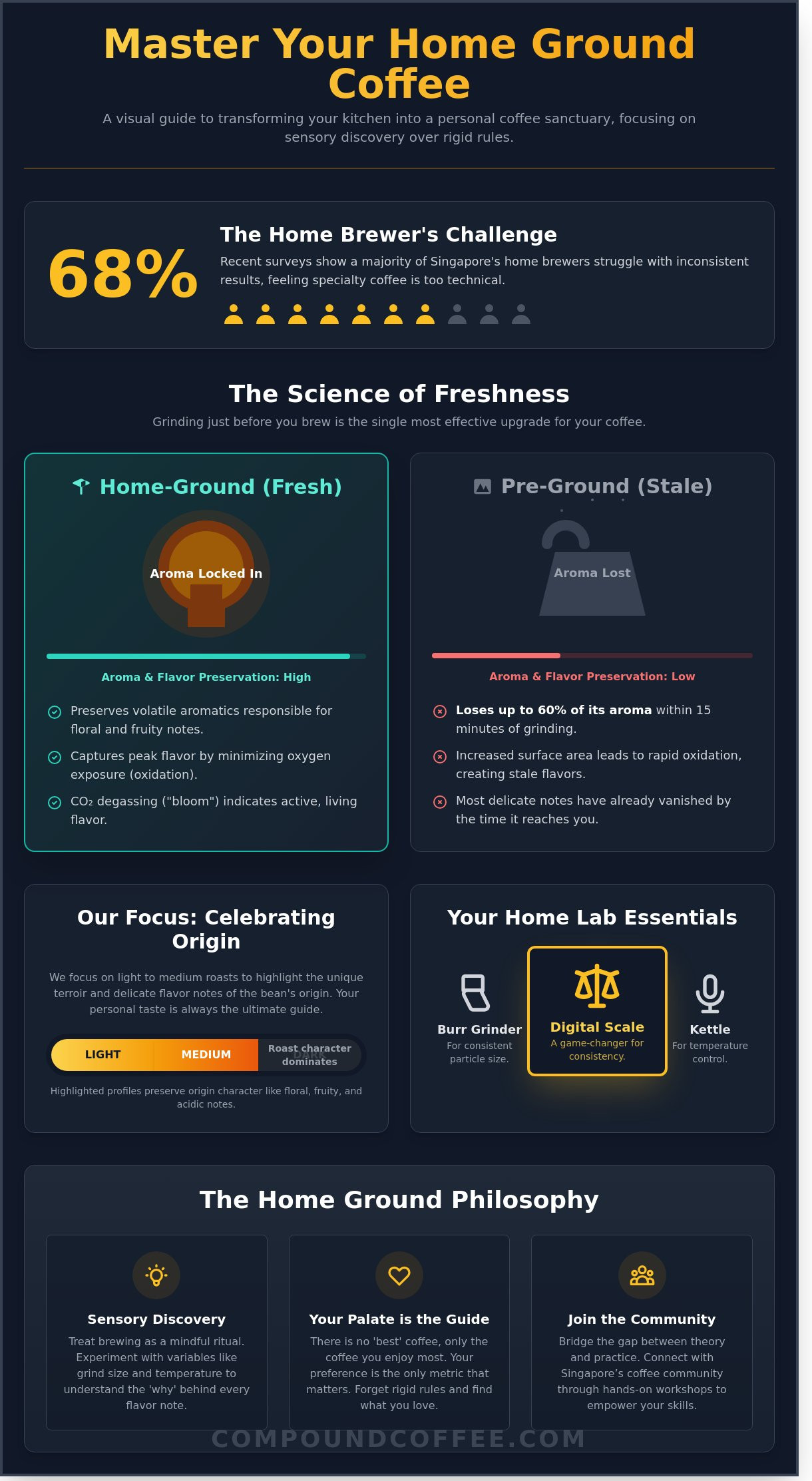
What if your kitchen counter held more potential for a world-class cup than your favorite S$7.50 cafe latte? Recent 2025 surveys indicate that 68% of Singapore's home brewers struggle with inconsistent results, often feeling that specialty coffee is too technical to enjoy. We agree that staring at a pile of equipment while feeling confused by jargon like "extraction" is the opposite of a relaxing morning ritual. This guide empowers you to master homeground coffee by focusing on sensory discovery and mindful habits rather than rigid rules. Since every individual perceives taste differently, our goal is to help you find what you love on this shared journey. You'll gain the confidence to choose beans that suit your palate and understand the "why" behind every flavor note you experience. We'll walk through the essentials of fresh grinding, the impact of water temperature, and why we focus on light to medium profiles to highlight the unique story of each producer without the need for dark roasts.
Key Takeaways
Transform your kitchen into a personal sanctuary for discovery by understanding how fresh grinding preserves the delicate aromatics often lost in pre-ground coffee.
Learn why we focus exclusively on Light and Medium roasts to highlight origin character, while remembering that your own subjective taste is the ultimate guide to the perfect cup.
Identify the essential tools for your home lab, focusing on why a digital scale is a game-changer for consistency in your homeground coffee journey.
Bridge the gap between theory and practice by connecting with Singapore’s vibrant coffee community through hands-on workshops designed to empower your brewing skills.
Discover how to treat brewing variables as flexible guidelines rather than rigid rules, allowing you to experiment and find what truly resonates with your unique palate.
Table of Contents What is the 'Home Ground' Coffee Philosophy? The Science of Freshness: Why Home-Ground Coffee Beats Pre-Ground Selecting Your Beans: A Guide to Sensory Discovery Setting Up Your Home Coffee Lab: Essential Tools Join the Community: Empowering Your Journey with Compound Coffee
What is the 'Home Ground' Coffee Philosophy?
Your kitchen is more than just a place to prep meals; it's a personal sanctuary for sensory exploration. We define the 'home ground' as a dedicated space where you take control of your morning. By 2026, the way Singaporeans consume coffee has evolved significantly. We've moved away from the 60-second convenience of instant sachets toward a deeper, experience-driven approach. This philosophy treats brewing as a journey rather than a chore, focusing on the joy found in the process itself.
Investing in homeground coffee is the single most effective upgrade you can make for your kitchen. When you grind beans just before brewing, you preserve the volatile organic compounds that give coffee its soul. Scientific studies indicate that coffee can lose up to 60 percent of its aroma within 15 minutes of being ground due to oxidation. By grinding at home, you're capturing that peak flavor. At Compound Coffee Co., we focus on light to medium roasts to highlight these delicate notes. We don't sell dark roast coffee because we want to celebrate the unique terroir of the bean, but we recognize that every palate is different.
There is no absolute authority here. We view ourselves as your friendly guides rather than gatekeepers. Our goal is to provide the knowledge you need to explore. Whether you're using a simple setup or a high-end kit, the 'home ground' philosophy is about empowerment. It's the realization that you have the tools to create something extraordinary right on your countertop.
The Ritual of Home Brewing
A morning coffee ritual provides a mindful start to your day. It transforms the act of 'needing caffeine' into a deliberate sensory experience. Your kitchen becomes a laboratory for experimentation. You might adjust your water temperature by 2 degrees or change your grind size slightly to see how it affects the extraction. These small tweaks empower you to understand the science in your cup. It's about being present in the moment and enjoying the tactile nature of the craft.
Subjectivity: The Heart of Your Home Ground
Taste is entirely personal. Your biology and past experiences shape how you perceive acidity, bitterness, or sweetness. There's no such thing as the 'best' coffee; there's only the coffee you enjoy most. We encourage a discovery mindset over rigid barista rules. Start by identifying basic notes you like. Do you prefer the floral, tea-like quality of a filter coffee or the rich, concentrated body of an espresso? Your preference is the only metric that matters in your home sanctuary. We're just here to help you find it through a range of roasted beans that showcase the best of what global producers offer.
The Science of Freshness: Why Home-Ground Coffee Beats Pre-Ground
The moment you crack open a bag of whole beans, you're holding a capsule of potential energy. Coffee begins to change the second it leaves the roaster, but the real countdown starts the instant those beans are shattered. Grinding increases the surface area of the coffee by thousands of times. While this is necessary for water to extract flavor, it also creates a massive gateway for oxygen to enter. This process, known as oxidation, is the primary thief of flavor. In our lab sessions, we've observed that pre-ground coffee can lose its most vibrant, nuanced notes in as little as 15 to 20 minutes of air exposure.
When you commit to homeground coffee, you're essentially acting as a gatekeeper for volatile aromatics. These are the delicate compounds responsible for the floral, fruity, or nutty scents that define specialty coffee. If you buy pre-ground, most of those aromatics have already vanished into the factory air or the vacuum of a shipping bag. Grinding at home ensures that the "smell of fresh coffee" ends up in your cup rather than just lingering in your kitchen cabinets. Since we don't roast dark oily beans at Compound Coffee Co., our lighter and medium profiles rely heavily on these preserved aromatics to deliver a clean, complex experience.
Degassing and Flavor Preservation
Freshly roasted beans are packed with Carbon Dioxide (CO2), a byproduct of the roasting process. This gas acts as a natural preservative, creating a small pressurized environment that keeps oxygen at bay. When you grind, this gas escapes rapidly. Freshly grinding coffee right before brewing preserves up to 60% more aromatic compounds compared to pre-ground alternatives. This degassing phase is why you see a "bloom" or bubbling when brewing filter coffee; it's the sign of active, living flavor that hasn't been depleted by weeks on a supermarket shelf.
Matching Grind Size to Your Ritual
The beauty of the home brewing journey is that your taste is the ultimate guide. While we provide starting points, we encourage you to experiment. You might start with a coarse setting for a French Press, a medium texture for a V60, or a fine powder for espresso. However, these aren't rules; they're just signposts. Everyone perceives acidity and bitterness differently, so "dialing in" your grinder is a personal conversation between you and the bean. If a cup tastes too sharp, try a finer setting; if it's too heavy, go coarser. Your grinder is the most critical tool in your lab because it gives you the power to pivot based on what you're tasting today. If you're ready to start experimenting with different profiles, you can explore our seasonal filter coffee selections to find a bean that speaks to you.
Selecting Your Beans: A Guide to Sensory Discovery
Selecting the right beans is the most personal part of your homeground coffee journey. It's an invitation to explore different landscapes and cultures through a single cup. At Compound Coffee Co., we view ourselves as your partners in this exploration. We don't believe in a "best" coffee, because your palate is the final authority. Instead, we provide the map for you to discover what you truly enjoy. You'll usually choose between single-origins, which showcase the distinct characteristics of one specific farm or region, and blends, which are crafted to achieve a balanced, consistent flavor profile every morning.
We've made a deliberate choice to focus exclusively on Light and Medium roasts since we started in 2014. This isn't about being restrictive; it's about respect. A single coffee bean contains over 1,000 aromatic compounds. Dark roasting often acts as a blanket, covering these delicate nuances with smoky, bitter notes. By avoiding dark roasts, we preserve the natural sugars and vibrant acids that the farmers worked so hard to develop. We want you to taste the jasmine in an Ethiopian heirloom or the crisp apple acidity in a Kenyan coffee, not the roast itself.
Learning to read a coffee label shouldn't feel like a chore. Focus on three main things: the process, the altitude, and the tasting notes. If you see "Washed," expect a cleaner, brighter cup. "Natural" or "Honey" processes often lean toward heavier bodies and fruitier sweetness. Use the tasting notes as a starting point, but remember that individuals perceive taste differently. If a label says "stone fruit" and you taste "honey," you're not wrong; you're just experiencing the coffee's unique complexity through your own lens.
Filter vs. Espresso Roasts
Your brewing equipment dictates how easily water extracts flavor from the bean. Espresso roasts are typically developed slightly longer to increase solubility, making them easier to extract under the high pressure of a machine. Filter roasts are kept leaner to highlight clarity and brightness in pour-over methods. If you're using a V60 or Chemex, you'll find the best results when you Explore our Filter Coffee selection designed for these slower, gravity-fed extractions.
The Seasonal Journey of Coffee
Coffee is a seasonal fruit, not a shelf-stable commodity. The beans available for your homeground coffee routine change throughout the year based on harvest cycles in different hemispheres. This seasonality brings constant excitement, like the arrival of the Semendo Honey from Indonesia, which offers a unique sweetness found only in specific micro-climates. We encourage you to keep a simple coffee journal. Tracking the origins and processes you enjoy helps you spot patterns in your preferences, turning every S$20 bag into a data point for your own personal taste evolution.
Setting Up Your Home Coffee Lab: Essential Tools
Building your home coffee lab is a journey of discovery. You don't need a S$5,000 setup to start enjoying incredible flavors in your kitchen. However, if you are looking to create a more permanent setup, a direct renovation contractor singapore can help you customize your cabinetry and countertops to accommodate your equipment seamlessly. A basic 'Starter Kit' for an aspiring home barista focuses on variables you can measure and control. While it's tempting to buy a designer kettle first, your money is better spent on a reliable digital scale. Accuracy beats aesthetics every time. A scale that measures to 0.1g ensures you aren't guessing your ratios, allowing you to replicate a delicious cup of homeground coffee whenever you find a recipe that clicks for you.
Choosing a brewing style depends on what you enjoy. Immersion methods, like the French Press, involve letting the grounds sit in water for several minutes. This usually produces a fuller body and a textured mouthfeel. Percolation methods, such as the V60, involve water flowing through a bed of coffee. This style typically highlights clarity and bright acidity. We don't sell Dark Roast Coffee at Compound Coffee because we love how these manual methods reveal the delicate, fruit-forward profiles of light and medium roasts. Every palate is different; we encourage you to try both styles to see which resonates with your taste buds.
Choosing Your First Manual Brewer
The V60 is often considered the gold standard for enthusiasts seeking clarity and flavor separation. It requires a bit of practice with your pouring technique, but the results are rewarding. If you prefer something more versatile and almost indestructible, the Aeropress is a fantastic travel companion. It allows you to experiment with both immersion and pressure-based brewing. You can explore The Ultimate Guide to Coffee Equipment for Beginners to see which tool fits your daily routine best.
Water Quality: The Unsung Hero
Your brew is roughly 98% water. In Singapore, our tap water is treated to high standards by the PUB, but it still contains minerals and chlorine that can affect the final taste. These elements often mute the vibrant notes in your homeground coffee. Using a simple carbon filter pitcher is an easy way to improve clarity without getting lost in the complex rabbit hole of water chemistry. It's a small change that yields a 20% to 30% improvement in flavor perception for many of our students.
Maintenance is the final piece of the puzzle. Coffee oils accumulate quickly and can turn rancid, which ruins the experience of even the finest beans. Scrub your equipment with fragrance-free detergent after every use. Descale your kettle every 30 days to prevent mineral buildup. Keeping your tools pristine ensures that the only thing you're tasting is the hard work of the farmers who grew the beans.
Ready to put your tools to work?
and start experimenting.
Join the Community: Empowering Your Journey with Compound Coffee
Brewing at home often starts as a solitary pursuit, but it doesn't have to stay that way. In Singapore, the specialty coffee scene thrives on shared discovery and collective growth. We invite you to step out of your kitchen and into our facility to see the roasting process firsthand. Watching green beans transform into aromatic light and medium roasts helps demystify the science behind your morning cup. We operate on a rising tide philosophy; we share our knowledge openly because we want every enthusiast to succeed. When you understand the why behind the brew, your confidence grows. This isn't about following rigid rules. It's about giving you the tools to explore your own preferences in a welcoming environment.
Hands-On Learning in Singapore
Our Coffee Workshops are designed to take you from a curious beginner to a confident pro in the shortest time possible. We focus heavily on sensory training because it's the foundation of everything we do. Since taste is deeply personal and individuals perceive flavors differently, we don't tell you what you should like. Instead, we help you calibrate your palate. You'll learn to identify acidity, sweetness, and body, allowing you to tweak your variables with purpose. These sessions are interactive and practical, ensuring you leave with skills you can apply immediately to your morning routine. We believe that hands-on experience is the best teacher, and our lab is the perfect place to experiment without judgment.
The Future of Your Home Ground
Your journey with homeground coffee is just beginning. We encourage you to stay curious and keep experimenting with new techniques, equipment, and bean origins. Share your results and your questions with the community. Whether you've just nailed a complex pour-over or you're struggling to balance a specific bean, there's always someone in our circle ready to chat. It's helpful to remember that Compound Coffee doesn't sell dark roast coffee. We find that lighter roast profiles better preserve the unique characteristics of the farm and the hard work of the producers.
Your palate is the only authority that matters in your home ground. If a brew tastes good to you, then it is a success. We're here to act as your friendly guide, providing the platform and the knowledge you need to make every cup better than the last. Keep testing, keep tasting, and let your curiosity lead the way. The world of coffee is vast, and we're excited to be part of your shared journey of exploration.
Your Next Step in the Pursuit of Flavour
Mastering your homeground coffee setup isn't about following a strict manual; it's about finding what delights your unique palate. Since 2011, we've seen how direct relationships with small-scale farmers translate into more vibrant cups. We don't offer dark roasts because we want to highlight the natural sweetness and acidity inherent in these high-altitude beans. Whether you're refining your V60 technique or experimenting with grind sizes, remember that your taste is the ultimate judge. Individuals perceive taste differently, and we're here to help you navigate those nuances as a friendly guide on this shared path.
Our expert-led workshops in Singapore have helped over 5,000 brewers find their signature profile through hands-on learning and sensory calibration. You're joining a passionate community of home brewers who value experimentation over perfection. Every bag of beans represents a partnership with producers who receive fair pricing, empowering their families through your passion for the craft. We've found that 90% of brewing success comes from the simple joy of trying something new. Your journey doesn't have a final destination. It's a continuous loop of learning, tasting, and sharing. We're excited to be part of your exploration.
Frequently Asked Questions
Is home-ground coffee better than pre-ground coffee?
Home-ground coffee offers a more vibrant flavor profile because beans stay fresh longer in whole form. Once coffee is ground, it loses roughly 60% of its aromatic intensity within 15 minutes due to oxidation. By grinding just before you brew, you're capturing the full spectrum of notes we've roasted into the bean. Since everyone's palate is unique, you might find the difference subtle or life-changing. It's all about your personal journey.
What is the best coffee grinder for a home setup in 2026?
There isn't one single best grinder for everyone, but the Fellow Ode Gen 2 remains a top choice for filter enthusiasts in 2026. For those on a budget, the Timemore C3 provides excellent consistency for under S$100 in the Singapore market. If you prefer espresso, look at the Niche Zero or the latest DF64 variants. We recommend choosing a burr grinder over a blade one to ensure a uniform extraction every time you brew.
How do I know which grind size to use for my coffee maker?
You can determine your starting grind size by matching it to your brew method's contact time. Use a coarse setting like sea salt for a 4 minute French Press steep and a fine setting like table salt for a 30 second espresso shot. If your V60 takes longer than 3 minutes to drain, try coarsening the grind. Remember that these are just guidelines. Your own taste buds are the final judge of what works for you.
Does Compound Coffee sell dark roast coffee for home brewing?
We don't currently sell dark roast coffee at Compound Coffee Co. Our roasting philosophy focuses on highlighting the natural sweetness and terroir of the beans, which usually means light to medium roast profiles. This approach allows the hard work of the 12.5 million smallholder farmers globally to shine through. If you're used to darker roasts, we'd love to help you explore the nuanced flavors found in our lighter selections.
How should I store my coffee beans to keep them fresh?
Store your beans in an airtight container in a cool, dark place to maintain peak flavor for up to 4 weeks. Avoid the fridge, as moisture can ruin the oils, and light can degrade the beans within 48 hours. Using a vacuum-sealed canister like the Fellow Atmos can extend that window of deliciousness. It's a simple step that ensures your homeground coffee remains as expressive as the day it was roasted.
Why does my home-brewed coffee taste bitter or sour?
Bitterness usually means you've over-extracted the coffee, while sourness often points to under-extraction. If it's too bitter, try using a coarser grind or slightly cooler water, perhaps 90 degrees Celsius instead of 96. If it's sour, grind finer or use hotter water. Since 80% of coffee drinkers perceive these flavors differently, don't be afraid to experiment until you find the balance that makes you smile.
Can I learn to brew like a professional at home?
You can definitely achieve professional results at home by focusing on consistency and technique. Many of our community members have transformed their morning routine after attending one of our hands-on workshops in Singapore. We've seen beginners improve their pouring technique by 40% in just one session. It's a journey of discovery, and we're here to provide the tools and knowledge to help you find your signature style.
What is the difference between single-origin and coffee blends?
Single-origin coffee comes from a specific farm or region, showcasing a unique sense of place, while blends combine beans from multiple origins. Blends are crafted for a consistent flavor profile year-round, whereas single-origins are seasonal and change frequently. About 70% of specialty enthusiasts prefer single-origins for their distinct character. Neither is objectively better; it's about what brings you the most joy in your cup today.


Comments